
Reviewed · CAPPADOCIA TOURS
Cappadocia Cooking Class
The best part of this Cappadocia cooking class is not the recipe card. It is the chance to shop for ingredients in Urgup, then cook and eat with a local host in a home setting. Guide Kadir often joins the group as interpreter and cultural guide, helping turn a meal into a real conversation about Turkish life.
I like the small group size, capped at six, and the hotel pickup and drop-off across much of Cappadocia. I also like that you do more than sit at a restaurant table: you may chop vegetables, stir pots, prepare dessert, or even help place bread in a tandoor oven. The main consideration is that this is not always a hands-on cooking school. In some sessions, several dishes are partly prepared before you arrive.
Key points to know before booking
- Shop in Urgup first: The outing begins with a stop at local shops for ingredients, giving you a look at everyday food buying.
- Meet a local host: Cooking takes place in a host home or another local venue, depending on the session.
- Kadir may guide your group: He has helped with pickup, translation, cultural context, and conversation.
- Expect a changing menu: Dishes can include salads, stuffed grape leaves, stews, Turkish ravioli, yogurt soup, meatballs, rice, and a Cappadocian dessert.
- Small groups matter: The maximum is six people, and some bookings become private classes.
- Plan for four hours, or longer: The stated duration is about four hours, but one group spent five to six hours cooking and talking.
Why this meal feels different from a restaurant visit
Cappadocia is full of excellent places to eat, but restaurant meals usually keep you on the customer side of the kitchen. This experience gives you a look at how food moves from market stall to family table.
You start with pickup at about 10 AM for lunch or 4 PM for dinner. The schedule fits neatly around other Cappadocia activities, though you should leave room for the session to run long. Cooking with a family can be less clock-driven than a standard tour, and that is part of the appeal.
The group limit of six is a real advantage. You are not standing behind a crowd trying to see a chef slice vegetables. Depending on the host and the dishes, you may work at the counter, help prepare ingredients, stir a stew, shape food, or take part in serving the meal.
The setting can vary. Several sessions take place in a local home, including apartments and family houses. One cooking class took place in a restored old prison that had been turned into a restaurant. The host may also change from one date to another, so do not book this expecting one fixed chef, one fixed kitchen, or one identical menu every time.
More cooking classes in Goreme:
- Cooking Class at Exclusive Kings Valley
★ 5.0 · 54 reviews - Private Turkish Cuisine Cooking Class with Local Moms
★ 5.0 · 114 reviews - Traditional Home Cooking with a Local in İstanbul City Center
★ 5.0 · 82 reviews
The Urgup market stop comes first
After pickup, the group goes to Urgup to shop for ingredients. This is a small but useful part of the outing because it gives you context for the meal before any cooking begins.
You may see the kinds of produce and pantry items used in Turkish home cooking, along with the everyday rhythm of small local shops. The point is not a formal food market tour with a long lecture. It is a practical buying trip connected to the meal you are about to prepare.
I especially like this order of events. Shopping first helps you understand that Turkish cooking is built around fresh vegetables, grains, herbs, yogurt, grape leaves, meat, and simple sauces. It also gives the guide a natural opening to explain ingredients and answer questions.
The shopping stop may be brief, so do not expect a full food tour of Urgup. Think of it as a useful introduction rather than a separate attraction. If you want to buy something for home, ask about that directly, since the main purpose is to gather ingredients for the class.
Inside the host home
Once the shopping is complete, you continue to the host’s home or cooking venue. This is where the experience becomes personal.
The hosts described in the supplied information range from home cooks to professional chefs. Some are Turkish couples, some are families, and some operate from a restaurant or apartment kitchen. The common thread is a welcoming meal prepared with local guidance, not a demonstration designed only for photographs.
English ability varies by host. The local interpreter remains available for the full experience, which matters if your host does not speak English. Kadir is named several times as a guide and pickup contact, and he has helped explain dishes, translate conversations, and talk about Turkish culture, history, and modern life.
That human contact is a major reason to choose this activity. You can ask how a dish fits into daily life, how a family prepares it, or what makes Cappadocian cooking different from the food served in tourist restaurants. The conversation may be as memorable as the food.
The home setting also has limits. It is more intimate than a commercial cooking studio, but it may not have individual workstations or a carefully timed teaching plan. You might be seated at a family table, working together around one kitchen rather than preparing your own complete meal from start to finish.
What you may cook from the Cappadocian menu
The listed sample menu covers several courses, but you should treat it as a guide rather than a promise of every dish. The menu changes with the host, ingredients, dietary needs, and the session.
Possible starters include a seasonal salad, purslane salad, minced seasonal vegetables, and stuffed grape leaves. Purslane is a leafy plant often used in Turkish cooking, and it gives you a chance to try something that may not appear on a typical tourist menu.
Main dishes may include stewed vegetables, meat stew with vegetables, and Turkish ravioli. Turkish ravioli, often called manti, is usually small and labor-intensive, so the amount of hands-on preparation will depend on how the host organizes the class.
Past sessions have also included yogurt soup, meatballs wrapped in eggplant, rice with beans and pastrami sauce, and several mezze. These examples show why the class is better understood as a home-cooking experience than a fixed cooking syllabus. You could learn dishes that are common in local households but not always listed at restaurants.
Dessert may be aside, a Cappadocian sweet made with flour, grape molasses, and butter or sunflower oil. It is a modest, regional dessert rather than a polished pastry course. That simplicity is useful: you can see how a few everyday ingredients become something suitable for a family meal.
More hands-on workshops in Goreme:
- Cappadocia Pottery Workshop Class
★ 5.0 · 191 reviews - Cappadocia: Turkish Mosaic Lamp Workshop in Göreme – All Included
★ 5.0 · 139 reviews - Sand-Brewed Turkish Coffee Workshop in Cappadocia
★ 5.0 · 64 reviews - Private Red Tour with Pottery Workshop in Cappadocia
★ 5.0 · 17 reviews
How hands-on is the cooking?
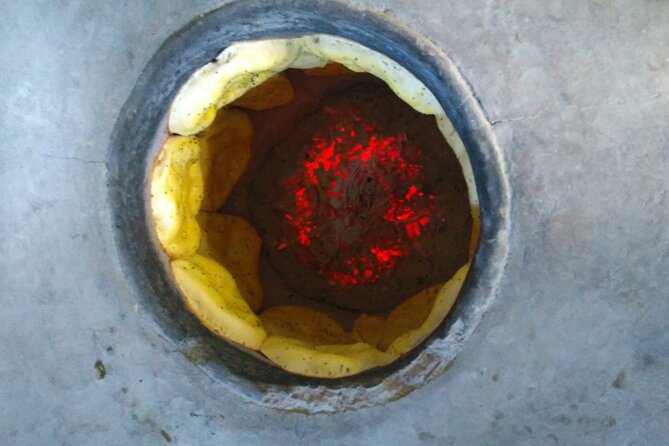
This is the point to consider carefully. Some sessions are genuinely active. You may help prepare several dishes, learn recipes step by step, and take part in the full process. One family even helped place bread in a tandoor oven, which became a memorable activity for the children.
Other sessions are more collaborative than instructional. A host may prepare a large pot of each dish while you cut vegetables, stir occasionally, or assist with smaller tasks. Ingredients may be partly cooked before the group arrives.
You should book this class if you want to cook with local people and learn through conversation. You should look elsewhere if your main goal is a formal lesson with printed recipes, individual burners, exact measurements, and one dish completed entirely by you.
The good news is that the small group makes questions easier. If you want to learn a technique, ask at the moment it comes up. The guide or interpreter can help turn a quick task into an explanation of ingredients, timing, and serving customs.
Children can take part, and one family found that involving the children in preparation made them more willing to try unfamiliar food. Children must be accompanied by an adult, and parents should be ready for a relaxed home meal rather than a tightly managed kids’ program.
The meal is part of the lesson
After cooking, you sit down to eat the food you helped prepare. Three courses of lunch or dinner are included, along with water, black tea, or coffee.
This shared meal is where the class earns much of its value. You can taste the food immediately, compare the raw ingredients with the finished dishes, and continue talking with the host. Several sessions became long social evenings, with conversation, laughter, and, in one case, dancing in the kitchen.
Alcohol is not included. A group may have local wine if it arranges or purchases it separately, but you should not assume that wine will be provided. Soda and other soft drinks are also excluded.
The menu can be generous. A group of vegetarians and one person avoiding gluten received accommodations, including gluten-free flour for dessert. Still, you should communicate dietary needs when booking and confirm them again with the operator. The available information shows that accommodations have been possible, but it does not promise that every request can be met at every host venue.
Guide Kadir and the value of translation
Kadir is the guide name most closely associated with this experience. He has handled hotel pickup, accompanied groups to the shops, translated between visitors and hosts, and added background on Turkey and Cappadocia.
That role is more important than it might sound. A home cook may be warm and skilled but not speak English. Without an interpreter, the meal could become a pleasant but limited exchange. With one available throughout the class, you can ask about family customs, ingredients, cooking methods, and local life.
The guide also helps with logistics. One group reported that its driver got lost on the way to the class. That appears to have been an isolated transportation problem, but it is a useful reminder to allow patience around pickup and transfers, especially when visiting a private home rather than a clearly marked restaurant.
Pickup is offered from hotels in Goreme, Avanos, Uchisar, Ortahisar, Cavusin, Urgup, Mustafapasa, Ayvali, and Nevsehir. That wide coverage saves you from arranging a taxi, and drop-off is included afterward.
How much value do you get for $176.61?
At $176.61 per person, this is not a cheap meal or a basic group food lesson. The price makes sense only if you value the full package: hotel transport, a local shopping stop, an interpreter, a small group, several courses, and time with a host.
You are also paying for access that is difficult to arrange on your own. Finding a local home cook, arranging transport between towns, explaining dietary needs, and translating a conversation would take effort. The operator puts those pieces together.
The value is strongest for couples, families, and small groups who want a personal cultural activity. One booking became a private class, which can make the price easier to justify if you want focused attention. For a solo visitor, the cost is harder to compare with a normal restaurant meal, but the social and cultural side may still make it worthwhile.
I would not choose this class simply to save money on lunch or dinner. You will likely spend four hours with the activity, and some sessions last five to six hours. Choose it because you want the connection, the conversation, and the chance to see how food is made in a local setting.
Who should book this Cappadocia cooking class?
This class suits you best if you enjoy food but do not need a polished culinary school format. It is especially good for:
- Couples seeking a quieter alternative to sightseeing
- Families who want children involved in a practical activity
- Small groups interested in Turkish home life
- Vegetarians or people with food restrictions who can discuss needs in advance
- Visitors who value conversation as much as instruction
- Anyone tired of eating only in tourist-oriented restaurants
It may not suit you if you need a fixed menu, a guaranteed professional chef, or a strict four-hour schedule. The host and venue can vary, and the amount of cooking can range from very hands-on to simple assistance.
The experience is also a good break during hot weather. One group used it as a cool, social pause from the afternoon sun in July. The afternoon dinner option begins around 4 PM, while the morning lunch option begins around 10 AM.
Booking, cancellation, and practical details
Confirmation is provided at booking, and the activity is offered in English with a local interpreter. The maximum group size is six, and mobile tickets are accepted.
Free cancellation is available if you cancel at least 24 hours before the local start time. Changes or cancellations made inside that window are not accepted for a refund.
The minimum drinking age is 21. Alcohol is not included, and service animals are allowed. Children must remain with an accompanying adult.
Because this is a home-based experience, I would contact the provider before the day if you have serious allergies, mobility concerns, or a strict dietary requirement. The information confirms that some dietary accommodations have been handled successfully, but the host kitchen can change.
Should you book it?
Book this experience if you want a personal evening with Turkish food, a local host, and plenty of conversation. The most valuable part is not mastering a set of recipes. It is seeing how food, hospitality, and family life meet around a real kitchen table.
At $176.61, the class is expensive compared with an ordinary Cappadocian meal. It is a fairer deal when you count the transport, shopping trip, interpreter, small group, cooking time, and three-course meal. Just keep your expectations flexible: you may cook several dishes from scratch, or you may help with selected steps while the host leads the meal.
For a first visit to Cappadocia, I would book it after your major sightseeing days. It gives you a different view of the region, one based on kitchens and conversation rather than rock formations and viewpoints.
FAQ
How long does the Cappadocia cooking class last?
The stated duration is approximately four hours. Some sessions may last five to six hours, especially when the group spends extra time cooking and talking with the host.
What time does the class begin?
The lunch session begins with hotel pickup at about 10 AM. The dinner session begins with pickup at about 4 PM.
Is hotel pickup included?
Yes. Pickup and drop-off are included for hotels in Goreme, Avanos, Uchisar, Ortahisar, Cavusin, Urgup, Mustafapasa, Ayvali, and Nevsehir.
How many people can join the class?
The maximum group size is six people. Some bookings may operate as private classes if no other participants are scheduled.
What food is included?
Three courses of lunch or dinner are included. Possible dishes include salads, stuffed grape leaves, vegetable or meat stews, Turkish ravioli, yogurt soup, rice, and a Cappadocian flour and grape molasses dessert. The exact menu can vary.
Are drinks included?
Water, black tea, or coffee are included. Alcoholic drinks and soda are not included.
Can children or people with dietary restrictions join?
Children may join but must be accompanied by an adult. Service animals are allowed. Dietary accommodations have been handled in some sessions, including vegetarian and gluten-free requests, but you should communicate your needs before the class.
Just added around Goreme
- Flexible Private Cappadocia Tour – Explore at Your Own Pace★ 5.0 · 27 reviews
- Sunset ATV Tour in Cappadocia★ 5.0 · 188 reviews
- Private Salt Lake Sunset Tour with Photos & Snacks★ 4.5 · 32 reviews
- Photoshoot Experience in Cappadocia with Flying Dress★ 5.0 · 19 reviews
- Cappadocia: Two Full-Days Private Tour (Driver Guide)★ 5.0 · 51 reviews
- Whirling Dervish show in Cappadocia★ 5.0 · 15 reviews
- Balloon Watching & Sunrise Experience★ 5.0 · 20 reviews
- VIPPrivate Airport Transfer From or To Kayseri & Nevsehir Airport★ 4.5 · 20 reviews
Cappadocia Tours, compared.

Cappadocia Hot Air Balloon Ride / Royal Balloon
Read our review →

Cappadocia Hot Air Balloon Ride/ Turquaz Balloons
Read our review →

Cappadocia Sunrise Hot Air Balloon Flight / Discovery Balloons
Read our review →
Goreme Hot Air Balloon Flight Over Fairychimneys
Read our review →
Green (South) Tour Cappadocia (small group) with lunch and ticket
Read our review →
Cappadocia Hot Air Balloons or Kelebek Flight
Read our review →Browse the lists this tour appears in