
Reviewed · CAPPADOCIA TOURS
Cooking Class at Exclusive Kings Valley
The best part of this Cappadocia cooking class is not simply learning a few Turkish recipes. It is the setting: you shop for produce, walk into the quiet King’s Valley of Kelebek, and prepare lunch with local village women in a cottage-style farm kitchen. The farm visit and the chance to cook beside women who make this food at home give the morning a genuine local feel.
I like two things right away. First, you help choose ingredients rather than arriving at a kitchen with everything already measured. Second, the meal you prepare becomes your lunch, with dishes such as lentil soup, stuffed peppers, chickpeas, salad, and a regional dessert. The main consideration is that the class is offered in English through a guide or translator, while the women cooking with you may speak little or no English.
Key points to know
- A 10:30 am hotel pickup takes you from any hotel in Cappadocia to King’s Valley.
- The ingredient shopping is part of the experience, with produce collected from a local organic farm or nearby vendors.
- Village women lead the cooking, giving you a close look at everyday Turkish food traditions.
- Lunch is made by the group, not served as a separate restaurant meal.
- The outdoor patio kitchen is weather dependent, with indoor cooking available if conditions are poor.
- The group is kept small, advertised for up to 10 participants, with additional information allowing a maximum of 12.
From your Cappadocia hotel to King’s Valley
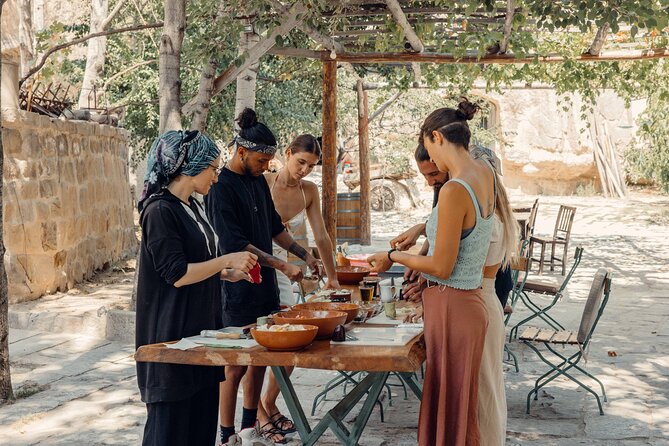
The morning begins with pickup at your hotel at about 10:30 am. The service covers hotels anywhere in Cappadocia, which is useful if you are staying in Goreme, Uçhisar, or another nearby base and do not want to arrange a taxi.
You then drive to King’s Valley of Kelebek. This is not a class in a standard commercial kitchen. The setting is a quieter valley property with an organic farm, animals, a cottage, and an outdoor patio dining area. One participant described the views toward Uçhisar Castle, while another enjoyed walking around the property and seeing the farm animals as the food cooked.
The ride and arrival matter because the class feels tied to its place. You are not just being shown how to make generic Turkish food in a city kitchen. You are preparing a meal in the sort of rural setting that gives the ingredients and recipes their context.
The property may require a short walk down into the valley. Wear comfortable clothes and shoes, as recommended by the operator. This is a practical point, especially if you have spent the morning in stiff sightseeing clothes or dress shoes.
More cooking classes in Goreme:
- Cappadocia Cooking Class
★ 5.0 · 29 reviews - Private Turkish Cuisine Cooking Class with Local Moms
★ 5.0 · 114 reviews - Traditional Home Cooking with a Local in İstanbul City Center
★ 5.0 · 82 reviews
Choosing produce before the cooking begins
The ingredient stop is one of the class’s strongest features. Instead of beginning with a prepared workstation, you help collect or buy the produce needed for the meal. The exact source can vary, with descriptions referring to a local organic farmer’s market, organic farm, or local vendors.
That small step changes the pace of the morning. You can see what is available locally, ask about ingredients through your guide, and understand that Turkish home cooking often starts with simple vegetables, legumes, herbs, yogurt, and grains. The activity is less about fancy technique and more about knowing how to turn everyday produce into a generous meal.
A farm visit can also bring small surprises. On one occasion, bread was being made on the property, offering a glimpse of traditional food preparation beyond the scheduled menu. Grape molasses production was also part of one visit. These details are not guaranteed, but they show why the farm stop is more than a quick shopping errand.
Do not expect a formal market tour with a long lecture about every ingredient. The information available points to a hands-on shopping stop, guided by the local team. If you want to remember the recipes, take notes as you go. One participant received no printed recipe sheet but was able to write down each step with help from the guide.
Cooking with the village women
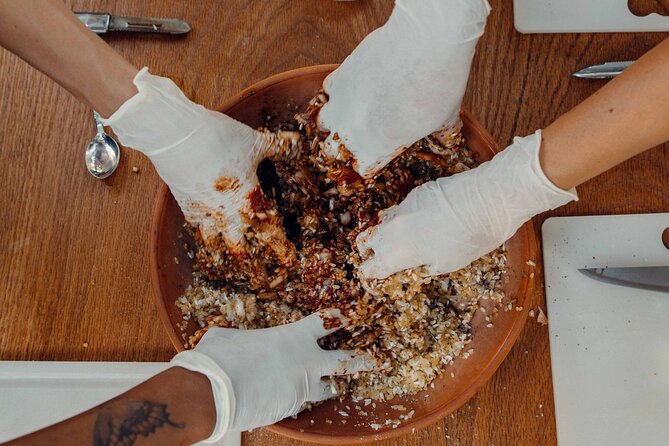
At the cooking area, local village women guide you through the preparation. Their role is central to the experience. They bring practical knowledge of Turkish home cooking, while the English-speaking guide helps explain what is happening.
The language arrangement can be part of the charm, but it also requires patience. One of the cooks did not speak English, yet communicated through gestures, demonstrations, and personality. If you want precise quantities, ask the guide to translate and write them down as you work. Traditional cooks often measure by feel, so the class may teach you technique and judgment rather than a perfectly standardized recipe.
Named guides in past sessions include Kadir, Tuğba, and Seçil. Your guide may be someone else, but these examples help explain how the class works. Kadir was described as helpful during the cooking session, Tuğba led a private class for one participant, and Seçil was praised for her English and humor. The quality of the experience depends partly on the guide’s ability to translate the cooks’ instructions and keep everyone involved.
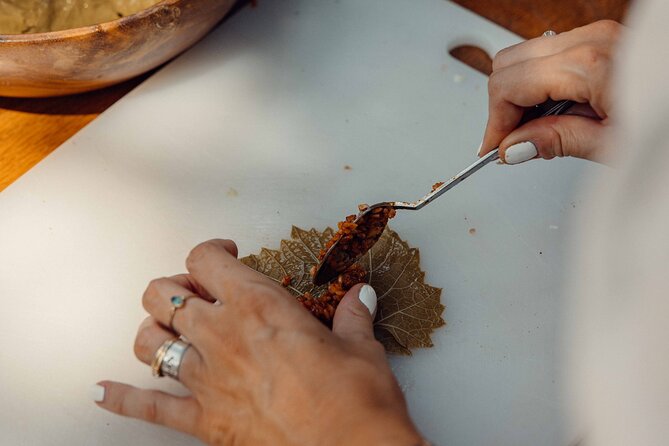
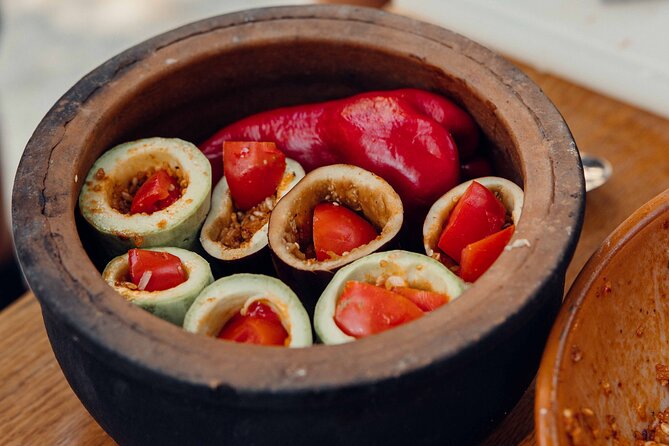
This is a good class for you if you enjoy participating rather than watching. You may chop, mix, fill vegetables, shape or assemble dishes, and follow the cooking process from start to finish. The supplied menu lists stuffed peppers and eggplants, chickpeas, soup, salad, potato salad, and a regional dessert. Some sessions have also included sarma and halva.
The recipes are appealing because they are practical. You are not being asked to master restaurant tricks or unusual equipment. The food is the kind you can try to make at home after returning from Turkey, provided you take notes and clarify the measurements.
What you may eat for lunch
The sample menu begins with soup, either lentil or yogurt soup. Both are familiar parts of Turkish home cooking, and each gives you a useful lesson in balancing texture and seasoning. The exact choice may depend on the day and ingredients available.
Potato salad and a separate salad are also listed. These are simple dishes, but they help round out the meal and show how a Turkish table uses fresh vegetables alongside cooked foods. The main courses include stuffed peppers and eggplants, plus chickpeas.
The dessert is described as Aside, a regional sweet. Past sessions have included halva, so the dessert may vary. Treat the menu as a guide rather than a promise that every listed dish will appear in exactly the same form. Seasonal produce and the cooking plans for that day can affect the final spread.
The meal is the payoff for the work, but it is also a useful test of the class’s value. You are not paying only for a cooking demonstration. You spend several hours shopping, preparing food, learning from local cooks, and then eating what you helped make.
The dining area is an outdoor patio under vines when the weather is pleasant. In poor weather, the class moves indoors. The outdoor setting adds a lot to the experience, particularly after the food has been simmering and you can sit down in the same peaceful property where you cooked.
A glass of wine was included during one session while the food was cooking. Since this detail is not presented as a fixed inclusion, do not book the class expecting wine unless the operator confirms it.
More hands-on workshops in Goreme:
- Cappadocia Pottery Workshop Class
★ 5.0 · 191 reviews - Cappadocia: Turkish Mosaic Lamp Workshop in Göreme – All Included
★ 5.0 · 139 reviews - Sand-Brewed Turkish Coffee Workshop in Cappadocia
★ 5.0 · 64 reviews - Private Red Tour with Pottery Workshop in Cappadocia
★ 5.0 · 17 reviews
Why the small group matters
The class is promoted as an intimate experience with a limit of 10 participants. The additional information gives a maximum of 12, so you should confirm the final group size when booking if this matters to you.
Either way, this is much smaller than a large coach-based food tour. A small group gives you more room to ask questions, handle ingredients, and work directly with the cooking team. It also makes translation easier. When a local cook is demonstrating how to fill a pepper or prepare a dish by hand, a crowded room would make the lesson less useful.
The small format can also produce a private class. One participant ended up alone and received a personal lesson with Tuğba and the cooks. That cannot be guaranteed, but the possibility is worth noting if you are booking outside the busiest period.
There is a tradeoff. A quiet, small class may not offer the polished choreography of a professional culinary school. The women may teach through demonstration, gestures, and informal conversation. I see that as a strength for an authentic home-cooking experience, but you should choose a different class if you want printed recipes, formal instruction, or advanced culinary training.
Four hours that feel different from a standard food tour
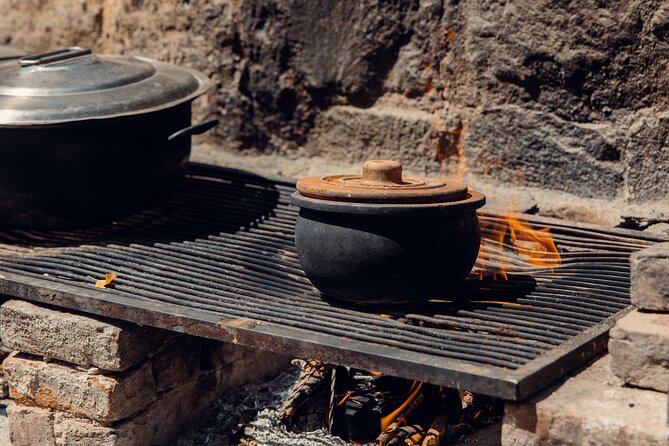
The activity lasts about four hours. That gives you enough time for pickup, the farm or market stop, the walk into the valley, preparation, cooking, and lunch without turning the day into a full-day commitment.
The timing works well as a break from Cappadocia’s major sights. You can schedule it on a day when you want something slower than cave churches, viewpoints, and busy town streets. The valley setting is quiet, and the cooking gives the morning a clear focus.
Still, plan for an unhurried pace. This is not a quick lunch stop where you watch one dish being made and leave. Shopping and preparation take time, and the food must cook before you eat it. The four-hour estimate is approximate, so avoid arranging a tightly timed afternoon activity immediately afterward.
The walk down into the valley is another reason to allow flexibility. Comfortable footwear is specifically recommended, and the property setting may be less convenient for anyone who has difficulty walking on uneven ground. The supplied information does not give accessibility details, so ask Kelebek Travel before booking if that is important for you.
Is $129.31 a fair price?
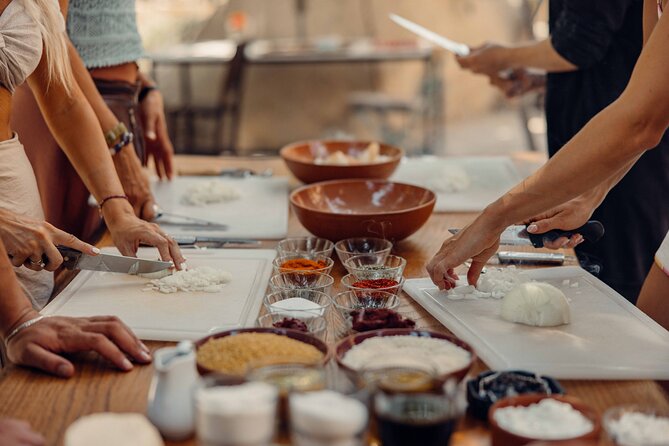
At $129.31 per person, this is not a budget lunch. The value comes from the whole package: hotel pickup, transportation to King’s Valley, ingredient shopping, instruction, the setting, and the meal you prepare.
I would compare it with the cost of a high-quality meal plus a separate guided food activity. Here, you get the meal and the lesson in one outing, along with access to a private-feeling farm property and local cooks. For someone who values food, culture, and personal contact, the price can make sense.
The value is weaker if you mainly want to eat Turkish food. Cappadocia has restaurants where you can enjoy local dishes without spending four hours cooking. This class earns its price through participation and setting, not through the number of courses alone.
The high rating, 4.9 from 54 ratings, and 98 percent recommendation rate point to a consistently well-liked experience. I would still read the details carefully: the class is informal, the menu can vary, recipe notes are not guaranteed, and the English translation may depend on the guide.
Who should book this cooking class?
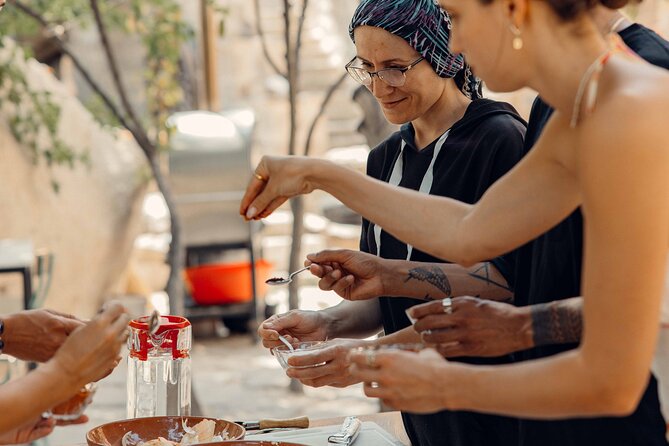
I would recommend it most strongly to:
- Couples looking for a relaxed half-day activity, especially for a honeymoon or special trip
- Food lovers who want to learn Turkish dishes they can attempt at home
- Visitors who prefer a small group and local contact over a large sightseeing program
- Families or friends who enjoy working together and eating a shared meal
- People who want a quiet Cappadocia experience away from the busiest town areas
It may be less suitable if you dislike walking, need a fully accessible venue, want exact written recipes, or prefer a fast, highly structured class. It is also not the best pick if you are looking for advanced chef training. The focus is on village-style dishes, simple ingredients, and the pleasure of cooking with local people.
The class is offered in English, but the cooks themselves may not speak English. A guide or translator helps bridge that gap. You will get the most from the session if you are comfortable with demonstrations, basic questions, and a little flexibility.
Book ahead if your schedule is fixed. The experience is booked an average of 63 days in advance, and confirmation arrives within 48 hours, subject to availability. You can cancel for a full refund up to 24 hours before the start time. A cancellation made later than that is not refundable, and changes made within 24 hours are not accepted.
My verdict on the King’s Valley kitchen
I like this class because it connects the meal to the place where the food is grown and prepared. You shop for ingredients, cook beside local women, eat in a cottage-style farm setting, and leave with dishes you may be able to recreate at home.
The strongest moments are likely to be the informal ones: a guide translating a cook’s instructions, fresh produce chosen at the farm, bread being made nearby, or a pause with a drink while the food cooks. Those details cannot be promised on every date, but the format allows them to happen.
Book it if you want a personal, food-centered morning and are happy with an informal teaching style. Skip it if you only want a restaurant meal or need a rigid menu and printed recipes. For most visitors who enjoy hands-on cooking, the price is justified by the setting, the local connection, and the lunch you make yourself.
FAQ
Where does the cooking class take place?
The class takes place in King’s Valley of Kelebek near Goreme, Cappadocia.
Is hotel pickup included?
Yes. Pickup is offered from any hotel in Cappadocia.
What time does the experience begin?
The scheduled start time is 10:30 am.
How long does the activity last?
The cooking class lasts approximately four hours.
Is the activity offered in English?
Yes. The experience is offered in English, with a guide or translator helping communicate with the local cooks.
What food will be prepared?
The sample menu includes lentil or yogurt soup, potato salad, salad, stuffed peppers and eggplants, chickpeas, and a regional dessert called Aside. Past sessions have also included sarma and halva.
How many people can join?
The experience is described as having a limit of 10 participants. Additional information gives a maximum of 12 travelers, so confirm the final group size if this is important to you.
Should I wear special clothing?
Comfortable clothes and shoes are recommended, particularly because the experience includes a possible walk down into the valley and time on a farm property.
Can I cancel for a full refund?
Yes. You can cancel at least 24 hours before the local start time for a full refund. Cancellations or changes made less than 24 hours before the experience are not accepted for a refund.
Just added around Goreme
- Flexible Private Cappadocia Tour – Explore at Your Own Pace★ 5.0 · 27 reviews
- Photoshoot Experience in Cappadocia with Flying Dress★ 5.0 · 19 reviews
- Sunset ATV Tour in Cappadocia★ 5.0 · 188 reviews
- Private Salt Lake Sunset Tour with Photos & Snacks★ 4.5 · 32 reviews
- Cappadocia: Two Full-Days Private Tour (Driver Guide)★ 5.0 · 51 reviews
- Whirling Dervish show in Cappadocia★ 5.0 · 15 reviews
- Balloon Watching & Sunrise Experience★ 5.0 · 20 reviews
- VIPPrivate Airport Transfer From or To Kayseri & Nevsehir Airport★ 4.5 · 20 reviews
Cappadocia Tours, compared.

Cappadocia Hot Air Balloon Ride / Royal Balloon
Read our review →

Cappadocia Hot Air Balloon Ride/ Turquaz Balloons
Read our review →

Cappadocia Sunrise Hot Air Balloon Flight / Discovery Balloons
Read our review →
Goreme Hot Air Balloon Flight Over Fairychimneys
Read our review →
Green (South) Tour Cappadocia (small group) with lunch and ticket
Read our review →
Cappadocia Hot Air Balloons or Kelebek Flight
Read our review →Browse the lists this tour appears in