
Reviewed · CAPPADOCIA TOURS
Avanos: Pottery Workshop with Clay Making Experience
Avanos pottery is not a staged souvenir trick. It is a living local craft tied to the Kızılırmak River clay and passed through Avanos families since the Hittite period. In this 1.5-hour workshop, a master potter guides your hands as you turn a lump of clay into a bowl, cup, vase, or other small form.
I like two things here: you get to make something yourself, and the history comes with the activity rather than being tacked on afterward. Guides such as Alper explain the tradition and finished designs, while masters including Baran and Adil patiently help beginners. The main drawback is that your piece is unfired, so it is a fragile souvenir and may need considerable drying time before it can travel safely.
Key points to know before you book
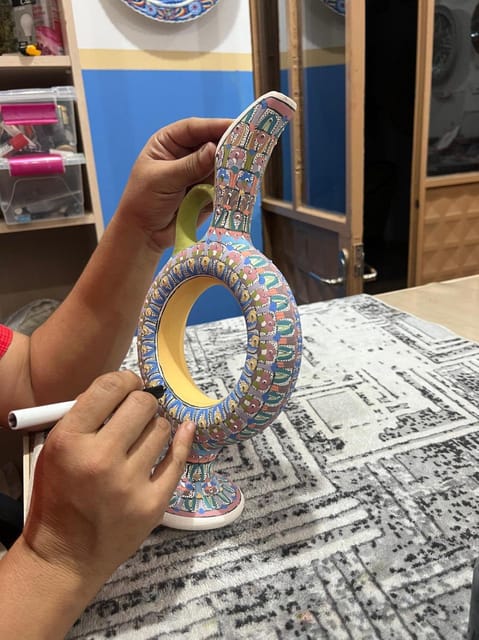
- Avanos is the right setting: This town is one of Central Anatolia’s key pottery centers, with a clay tradition reaching back to the Hittite period.
- You work at the wheel: After a demonstration, you get practical help shaping your own clay instead of only watching a professional.
- Beginners are welcome: Masters guide your hands and correct the clay as you work, so artistic skill is not required.
- You may make several pieces: Depending on the session, participants have made two or three objects each, including bowls, cups, plates, vases, and small pots.
- The souvenir is unfired: You keep the form you create, but it is not glazed or kiln-fired as part of this short visit.
- Transport and drinks are included: Pickup and drop-off cover Göreme, Ürgüp, Uçhisar, Avanos, and Çavuşin, with tea, apple tea, coffee, soda, or water available.
Why Avanos pottery feels more meaningful here
Avanos is more than a convenient workshop stop in Cappadocia. Its pottery tradition is linked to local clay and to generations of craftspeople who learned the trade from family and community. That gives the activity a useful sense of place: you are not simply trying a craft that could happen anywhere.
The exact historical explanation depends on your guide, but the central point is clear. Pottery making in Avanos reaches back to the Hittite era, and local makers have carried the methods forward. Guides such as Alper have explained the background of the clay, the historical periods connected with pottery, and the meanings of certain decorative designs.
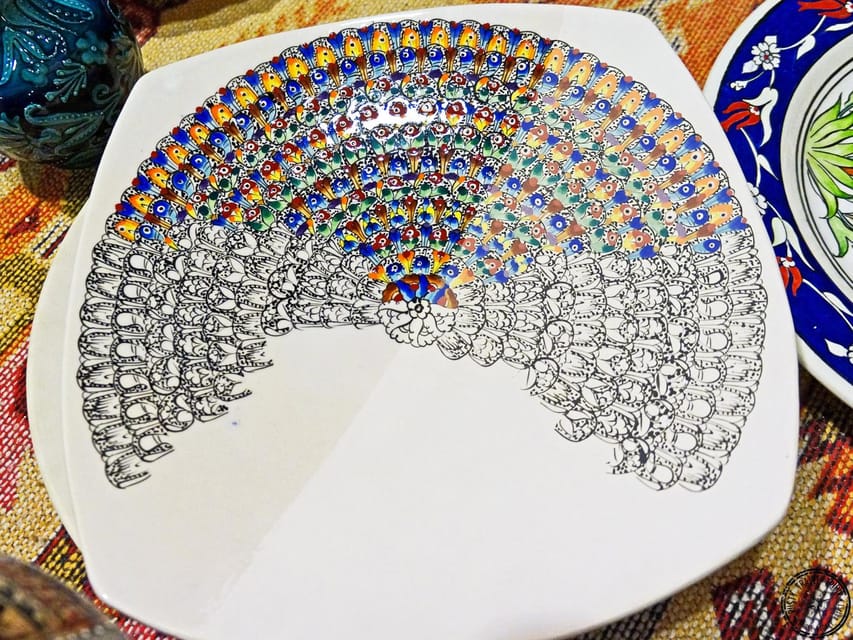
I value that context because it changes the way you look at the shop afterward. A painted plate is no longer just a colorful object on a shelf. You have seen how a shapeless piece of clay becomes a vessel, and you have heard why some patterns and forms matter.
This is still a short commercial workshop, not a full apprenticeship. You will not learn every stage of Turkish ceramic production in 90 minutes. But you get a clear introduction, a working demonstration, time at the wheel, and a look at finished pieces. For many people, that is enough to make the craft memorable.
More hands-on workshops in Cappadocia:
- Cappadocia: Sand-Brewed Turkish Coffee Workshop
★ 4.9 · 745 reviews - Cappadocia: Authentic Pottery Workshop Experience
★ 4.6 · 75 reviews - Istanbul:Original Turkish Mosaic Lamp Workshop w/ Snacks
★ 4.9 · 3,077 reviews
The 15-minute ride from your hotel
The experience begins with pickup in a van. The available pickup areas are Ürgüp, Göreme, Uçhisar, Avanos, and Çavuşin, followed by a ride of about 15 minutes to the workshop in Avanos.
That short transfer is useful if you are staying in Göreme or another nearby Cappadocia base. You do not need to arrange a taxi or work out local transport, and the return ride is included. The same five areas are available for drop-off.
The transfer also keeps the activity easy to fit into a busy Cappadocia schedule. You can place it between sightseeing stops, use it as a rainy-day plan, or book it for a quieter final day. One particularly practical use is as an indoor alternative when weather disrupts outdoor plans.
Private-group arrangements make the session feel more personal than a large class. The group size can affect how much time you get at the wheel, so a small booking is especially appealing for couples, families, or solo visitors. A solo participant may have a very focused session, while two people can work together and compare their shapes.
Pickup times vary, so you need to check the available start time when booking. The activity lasts about 1.5 hours in total, including the rides, which leaves roughly an hour at the workshop itself.
Inside the one-hour workshop
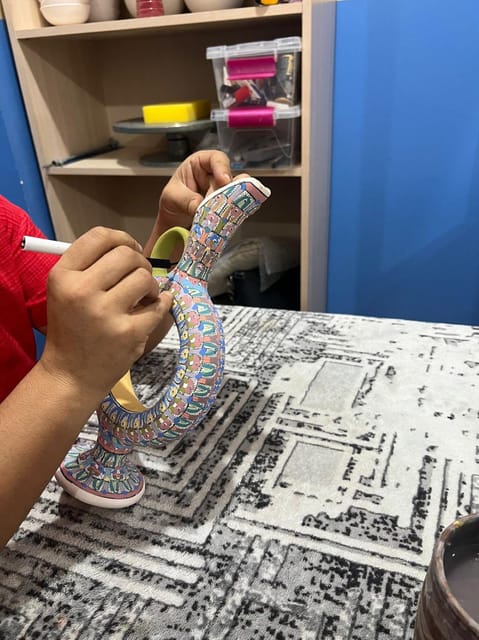
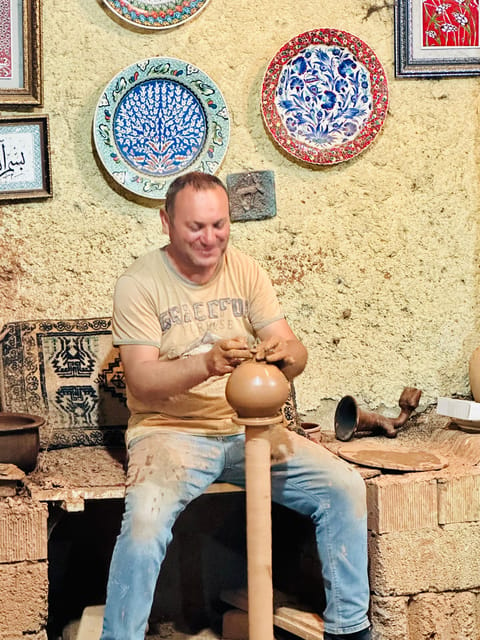
The workshop portion begins with an introduction to the craft and a demonstration by a local master. This is your chance to watch the whole basic process before you touch the clay.
The demonstration matters. Pottery looks easy when an experienced hand is controlling the wheel, but clay can collapse quickly if you press too hard or lose the center. A master shows you the rhythm of wetting, centering, opening, and shaping the clay. You then try to repeat those movements with help close at hand.
Several instructors are named in the activity’s recent feedback, including Baran, Adil, and a young master described as 17 years old with nine years of pottery experience. That detail gives you a good sense of how early the craft can begin in Avanos. Age is less important than the practical point: these makers have spent years learning how clay responds.
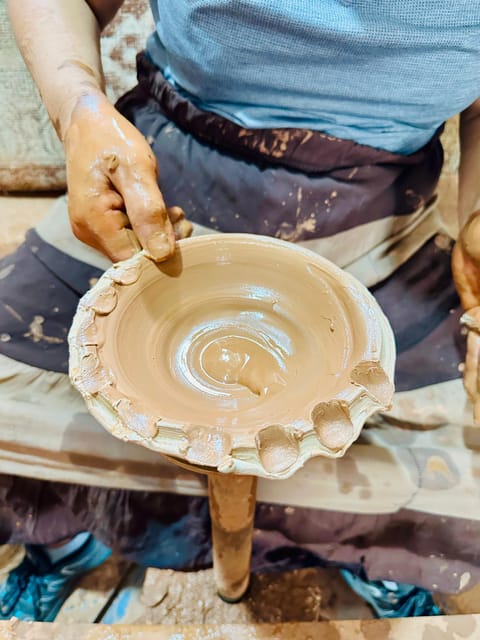
You may produce more than one object. People have made bowls, cups, vases, plates, and decorative pots, with some sessions producing two pieces per person and others producing three. The exact number is not guaranteed, but you should expect an active session rather than one rushed turn.
Your master will help shape the clay, and the guidance is direct. If a wall becomes too thin or the form begins to wobble, the instructor can steady it or show you how to correct it. This is why I would not worry about having no artistic background. You are making a genuine attempt, but you are not left alone to fail at the wheel.
That help does not remove the challenge. A first attempt may still look uneven, and the clay may not obey you immediately. In fact, that is part of the fun. You feel the difference between simply admiring a handmade bowl and trying to create one.
Alper, Baran, and the people who shape the experience
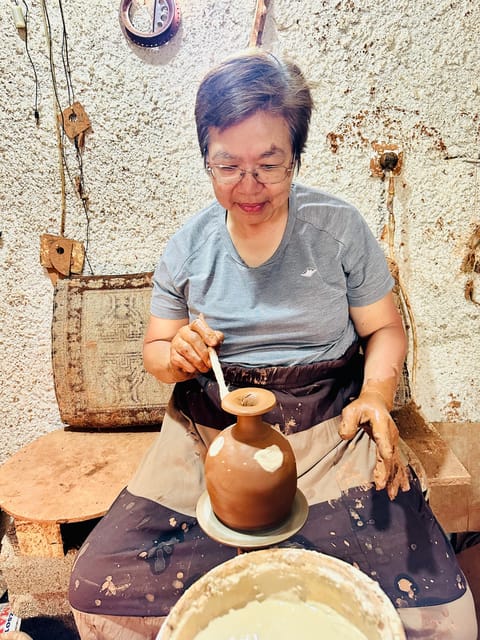
The workshop uses different staff members for different parts of the visit. Guides such as Alper often handle the welcome, historical explanation, shop visit, and general questions. The pottery master then focuses on the hands-on work.
Alper is repeatedly singled out for being attentive, friendly, and clear when explaining the history of the objects. Baran is praised for patience and practical instruction, while Adil is also mentioned as a skilled workshop master. Kerim and Mehmet have helped with explanations and the display area as well.
You may not meet every named person. Staff assignments can change, but the pattern is useful: expect a guide who talks you through the setting and a master who works beside you at the wheel.
Language support is available in English, Russian, and Turkish. The quality of a craft lesson depends partly on clear instructions, so this is an important inclusion. If you need a step repeated, ask. The activity is designed for hands-on learning, not silent observation.
Drinks are also served during the visit. Depending on what is available, you may be offered tea, apple tea, coffee, soda, or water. This is a small touch, but it helps the workshop feel relaxed rather than hurried.
More Cappadocia valleys and villages:
- Cappadocia Hot Air Balloon Ride / Royal Balloon
★ 5.0 · 6,829 reviews - Cappadocia: Goreme Hot Air Balloon Flight at Sunrise
★ 5.0 · 4,924 reviews - Cappadocia Hot Air Balloon Ride/ Turquaz Balloons
★ 5.0 · 3,330 reviews - Cappadocia Sunset ATV Tour
★ 5.0 · 2,984 reviews
The shop and the finished pottery display
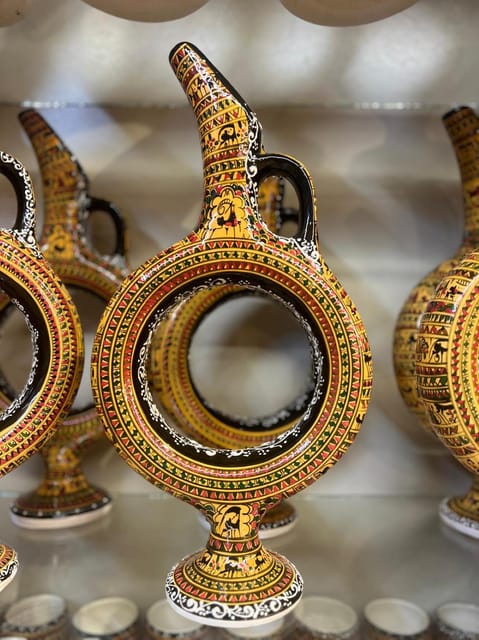
After your own attempt, you see finished pottery made by the masters. This display gives you a useful comparison. Your object may have a charming tilt, while the professional pieces show the control, balance, painting, and finishing that come from years of work.
The shop can be large, with ceramic plates, bowls, vessels, and decorative pieces on display. Guides may explain the materials, firing process, glaze, historical periods, and symbolic designs connected with some objects.
I like this part best when treated as a lesson rather than a sales stop. You can see what the clay becomes after proper drying, firing, and decoration. It also helps you decide if you want to buy a finished souvenir instead of carrying your own fragile beginner piece.
Purchasing is optional. The activity includes a look at the collection, and some participants have bought additional pottery, but you should not feel that buying is required to make the workshop worthwhile. If you do shop, the finished ceramics are likely to be more practical for daily use than the small unfired object you make during class.
What happens to your handmade piece
You keep the clay creation you make. It is placed in a box so you can protect it for a while, but you need to understand exactly what that means.
The workshop information says the pieces are not fired, because drying and firing can take at least 20 days. Some people have been able to take their objects away after allowing them to dry for one or two days, but that does not turn them into finished, kiln-fired pottery. Treat the piece as a fragile clay souvenir.
This is the biggest practical limitation. If you are leaving Cappadocia the next morning, you may not have enough time to collect or safely pack the item. One participant who left the following day chose not to take the pottery, and that is a sensible decision if your luggage is already full or your route is long.
Ask the workshop team about the current drying and collection instructions before you leave. Do not pack the piece tightly while it is still damp. A box offers protection, but it does not make unfired clay strong.
If taking your own piece home matters to you, schedule the workshop earlier in your Cappadocia stay. That gives you more time to let it dry and sort out transport. If your visit is short, enjoy the making process and consider buying a finished item instead.
Is $22 a good value?
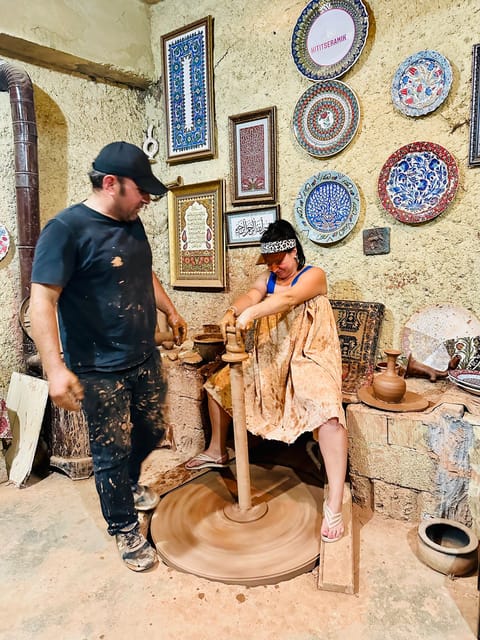
At $22 per person, this is a strong-value short activity. The price covers the pottery demonstration, instruction at the wheel, your own clay creation, the display of finished pottery, drinks, and pickup and drop-off within the listed Cappadocia towns.
The transport matters more than it might first appear. A lower-priced workshop without transfers could require a separate taxi, especially if you are staying in Göreme and the class is in Avanos. Here, the ride is built into a compact experience.
You also get more than a basic craft lesson. The history, demonstration, and finished collection give the activity cultural context. It is still not a full ceramic course, and you should not expect your clay piece to be glazed and fired for you, but the price is fair for an introductory session.
The value is best for people who want an activity that is social, creative, and easy to fit into a half-day plan. It is less valuable if your only goal is to bring home a finished, durable vase. In that case, you may prefer to spend your money on a professional piece in the shop.
Who should book this Avanos activity?
I would recommend it to couples, families with older children, art lovers, and solo visitors who want a break from Cappadocia’s viewpoints and outdoor stops. The private-group format is especially appealing if you want personal help or prefer not to perform in front of a large class.
It also suits beginners. You do not need to arrive with drawing or pottery skills. The master works with you, and the instruction is practical enough to help beginners make recognizable forms.
This is a good rainy-day choice because the main activity takes place indoors. It also works well on a departure day if your schedule allows enough time for pickup, the workshop, and return transport.
I would think twice if you have very limited luggage space, cannot protect a fragile object, or want a polished ceramic souvenir immediately. You should also wear clothes that can get dirty. Clay is part of the experience, and trying to stay spotless will only make you tense.
Wheelchair access is listed, which is useful for visitors who need an accessible activity. Since individual needs differ, confirm the arrangements when you reserve.
Booking flexibility and useful planning details
You can cancel up to 24 hours ahead for a full refund, and reserve now while paying later. That flexibility helps if you are still arranging hot-air balloon rides, weather-sensitive tours, or intercity travel.
The activity is offered with English, Russian, and Turkish host support. Pickup and drop-off are available in Avanos, Göreme, Uçhisar, Ürgüp, and Çavuşin, but you should select the correct location when arranging the booking.
Bring comfortable clothes that you do not mind getting dirty. Closed, practical clothing is more useful than anything delicate, since your hands and sleeves may come into contact with wet clay.
My best planning tip is simple: book it before the end of your Cappadocia stay, not on the final morning. That gives you the best chance of dealing with the unfired piece properly and leaves time to return if the workshop has a separate collection arrangement.
Should you book it?
Yes, if you want a hands-on cultural activity at a sensible price and you understand that your creation is an unfired clay object. The strongest parts are the patient master instruction, the chance to make several forms, the local Avanos setting, and the short included transfer.
I would book this for the experience first and the souvenir second. You may produce a charming bowl or vase, but the real reward is learning how difficult controlled pottery can be and seeing the skill behind the finished ceramics.
If you have only one day in Cappadocia and want the region’s famous outdoor sights, give those priority. If you have a free 1.5 hours, need an indoor plan, or want a calmer activity after busy sightseeing, this workshop makes an excellent addition.
FAQ
How long does the Avanos pottery workshop last?
The full activity lasts about 1.5 hours. The itinerary includes roughly 15 minutes by van to Avanos, about one hour at the workshop, and roughly 15 minutes for the return ride.
Where can I be picked up and dropped off?
Pickup and drop-off are available in Ürgüp, Göreme, Uçhisar, Avanos, and Çavuşin.
Do I need pottery experience?
No. The master instructor demonstrates the process and helps you shape the clay. Comfortable clothes that can get dirty are recommended.
Can I keep the pottery I make?
Yes. You receive your own clay creation in a box. The piece is unfired, however, and the drying and firing process can take at least 20 days. Some participants have taken pieces after one or two days of drying, but you should treat them as fragile.
What languages are available?
Host or greeter support is available in English, Russian, and Turkish.
Are drinks included?
Yes. Drinks may include soda, tea, apple tea, coffee, or water.
Just added around Cappadocia
- Cappadocia: Scenic Valley Tour in a Jeep★ 4.9 · 206 reviews
- Istanbul: 8-Day Cappadocia, Ephesus, Konya, Pamukkale Tour★ 4.9 · 18 reviews
- Cappadocia: Hot Air Balloon Tour★ 4.6 · 35 reviews
- Hot Air Balloon and Best of Cappadocia Region Tour★ 4.8 · 26 reviews
- Cappadocia : Horseback riding with fantastic view★ 5.0 · 36 reviews
- LET’S GO HİKİNG TO DİSCOVER CAPPADOCİA..★ 5.0 · 70 reviews
- Horse Riding in Cappadocia★ 4.8 · 48 reviews
- Green Tour Cappadocia (small group) with lunch and ticket★ 4.3 · 27 reviews
Cappadocia Tours, compared.

Cappadocia Hot Air Balloon Ride / Royal Balloon
Read our review →

Cappadocia Hot Air Balloon Ride/ Turquaz Balloons
Read our review →

Cappadocia Sunrise Hot Air Balloon Flight / Discovery Balloons
Read our review →
Goreme Hot Air Balloon Flight Over Fairychimneys
Read our review →
Green (South) Tour Cappadocia (small group) with lunch and ticket
Read our review →
Cappadocia Hot Air Balloons or Kelebek Flight
Read our review →Browse the lists this tour appears in