
Reviewed · IZMIR TOURS
Pamukkale and Hierapolis
Pamukkale is one of Turkey’s strangest and most beautiful sights: a hillside covered in white mineral terraces, shaped by hot spring water over many centuries. This day trip pairs it with Hierapolis, a Roman city spread across the plateau above the pools.
I like two things here. You get both the natural wonder and the ancient ruins in one outing, and the small-group format, capped at 15 people, can feel personal. Guides such as Erman, Mehmet, and Engin have been praised for clear explanations and friendly service. The catch is the road from Izmir. With roughly 3.5 to 4 hours each way, you may spend almost as much time in the vehicle as at the site.
Key points to know before booking
- Pamukkale’s white terraces are the main event: Calcium-rich thermal water formed the pools, cascades, and chalky shelves.
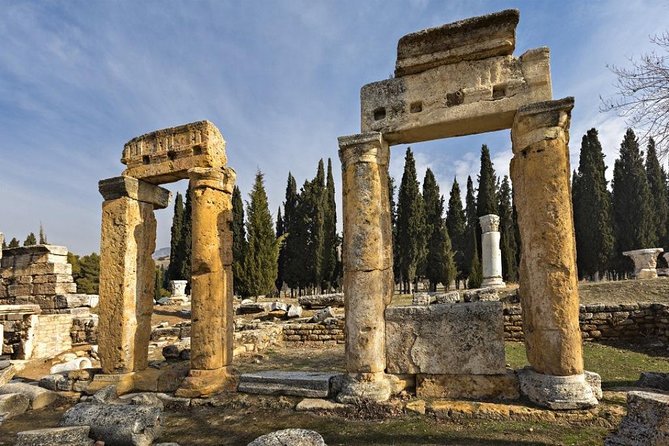
- Hierapolis adds serious Roman history: You’ll see the Theatre, Apollo Temple, Nymphaeum, basilica remains, and a huge Necropolis.
- The day begins early: Pickup starts at 6:30 am from the DoubleTree by Hilton Izmir in Alsancak, with hotel pickup and drop-off offered.
- The drive is long but the destination is unusual: The journey can take about 3.5 to 4 hours each way, so this suits you only if Pamukkale is a priority.
- Bring swimwear if you want a thermal bath: The terraces are shallow, while Cleopatra’s Pool offers deeper, warm water for an extra fee.
- Season matters: Water levels and the look of the terraces can vary, especially in winter.
Why Pamukkale is worth the long road from Izmir
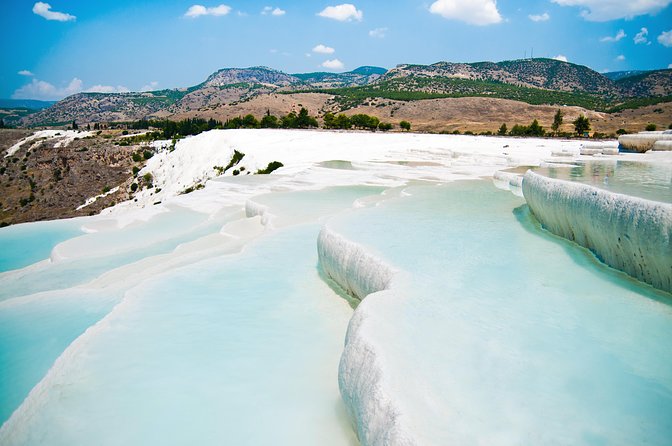
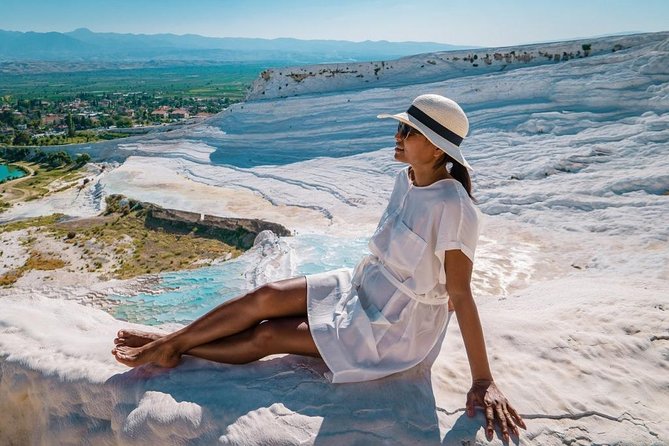
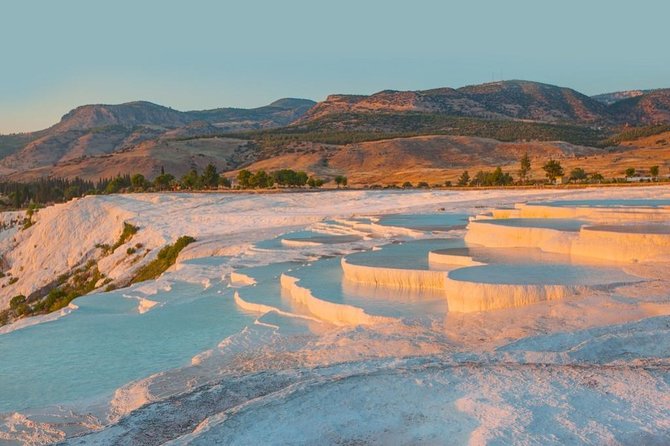
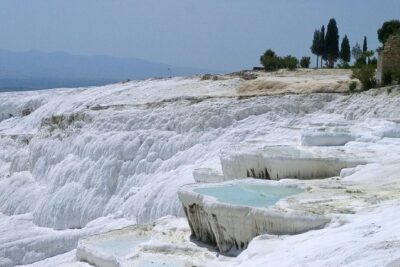
Pamukkale means cotton castle, and the name makes sense once you see the white hillside. Thermal water flows over the slope, leaving calcium deposits behind. Over time, those deposits formed rounded basins, small waterfalls, ridges, and shelves that look almost made of snow.
The effect is unusual rather than simply pretty. You are not looking at ordinary rock. The hillside was built by mineral water, and the bright white surface changes with the amount of water flowing through each section.
Your guide explains how the thermal springs were used from the Roman period onward. The water was valued for its supposed healing qualities, which helped make this high plateau a place for bathing, worship, and settlement.
You’ll have about three hours assigned to Pamukkale within the day’s schedule. That gives you time to walk across the permitted terraces, take photographs, and look back over the surrounding countryside. The exact amount of free time can depend on road delays, opening conditions, and the pace of the group.
The terraces are the reason to make this trip. If you are hoping for a quick stop beside a scenic road, this is not that kind of visit. You need to walk and spend time at the site to understand its scale.
A few more Izmir half-days to weigh up
- Ephesus Tour From Izmir
★ 5.0 · 980 reviews - Pamukkale Tour from Izmir
★ 5.0 · 806 reviews - Ephesus Tour with Virgin Mary From Izmir All Inclusive
★ 5.0 · 478 reviews
What the thermal terraces are really like
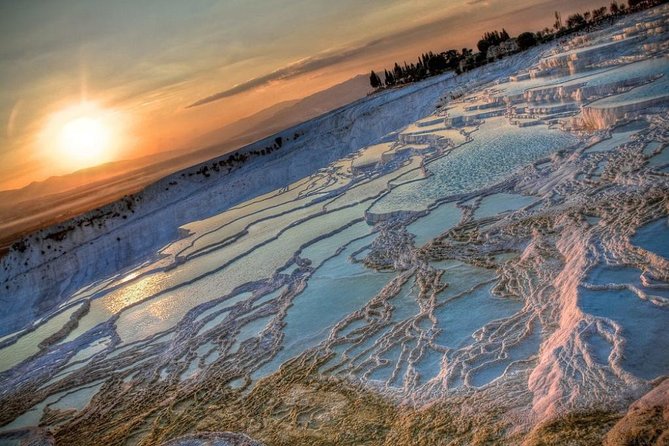
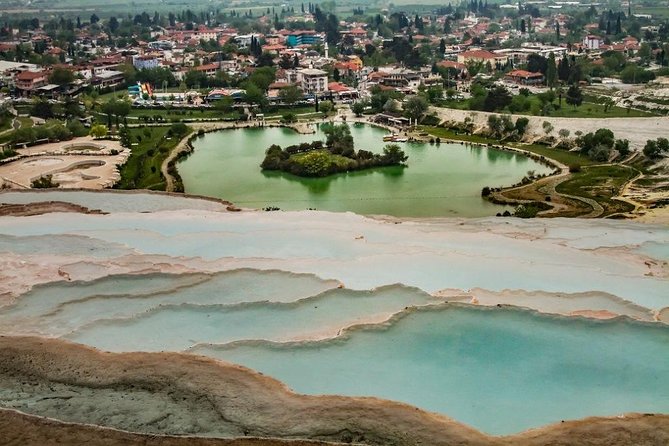
Photographs often show Pamukkale covered with bright pools of blue water. In person, the scene can be more varied. Some basins may hold water, while others may be dry or partly dry. The amount of water can change with the season and site management.
This matters because the experience may not match the most dramatic photographs you have seen. One departure in winter found little water at the terraces, which made the site less impressive for that visitor. If you are choosing between seasons, keep in mind that the appearance of the pools is not fixed.
You’ll also want suitable footwear and a moderate level of fitness. The tour description specifically calls for moderate physical fitness, and you should expect walking over uneven surfaces and a large open archaeological site. Children aged four and under are not recommended, and anyone under 18 must be with an adult.
If you plan to enter the water, bring a swimsuit and a towel. The travertine pools are generally shallow, more suited to wading than swimming. Cleopatra’s Pool, which is available at an extra charge, is deeper and has warm thermal water with submerged Greek and Roman columns.
That paid pool is not included in the tour price, so budget separately if bathing is important to you. I would treat it as an optional extra, not a reason to book the trip. The white terraces and ruins are the core experience.
Hierapolis, a city built above the springs
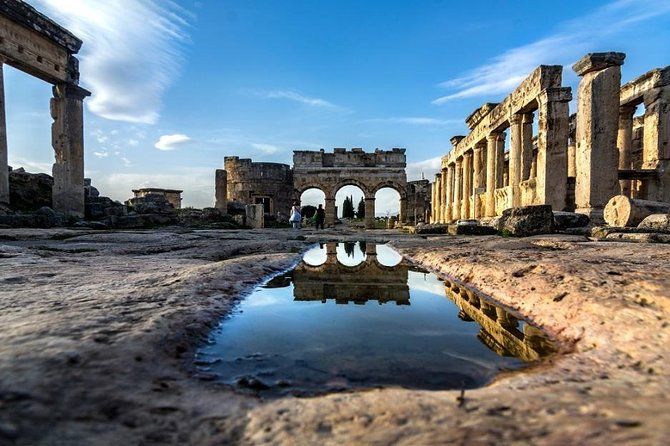
Hierapolis sits on the limestone plateau above Pamukkale. The city was shaped by the same mineral activity that created the terraces below, so the setting is part of its appeal. You are not simply moving from a natural site to a separate archaeological park. The two are physically and historically linked.
The name Hierapolis means sacred city. The city had many temples, and the location drew people who came for worship, bathing, and the thermal waters. Your guide uses the ruins to explain how the settlement developed and why the springs mattered to ancient people.
The site is spread out, so do not expect a compact ruin that can be seen in one quick loop. The itinerary allows about an hour for Hierapolis, with additional time connected to the wider Pamukkale visit. That can feel tight if you want to inspect every structure.
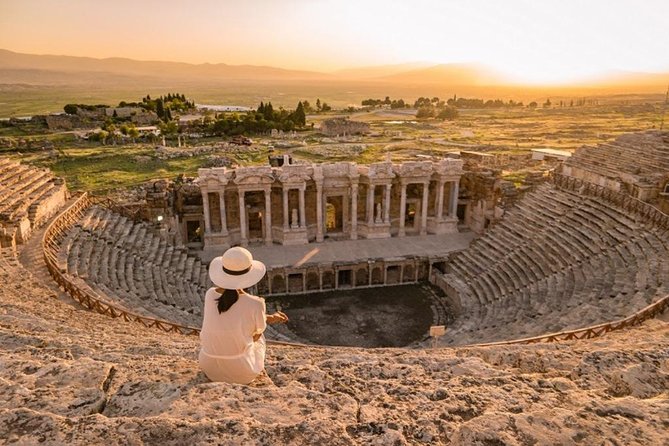
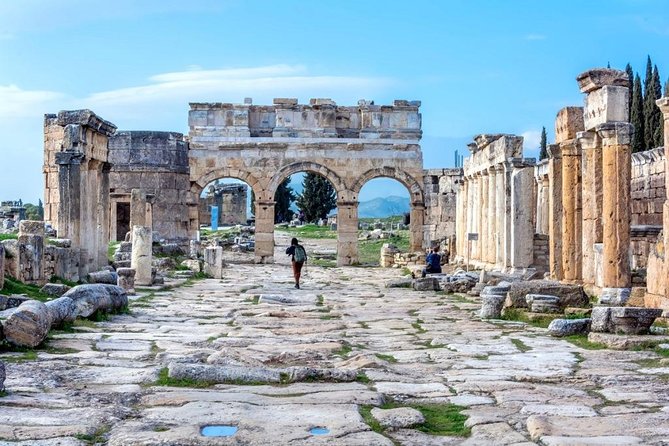
The most important stops include the Theatre, Apollo Temple, Monumental Nymphaeum, fourth-century basilica remains, and Necropolis. The guide’s explanations are valuable here because many of the surviving walls are easier to appreciate once you know their original purpose.
The Theatre, Apollo Temple, and Nymphaeum
The Theatre is one of the major visual highlights at Hierapolis. Its surviving structure gives you a sense of the city’s scale and public life. Look closely at the details rather than rushing through for a photograph, because the building helps connect the scattered stones around you to a working Roman city.
The Apollo Temple brings a religious side to the visit. It once competed in importance with Delphi, according to the tour information, and it helps explain why Hierapolis was known as a sacred city. Your guide can provide the context that makes this stop more than a pile of ancient remains.
The Monumental Nymphaeum is described as a fourth-century basilica in the tour details. It adds another layer to the site, showing how public and religious buildings changed over time. Together, these stops give you a good cross-section of Hierapolis without requiring a full archaeological study.
The exact order may vary. Museum closures or site conditions can also lead to a similar alternative being offered, so do not treat every stop as guaranteed in precisely the same sequence.
More Pamukkale and Hierapolis days:
- From Izmir: Guided Pamukkale Full-Day Tour with Lunch
★ 4.5 · 190 reviews - From Izmir: Pamukkale Guided Tour with Lunch
★ 4.8 · 143 reviews - Full Day Pamukkale and Hierapolis Tour from Izmir
★ 5.0 · 113 reviews - Pamukkale Small Group Tour From Izmir
★ 4.5 · 39 reviews
The Necropolis is the site’s grandest walk
Hierapolis has one of the largest ancient graveyards in Anatolia. The Necropolis stretches across a broad area, with tombs and funerary monuments that show how important the city was as a destination for people seeking the springs.
This is one of the places where the scale of the site becomes clear. A single temple or theatre can impress you, but the Necropolis shows how many people lived, died, and were buried near Hierapolis over the centuries.
Allow yourself time to look beyond the most obvious central ruins. The Necropolis is not just a quick photo stop, and its open setting can make the walk feel longer than expected. Comfortable shoes, water, and sun protection will help.
If your departure runs late, this is also the section most at risk of being shortened. One past outing arrived after 1 pm during a holiday period and left too little time for the full site. An early start is therefore more than a scheduling detail. It protects your time at Hierapolis.
The long drive and what it means for your day
The tour is advertised as about nine hours, but the road is the key factor. Past departures have taken around 3.5 to 4 hours each way from Izmir. That is a substantial portion of the day, even with an air-conditioned coach or minibus.
The transport is included, as are hotel pickup and drop-off. The vehicle is air-conditioned, and some small departures have used newer, comfortable vans. A group of up to 15 people is much easier to manage than a full-size coach, though the vehicle type can vary.
The early start is 6:30 am at the DoubleTree by Hilton Izmir in Alsancak. Central hotel pickup is offered, but confirm the exact pickup time carefully. One past departure had confusion around the time printed on the voucher, so you should check the details before bed and be ready early.
The guide may not be with you from the first minute of the drive. On one past arrangement, the driver collected the group and the guide joined about an hour later. That means the opening part of the journey may be quiet, and the amount of commentary on the road can vary.
This is not necessarily a problem. Some people prefer a peaceful morning ride. If you want a running explanation of every town and view along the way, ask about the guide’s schedule before departure.
How good is the guiding?
The guide can make a real difference at Hierapolis. The ruins are spread out, and names such as Nymphaeum or Necropolis do not explain themselves. A good English-speaking local guide turns the site into a story about healing, religion, public life, and death.
Guides named on past departures include Erman, Mehmet, and Engin. Erman was praised for being friendly and informative, while Mehmet was described as a capable guide on a small departure. Engin was noted for taking extra care with the group. These names do not guarantee who will lead your tour, but they give you an idea of the local guiding staff associated with the experience.
The quality can vary. One past departure had very little commentary beyond a short introduction, followed by long stretches of silence in the vehicle. Another guide talked so much that the group wanted more independent time. The safest expectation is a guided introduction and site explanations, with some free time to explore on your own.
That balance suits most people. You get context without having to remain beside the guide for every minute. If you want a detailed archaeological tour, ask questions early and make clear which ruins matter most to you.
Food, swimming, and what to pack
Food and drinks are not included unless specifically stated. One past account expected breakfast and lunch but received only lunch, so do not count on meals being part of the basic package. Bring water and a breakfast snack for the early start.
Lunch may be arranged during the outing, but the quality and inclusion should be confirmed before you leave. The supplied tour details only guarantee transport, guide service, and the vehicle.
Pack light, practical items:
- Comfortable walking shoes
- Water and a small breakfast
- Swimsuit and towel if you plan to use Cleopatra’s Pool
- Sun protection
- A light layer for the early morning
- Phone or camera with enough battery for the full day
A mobile ticket is provided, and confirmation is received at booking. The tour ends back at the starting point or your arranged hotel drop-off.
Is $160 a fair price?
At $160 per person, this is not a cheap day trip. The price includes hotel pickup and return, an English-speaking local guide, air-conditioned transport, and admission for the Hierapolis portion. It does not include food, drinks, or the optional Cleopatra’s Pool fee.
The value depends almost entirely on how strongly you want to see Pamukkale. If you are staying in Izmir and have no practical way to reach the site independently, the convenience is useful. You avoid arranging a long-distance journey, finding the ruins, and coordinating the return.
The price is harder to justify if you dislike long road days or want a relaxed schedule. You may spend seven to eight hours in transit and only a few hours at the actual sites. In that case, an overnight stay near Pamukkale could offer better time at the terraces, though this particular experience does not provide that option.
Small groups improve the value. A departure with only two or three people can feel almost private, and the tour has operated even when very few people were booked. On the other hand, the experience is still built around a long shared transfer, not a leisurely private excursion.
Who should book this Pamukkale day trip?
I would recommend it if Pamukkale is high on your Turkey list and you are based in Izmir. The terraces are genuinely unusual, and combining them with Hierapolis makes the long drive more worthwhile.
It also suits you if you value included transport and a local guide more than having complete control over the schedule. Solo visitors, couples, and small groups can benefit from the limited group size.
I would think twice if you are traveling with very young children, have limited walking ability, or dislike early starts. The tour is not recommended for children aged four and under, and the physical demands of a large archaeological site should not be underestimated.
I would also avoid booking it without checking the season and expected water conditions. Pamukkale can still be striking when some pools are dry, but the site may not look like the heavily retouched images used in advertising.
Should you book it?
Book this tour if you have one day available from Izmir and want the simplest way to pair Pamukkale’s white terraces with Hierapolis. The strongest parts are the remarkable setting, the Roman Theatre and Necropolis, the included transport, and the chance of a very small group with guides such as Erman, Mehmet, or Engin.
Skip it if the thought of 3.5 to 4 hours on the road each way already feels tiring. You should also be cautious if your main goal is swimming or seeing full blue pools, since water levels change and Cleopatra’s Pool costs extra.
Cancellation is free up to 24 hours before the start time. If the minimum group size is not reached, you should be offered another date or a full refund. That gives you some protection, but the main decision remains simple: Pamukkale is worth the journey only if you are willing to give it nearly a full day.
FAQ
Where does the tour start?
The listed meeting point is the DoubleTree by Hilton Izmir, Alsancak, at İsmet Kaptan, 1373. Sk. No:5, 35210 Konak, Izmir, Türkiye.
What time does the tour start?
The stated start time is 6:30 am.
Does the tour offer hotel pickup?
Yes. Hotel pickup and drop-off are included, with pickup offered from central Izmir hotels.
How long does the experience last?
The tour lasts approximately nine hours.
How long is the drive from Izmir to Pamukkale?
Past departures have taken about 3.5 to 4 hours each way, depending on the journey.
What transport is provided?
Transport is by air-conditioned vehicle. The group size can be as large as 15 people.
Is a guide included?
Yes. An English-speaking local guide is included.
What places are visited?
The tour visits Pamukkale and Hierapolis, including the Apollo Temple, Theatre, Monumental Nymphaeum, fourth-century basilica remains, and Necropolis.
Are food and drinks included?
No. Food and drinks are not included unless specifically stated.
Can I cancel for a full refund?
Yes, if you cancel at least 24 hours before the experience start time. Cancellations made less than 24 hours in advance are not refunded.
Just added around Izmir
- Seven Churches of Revelation Tour ( Private)★ 5.0 · 61 reviews
- Private Ephesus and Virgin Mary’s House tour★ 5.0 · 20 reviews
- Private Tour from Izmir to Ephesus, Artemission, Virgin Mary House incl. Lunch★ 5.0 · 44 reviews
- SKIP THE LINE / Highlights of Ephesus Private Tour / FOR CRUISE GUESTS ONLY★ 5.0 · 141 reviews
- Private Express Ephesus Tour from Izmir Port / Cruisers only★ 5.0 · 18 reviews
- Pamukkale Small Group Tour From Izmir★ 4.5 · 39 reviews
- From Izmir: PRIVATE Best of Ephesus Tour (Skip-the-Line)★ 5.0 · 21 reviews
- Pamukkale Private Tour★ 5.0 · 28 reviews
Izmir Tours, compared.
Ephesus Tour with Virgin Mary From Izmir All Inclusive
Read our review →
Ephesus Tour with Temple of Artemis and Sirince Village From Izmir
Read our review →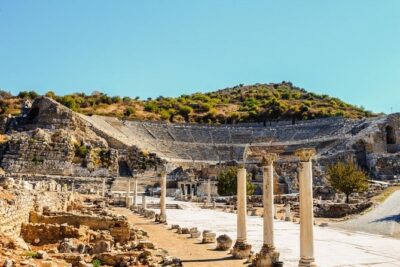
Ephesus and St. Mary’s House Day Trip from Izmir with Lunch
Read our review →

Daily Ephesus & Virgin Mary House Tour from Izmir
Read our review →Browse the lists this tour appears in