
Reviewed · KUSADASI TOURS
From Kusadasi: Ephesus Guided Private Tour
Ephesus is the star here: a vast ancient city where marble streets lead to the Celsus Library, the Great Theater, temples, fountains, and public buildings. I like the private format, which lets you ask questions and pause for photos, and I like the easy port pickup, a real help on a cruise day. The main catch is that entrance fees and drinks are extra.
I also appreciate the sensible five-hour length. You see the biggest sights without spending a full day away from Kusadasi, and an early start can help you avoid the worst queues. The tour involves plenty of walking over uneven ancient paving, so I would not choose it if you have major mobility limits.
Key points at a glance
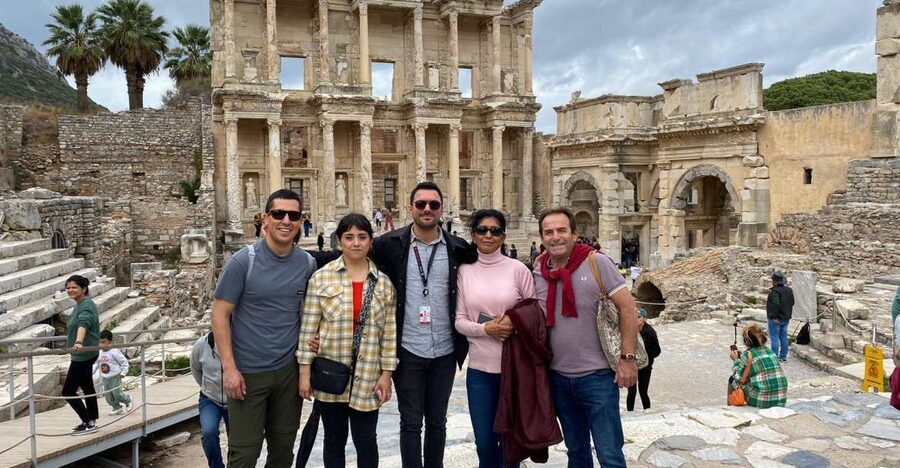
- Ephesus in a private group: You get a guide focused on your party rather than a large coach crowd.
- The Celsus Library is the visual highlight: Its restored facade gives you one of the clearest images of Roman Ephesus.
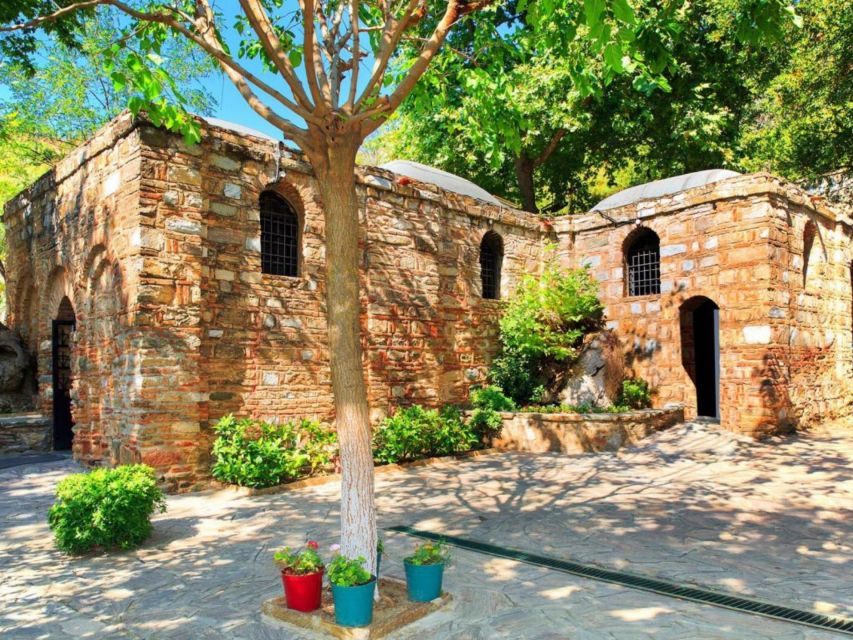
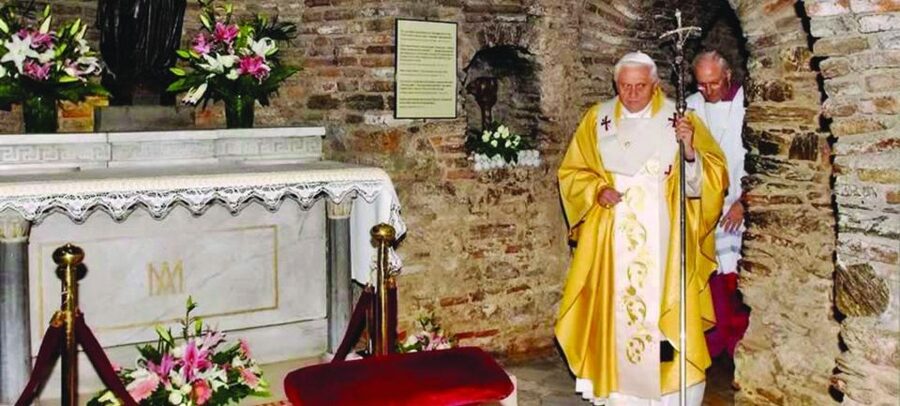
- Mary’s House adds a religious dimension: The small mountain shrine is linked by Christian tradition with the Virgin Mary’s final years.
- Artemis Temple is a brief but meaningful stop: Only a few remains survive, but the site recalls one of the Seven Wonders of the Ancient World.
- Port-to-port simplicity matters: Pickup is at the Kusadasi cruise arrival gate or your hotel reception, with return transportation included.
- Plan for extra costs: Entrance fees, lunch, and drinks are not included, even though the tour offers skip-the-ticket-line access.
Why Ephesus deserves your half-day
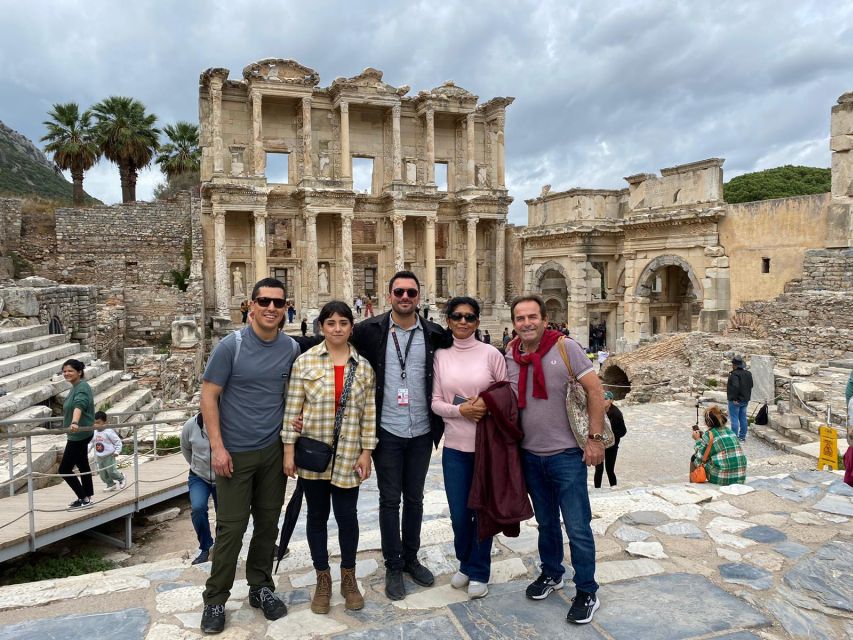
Ephesus is not a single monument. It is a whole ancient city spread across an open archaeological site, with streets, theaters, temples, fountains, and civic buildings still visible. The Ionians created the city in the 11th century BC, and Roman expansion later made it one of the major centers of the ancient world.
That long timeline is what makes the visit worthwhile. You are not simply walking up to one famous facade, taking a photograph, and leaving. You can trace how public life worked: where people gathered, how water was supplied, where rulers were honored, and how grand buildings were used to project power.
The site is also tied to several important figures. Cleopatra and Mark Antony are associated with Ephesus, while Saint Paul and Saint John connect it to early Christianity. The result is a place with both classical and biblical importance, which gives your guide plenty to explain.
I strongly prefer seeing Ephesus with a guide. The ruins can look like attractive columns and broken stone if you do not know what you are seeing. With context, the Great Theater becomes more than a large semicircle, and the Celsus Library becomes evidence of Roman civic pride, education, and memory.
More ways to see Ephesus:
- FOR CRUISERS: Skip The Lines PRIVATE EPHESUS TOUR &On Time Return
★ 5.0 · 8,527 reviews - Top Choice For Cruisers: Ephesus, Mary’s House WITH TICKETS+LUNCH
★ 5.0 · 7,233 reviews - PRIVATE EPHESUS TOUR FOR CRUISERS: On-time Return and Skip-Line
★ 5.0 · 5,807 reviews
A smooth start from Kusadasi port
Your guide meets you at the arrival gate of Kusadasi Cruise Port, holding a sign with your name. If you are staying in a hotel, pickup is arranged at reception instead. That direct meeting point removes one of the common worries on a port day: finding the right vehicle in an unfamiliar town.
The drive to the main site takes about 25 minutes by air-conditioned, non-smoking coach. Parking is included, and the private group format means you do not need to wait for a large bus to fill up or make repeated hotel stops.
A private tour is especially useful if your ship gives you a narrow window in Kusadasi. You have a fixed five-hour program, but a guide can usually respond more easily to your pace and questions than a large group can. Previous guide names connected with this tour include Barish and Happy Ahmet, though the guide assigned to you may be different.
The transport itself is practical rather than part of the attraction. That is fine. The important point is that you arrive with the complicated part handled, leaving your energy for the ruins.
Walking through the ancient city of Ephesus
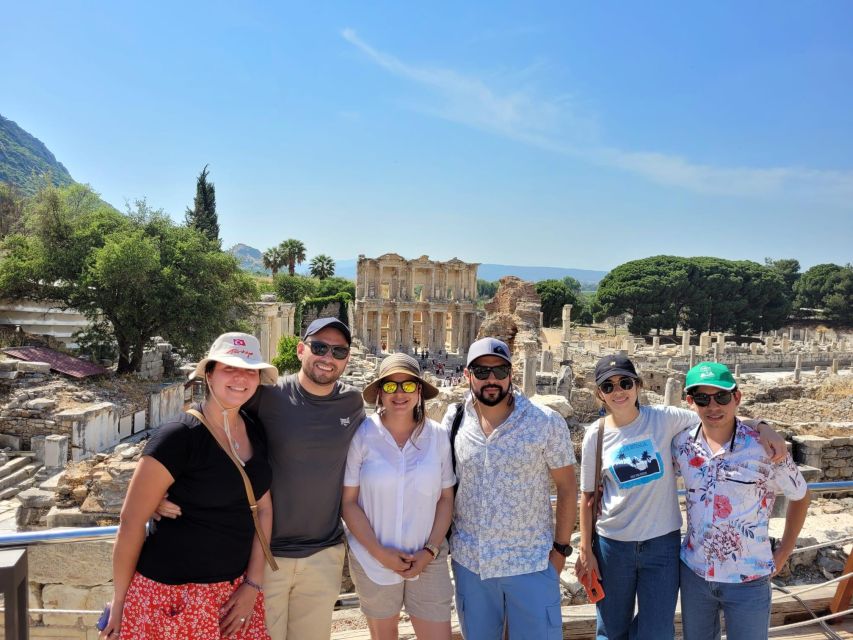
The main Ephesus visit lasts about two hours, which is enough time to see the major areas without turning the outing into an all-day archaeological marathon. Expect to walk outdoors over uneven surfaces, with little comfort from the ancient paving itself.
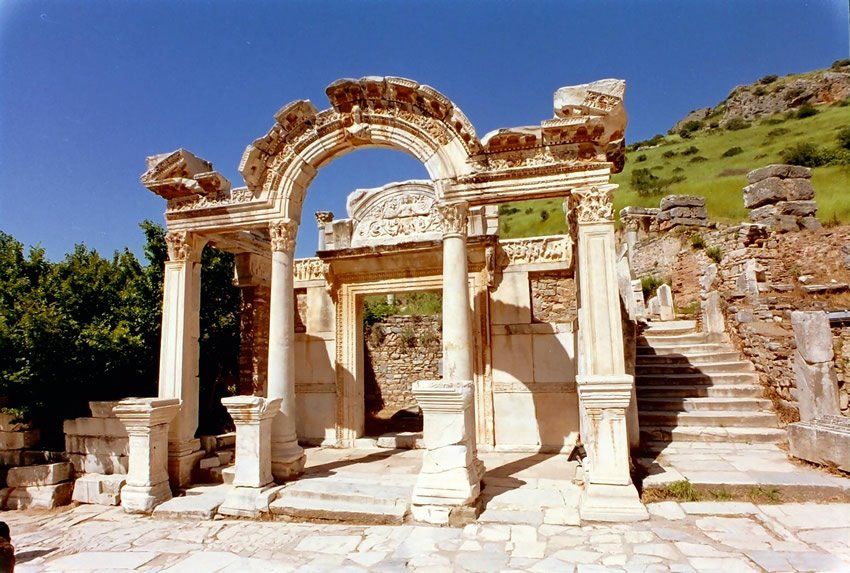
The route includes the Temple of Hadrian, one of the most recognizable structures along the street. Its decorative facade gives you a good sense of the public style of Roman Ephesus, where temples and monuments were designed to impress residents and visitors alike.
You also see the Fountain of Trajan, a reminder that water supply was a major civic achievement. Fountains were useful, but they were also statements of wealth and political power. Your guide can help you read those remains as part of a functioning city rather than isolated ruins.
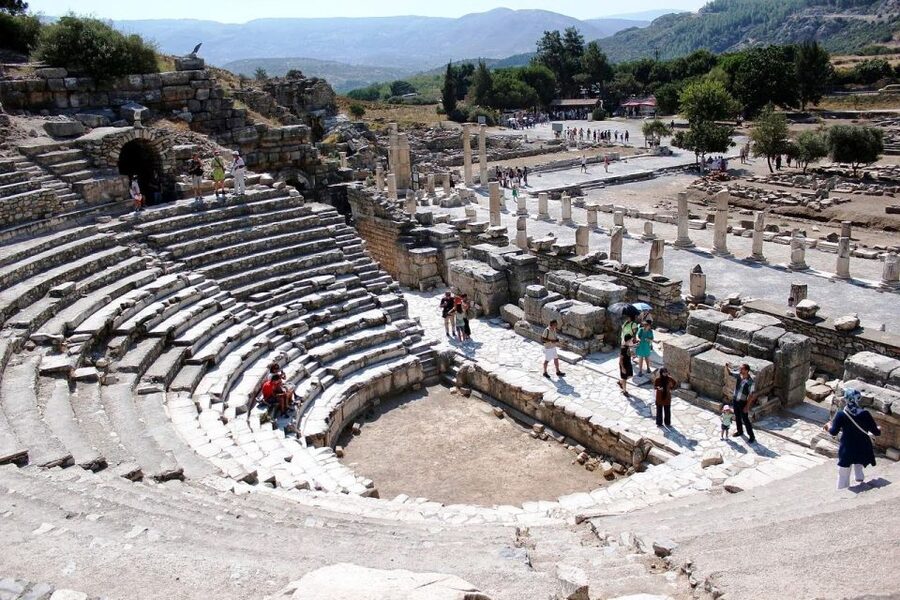
The Great Theater is another major stop. It was built to hold large crowds and served as a place for performances and public gatherings. Its size helps explain how important Ephesus became, although the exact experience depends on how much time your guide spends there and how busy the site is that day.
The best part of a guided walk is being able to connect the structures. You can ask what a building was for, how it fit into the street plan, and which details are original, restored, or reconstructed. One earlier account of this tour praised the calm pace and the guide’s willingness to allow time for photographs. That is exactly the right approach at Ephesus, where rushing can make a large site feel like a checklist.
The Celsus Library, the tour’s great photo stop
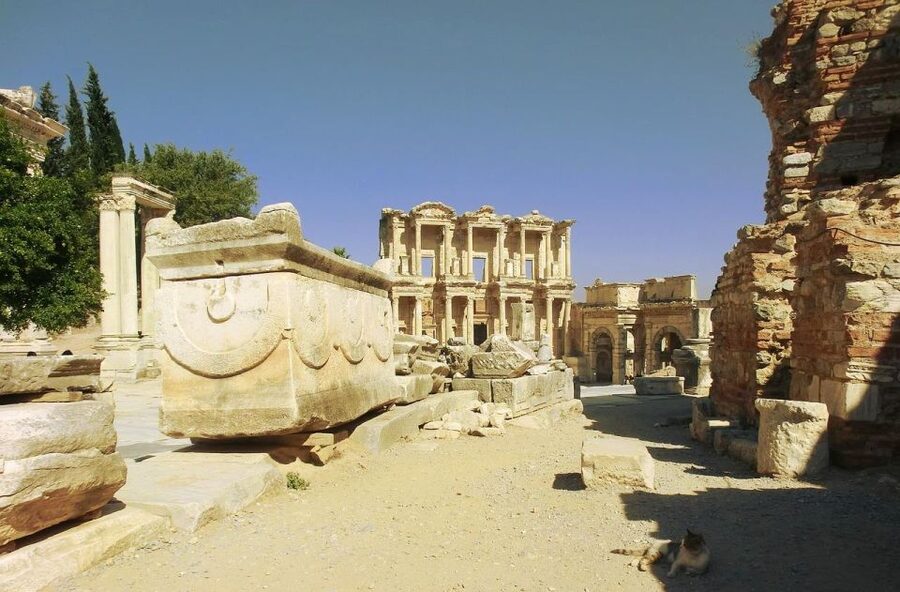
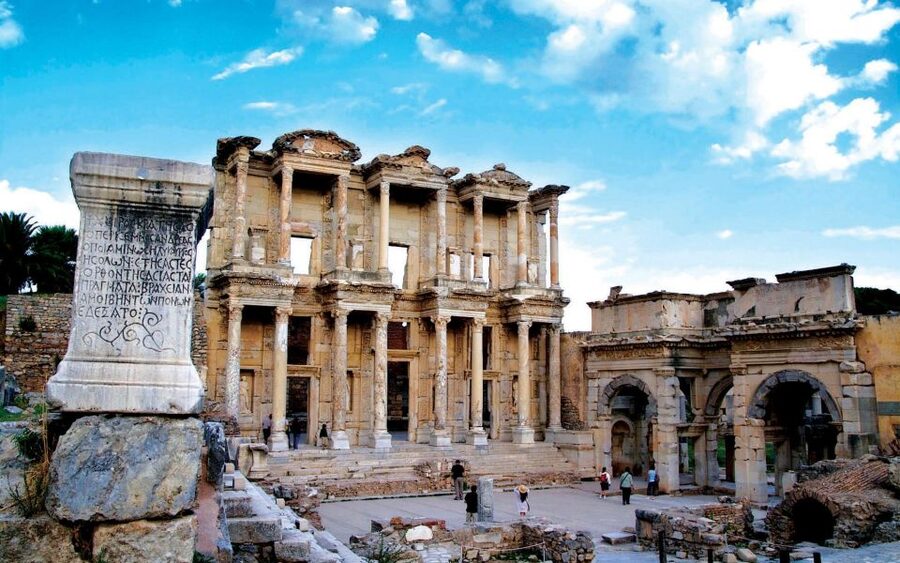
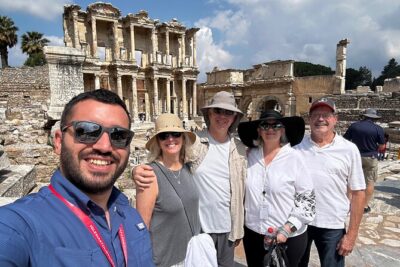
The Celsus Library receives about 15 minutes of guided attention, but it is likely to occupy more space in your memory than many longer stops. Its two-level facade, with columns and statues, is one of the best-preserved and most photographed parts of Ephesus.
Do not expect an intact library interior. What you see is mainly the impressive front, reconstructed from surviving pieces and archaeological evidence. Even so, the facade gives a strong impression of the money and ambition invested in Roman public buildings.
This is where a private guide can make a real difference. You can ask about the building’s purpose, its decoration, and the way the facade was meant to be read by people entering the city. You also have a better chance of getting the photographs you want without feeling hurried by a large group.
The short time allocation is both a benefit and a limit. It keeps the half-day schedule moving, but anyone fascinated by Roman architecture may wish for longer. If the library matters most to you, tell your guide early so you can use the available time well.
A few more Kusadasi half-days to weigh up
- PRIVATE NO HIDDEN FEES Ephesus, Mary’s House Guided Tour /GRP OPT
★ 5.0 · 2,455 reviews - For Ship Guests:BEST SELLER EPHESUS PRIVATE TOUR & On Time Return
★ 5.0 · 2,029 reviews - ALL INCLUDED: Ephesus Ruins, Mary’s House Tour incl ENTRY TICKETS
★ 5.0 · 1,670 reviews - Ephesus Temple of Artemis and House of Mary Private Half Day Tour
★ 5.0 · 1,573 reviews
Hadrian’s Temple and the city’s public face
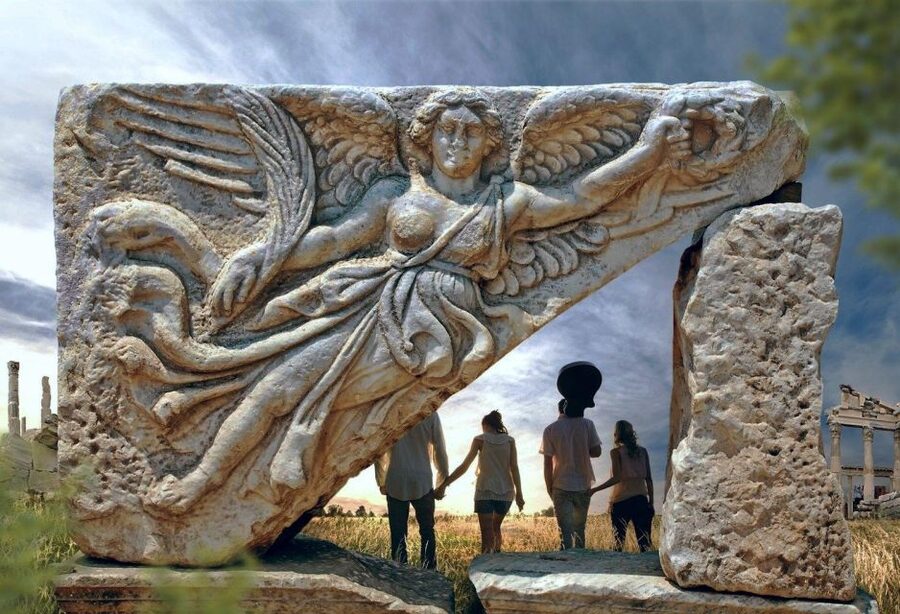
The visit to Hadrian’s Temple lasts about 10 minutes. That may sound brief, but the stop fits naturally into the walk because it is part of the central sequence of Ephesus sights.
The temple’s decorative stonework shows how Roman cities used architecture to honor emperors and advertise loyalty to the imperial system. It is a compact stop, so listen closely to the explanation and take a moment to look at the details rather than treating it as another quick photograph.
This is one reason I would not recommend visiting Ephesus with only a guidebook note on your phone. Ten minutes can be enough when someone points out what matters. Without that help, you might pass the temple without understanding its role.
Mary’s House in the Bulbul Mountains
The experience highlights the last House of Mother Mary, a small religious site in the Bulbul Mountains associated by Christian tradition with the Virgin Mary’s final years. The tradition holds that Mary came to the Ephesus area after Jesus’s crucifixion and lived there near the end of her life.
The site has become a destination for Christian pilgrimage. It offers a different mood from the broad Roman streets and monumental library. Here, the focus is quiet devotion rather than imperial display.
The provided schedule does not assign a separate time block to Mary’s House, so you should confirm the exact running order and time with the operator when booking. The overview includes it among the highlights, while the timed itinerary specifically lists Ephesus, the Celsus Library, Hadrian’s Temple, and Artemis Temple. That small difference is worth checking if the shrine is one of your main reasons for booking.
This stop may be especially meaningful if you are interested in biblical history or Christian pilgrimage. If your main goal is classical archaeology, the Roman city will likely be the stronger part of the day.
The Temple of Artemis and one surviving column
The Temple of Artemis receives about 25 minutes. It was one of the Seven Wonders of the Ancient World, but the site today is far less complete than the name might suggest.
You will not see a grand standing temple comparable to the Celsus Library facade. The remains are limited, and the stop asks you to use your imagination. That can feel underwhelming if you expect a fully reconstructed wonder.
Still, the visit is worthwhile because it gives scale to the ancient world’s reputation for monumental building. The temple was once a major sanctuary dedicated to Artemis, and its fame reached far beyond Ephesus. Your guide can help you understand why this location mattered, even when only fragments remain.
The 25-minute stop is generous for a small ruin site. Use it to hear the story, photograph the surviving remains, and ask how the temple changed over time. It also offers a useful contrast with Ephesus, where several structures are much more visually complete.
What the private format adds
The private group arrangement is the central reason to choose this tour over a standard group outing. You get a licensed professional guide in English or Spanish, with transportation reserved for your party.
I like private guiding at a site such as Ephesus because interests vary sharply. One person may want Roman architecture, another may care about Saint Paul, and someone else may mainly want photos. A private guide can adjust explanations and pace more easily.
The experience is also less hectic than a large group tour. A detailed account of an earlier outing describes a quiet morning, a small party, and plenty of time for photographs and questions. An early departure may help you find Ephesus calmer, though the start time depends on availability.
There is a tradeoff. Private tours often cost more per person than a large shared bus, and this one costs $89 per person before entrance fees. The value improves when several people share the booking, especially if you care about personal attention and a reliable return to the port.
Is $89 a fair price?
At $89 per person, this is not the cheapest way to see Ephesus. But the price includes round-trip transportation from Kusadasi, a licensed guide, an air-conditioned non-smoking coach, and parking. For a cruise visitor, those practical pieces have real value.
The price does not include entrance fees, lunch, or drinks. That matters when you compare the final cost with other options. The tour does advertise skip-the-ticket-line access, but you should still budget separately for admission.
I see the strongest value for couples, families, and small private parties who want control over the visit. It is less attractive if you are comfortable arranging your own transport and reading about the site independently.
Free cancellation up to 24 hours before the activity and reserve-now-pay-later terms also reduce the risk of booking around a changing travel schedule. Those policies do not change the historical content, but they are useful when your Kusadasi plans depend on a ship timetable.
Who should book this Ephesus tour?
You should consider it if you want to combine major classical ruins with Christian history in one half-day outing. It works particularly well for cruise passengers who need port pickup and a planned return.
The tour suits people who value explanation over wandering alone. You will see more than the headline monuments, and a guide can connect the Fountain of Trajan, Hadrian’s Temple, the theater, and the library into a clear story.
I would also recommend it for photographers who dislike being hurried. The private format gives you a better chance to stop for pictures, although you should still tell the guide which sights matter most.
I would hesitate if you have a mobility impairment or cannot manage uneven walking surfaces. The tour is not suitable for people with mobility impairments, and ancient streets are not designed for easy movement.
Bring comfortable shoes. Also bring water money, since drinks are not included, and remember that lunch is not part of the five-hour program.
Should you book it?
Book this tour if you want a well-organized, private introduction to Ephesus from Kusadasi, with a guide who can bring the ruins to life and keep the port transfer simple. The Celsus Library, Great Theater, Temple of Hadrian, and Artemis site give you a strong overview in five hours.
Before paying, confirm the entrance-fee arrangements and ask how much time is planned for Mary’s House, since the timed schedule does not list a separate stop for it. If you want a calm pace, personal questions, and dependable transport, the $89 price is reasonable. If you mainly want the lowest possible cost, a shared excursion or independent visit may suit you better.
FAQ
How long does the Kusadasi Ephesus tour last?
The tour lasts five hours, including pickup from Kusadasi, the drive to Ephesus, sightseeing, and the return to Kusadasi.
Where does pickup take place?
At Kusadasi Cruise Port, your guide meets you at the arrival gate with a sign showing your name. Hotel guests are met at the hotel reception.
Which languages are available?
The tour provides a live guide in English or Spanish.
Are entrance fees included?
No. Entrance fees are not included in the advertised price. Drinks and lunch are also extra.
What sights are included?
The route includes ancient Ephesus, the Celsus Library, the Temple of Hadrian, and the Temple of Artemis. The experience also highlights the last House of Mother Mary.
Is the tour suitable for people with mobility impairments?
No. The activity is listed as unsuitable for people with mobility impairments. Comfortable shoes are recommended for the ancient, uneven surfaces.
Just added around Kusadasi
- Kusadasi: Traditional Turkish Bath Experience★ 3.9 · 59 reviews
- Less Walking Private Ephesus, Virgin Mary, Temple Skip Lines★ 5.0 · 22 reviews
- Kusadasi Turkish Bath★ 3.6 · 51 reviews
- Kusadasi: Ephesus Small Group Tour★ 4.9 · 26 reviews
- Kusadasi: Quad Safari Adventure★ 4.3 · 25 reviews
- Kusadasi: Turkish Bath Experience with Hotel Pickup★ 3.5 · 22 reviews
- Kusadasi or Selcuk: Full-Day Ephesus Tour with Lunch★ 4.8 · 22 reviews
- Kusadasi: Pamukkale Hot Spring & Hierapolis Small-Group Tour★ 4.6 · 198 reviews
Kusadasi Tours, compared.
Skip The Lines PRIVATE EPHESUS TOUR &On Time Return
Read our review →
ALL INCLUDED: Ephesus Ruins, Mary’s House Tour incl ENTRY TICKETS
Read our review →
Ephesus Temple of Artemis and House of Mary Private Half Day Tour
Read our review →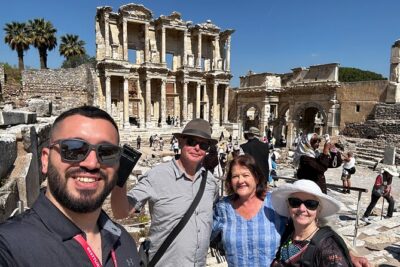
PRIVATE TOUR FOR CRUISERS: Mary’s House (Meryemana) and Ephesus
Read our review →
Top-Rated: Ephesus & Artemis Tour for Cruisers WITH ENTRY TICKETS
Read our review →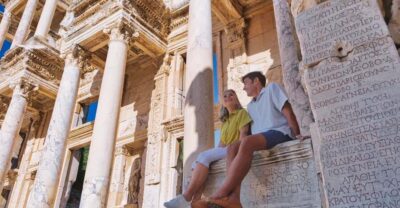
SKIP-THE-LINE: Group & Private Ephesus Tour ENTRY FEE & LUNCH
Read our review →Browse the lists this tour appears in