
Reviewed · KUSADASI TOURS
Ephesus, Priene, Miletos and Didyma Tour
Four ancient sites in eight hours is an ambitious plan, but this tour makes a strong case for going beyond the usual Ephesus visit. You move from Roman grandeur at Ephesus to the sharp urban design of Priene, the philosophers’ city of Miletos, and the giant Temple of Apollo at Didyma.
I like the private format, which gives you a better chance to ask questions and adjust the pace. I also like the useful all-in price: transport, a professional driver, guide, and entrance fees are covered. The drawback is simple: this is a long, busy day with plenty of walking, uneven ground, and several hours in the vehicle.
Key points at a glance
- Four major sites in one day: Ephesus, Priene, Miletos, and Didyma offer four very different views of ancient Aegean life.
- A private vehicle and guide: You travel with your own group rather than joining a large coach party.
- Ephesus goes beyond the Library of Celsus: The Great Theatre, Marble Street, ancient advertising clue, and optional Terrace Houses add depth.
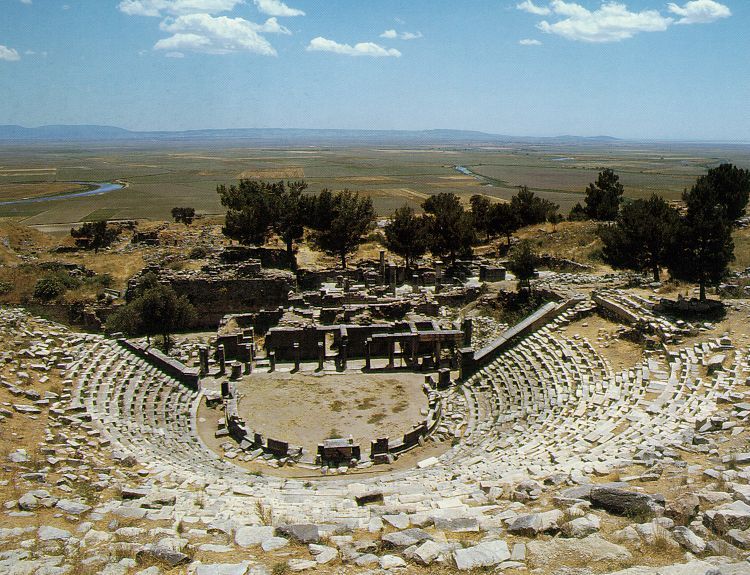
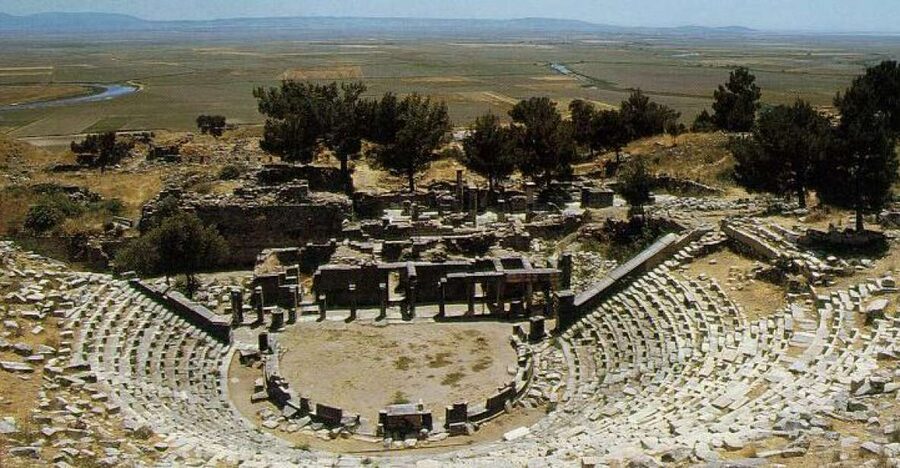
- Priene provides the best wide view: Its hillside theater looks across the Meander River delta.
- Miletos connects ruins with ideas: This was the home of thinkers such as Thales and Anaximander.
- Didyma finishes on a grand note: The Temple of Apollo and its remaining columns make a powerful final stop.
Four ancient worlds between Kusadasi and Didyma
Most day trips from Kusadasi focus on Ephesus alone. That is understandable. Ephesus is the best-preserved and most famous site here, with its polished marble streets, monumental library, and enormous theater.
This route asks more of you, but it also gives you a broader picture. You see how Greek city planning, Roman public life, maritime trade, philosophy, and religious pilgrimage shaped the Aegean coast over many centuries.
The tour lasts about eight hours and begins with pickup from Kusadasi port or a local hotel. Pickup is also available from hotels in Aydin and Izmir. A private, air-conditioned vehicle helps, especially because the four sites are spread across the region rather than gathered in one archaeological park.
The order may vary with the day’s arrangements, but the planned circuit covers Ephesus, Priene, Miletos, and Didyma. Your guide is licensed and may lead the tour in English, German, French, Dutch, Spanish, Italian, Greek, or Russian, depending on the booking.
More ways to see Ephesus:
- FOR CRUISERS: Skip The Lines PRIVATE EPHESUS TOUR &On Time Return
★ 5.0 · 8,527 reviews - Top Choice For Cruisers: Ephesus, Mary’s House WITH TICKETS+LUNCH
★ 5.0 · 7,233 reviews - PRIVATE EPHESUS TOUR FOR CRUISERS: On-time Return and Skip-Line
★ 5.0 · 5,807 reviews
Ephesus: marble streets and Roman public life
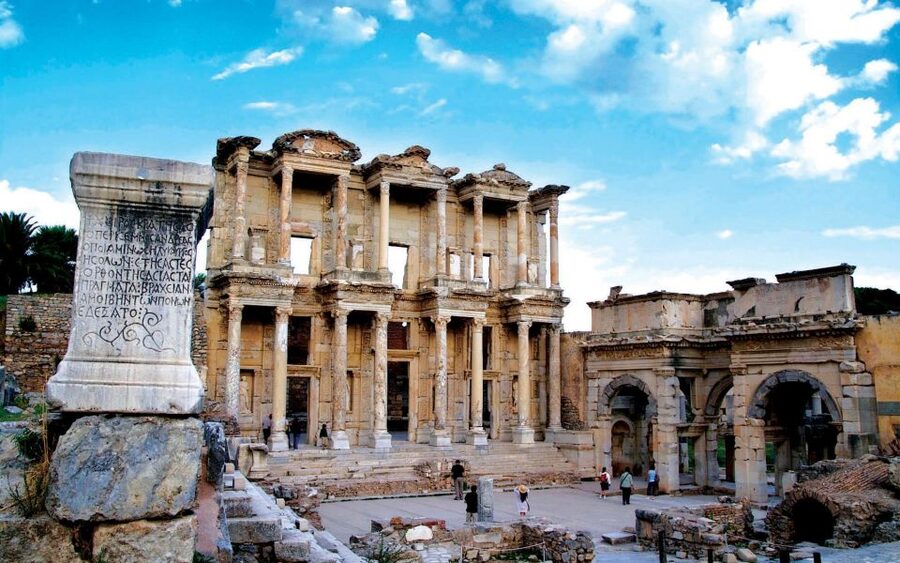
Ephesus is the headline stop, and it earns that position. As you walk along Marble Street, you are following the main route through a former Roman metropolis. The surviving architecture gives you a clear idea of the city’s scale, even though much of the ancient settlement is now in ruins.
The Library of Celsus is the familiar star, with its decorated facade and carefully restored appearance. But I would not let your visit stop there. The Great Theatre is just as important. It could hold about 24,000 people and served as a place for performances, public meetings, and political arguments, as well as spectacles.
Your guide can help connect these stones with the people who used them. Cleopatra and St. Paul are both linked with Ephesus in the tour’s historical storytelling, and the city’s streets become more interesting when you picture merchants, worshippers, officials, and ordinary residents sharing the same routes.
Look for the footprint and heart carving that points toward the ancient brothel. It is often described as one of the world’s earliest advertisements. The detail is small, but it gives the site a welcome bit of human humor. Ancient cities were not only about emperors and temples. They had signs, businesses, gossip, and practical directions too.
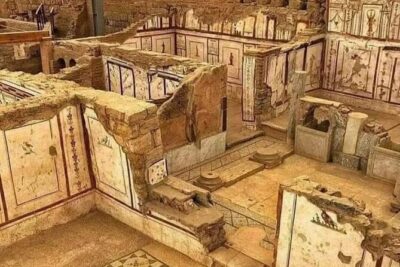
The optional Terrace Houses add another layer. These were the large homes of wealthy Ephesians, sometimes called the city’s ancient penthouses. Inside, mosaics and frescoes show how much comfort and decoration the elite enjoyed. The extra visit is worth considering if you care about domestic life and ancient art, though it adds more walking and may involve a premium cost.
Ephesus can be hot and exposed. Wear shoes with a firm sole, bring water, and carry a hat and sunglasses. The marble is beautiful but can be hard underfoot, and there is little reason to rush through such a major site.
Priene: a city planned with a ruler
Priene feels very different from Ephesus. Instead of a broad Roman center, you climb toward a hillside settlement shaped by Hellenistic planning. Its streets follow a grid, creating a striking sense of order even in a partially ruined city.
The Temple of Athena Polias is the main architectural focus. It reflects the clean lines of Ionian design and helps you understand the city’s civic identity. The ruins are not as visually complete as Ephesus, so your guide matters here. A good explanation can turn fallen blocks and partial walls into a readable plan.
The theater is one of Priene’s best rewards. From this high position, you get a broad view toward the Meander River delta. The view explains part of the city’s appeal and its strategic value. It also gives you a welcome change after the denser remains at Ephesus.
Priene requires more care with your footing. The route is uphill, and the archaeological remains are spread across uneven ground. This is not the easiest stop for anyone with limited mobility. The tour specifically is not suitable for wheelchair users, and Priene is one reason why.
I like Priene because it gives you a lesson in city design rather than simply another famous monument. You can see how streets, public buildings, and sacred spaces were arranged as part of one larger plan.
Miletos: where trade and philosophy met
Miletos was a major maritime center and the birthplace of early Greek philosophy. Thales and Anaximander are associated with the city, and the tour uses their stories to show how people here began asking new questions about nature, mathematics, and the world around them.
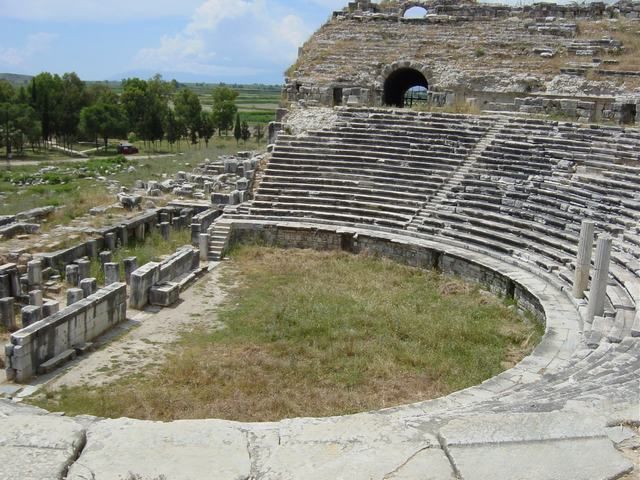
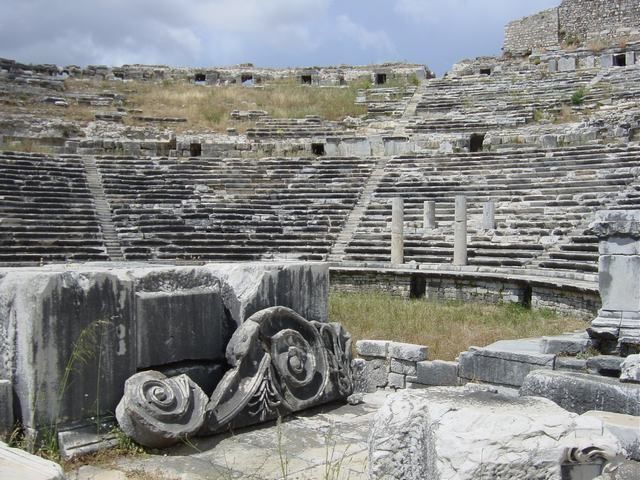
You will also see a much more physical side of Miletos. Its theater could hold around 15,000 people, a reminder that this was a large and prosperous city. The scale helps you picture public life on a level that smaller ruins cannot provide.
The Baths of Faustina are another highlight. They were built by Faustina, the wife of Emperor Marcus Aurelius, and remain unusually readable. The surviving bath structures help explain how Roman public facilities worked, from bathing to social gatherings.
The Agora gives you a sense of Miletos as a commercial center. This was not only a place for abstract thought. It was also a port city connected to Mediterranean trade, with markets and public spaces supporting a busy economy.
Miletos is less immediately polished than Ephesus. That is part of its appeal, but it also means you need to pay attention to your guide’s explanation. A casual walk can leave the site feeling like a collection of stones. With the historical setting in place, you can better understand why this city mattered.
A few more Kusadasi half-days to weigh up
- PRIVATE NO HIDDEN FEES Ephesus, Mary’s House Guided Tour /GRP OPT
★ 5.0 · 2,455 reviews - For Ship Guests:BEST SELLER EPHESUS PRIVATE TOUR & On Time Return
★ 5.0 · 2,029 reviews - ALL INCLUDED: Ephesus Ruins, Mary’s House Tour incl ENTRY TICKETS
★ 5.0 · 1,670 reviews - Ephesus Temple of Artemis and House of Mary Private Half Day Tour
★ 5.0 · 1,573 reviews
Didyma: the oracle and the unfinished giant
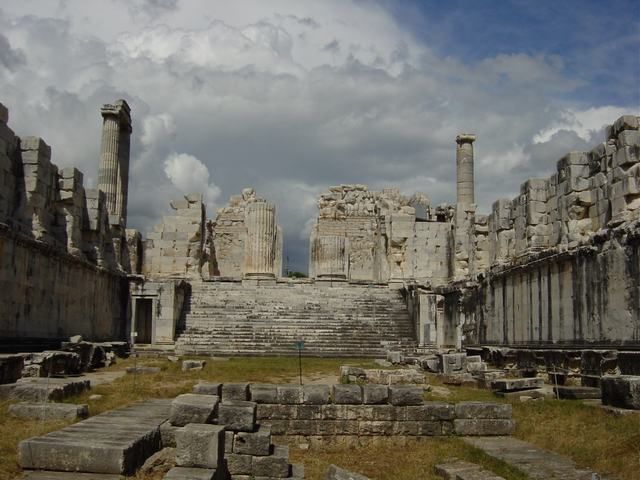
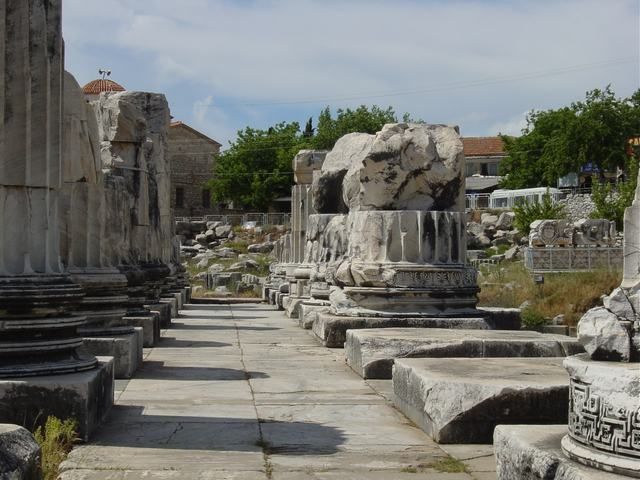
Didyma is not a city in the same sense as Ephesus, Priene, or Miletos. It was a sanctuary centered on the Temple of Apollo, one of the largest temples in the Greek world.
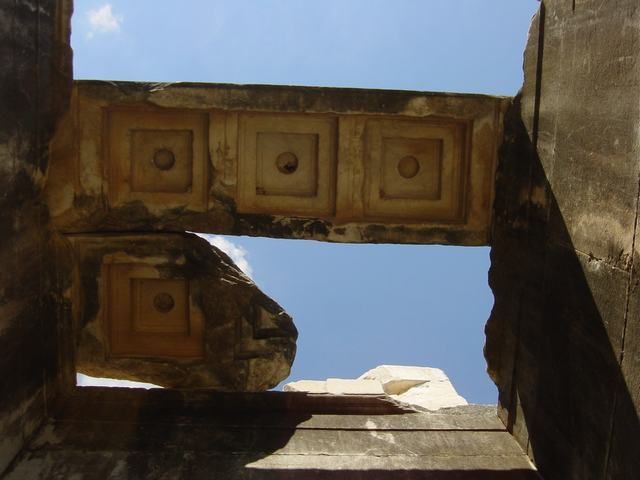
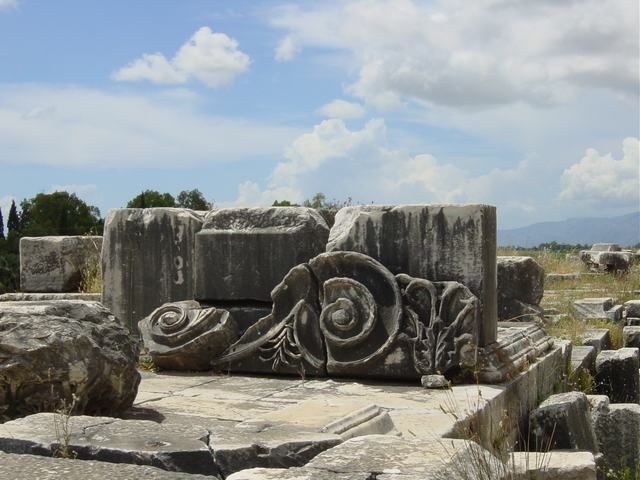
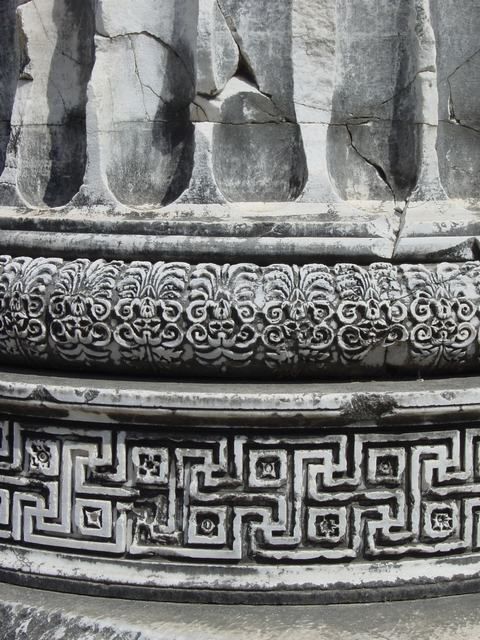
The surviving columns are the first thing you notice. Three towering, fluted columns remain, surrounded by enormous architectural fragments. The temple was never fully completed, which gives the site a dramatic, unfinished quality. You can see the scale of the ambition without needing much imagination.
Didyma was famous for its oracle, which rivaled Delphi. Pilgrims came along the Sacred Way seeking answers that could affect rulers, cities, and military plans. Your guide will explain the myths and religious traditions tied to Apollo and the sanctuary.
The temple’s size is difficult to grasp from a single angle. Walk around as much as your footing and time allow. Looking up at the columns and then back across the scattered foundations helps you understand how enormous the complex was meant to be.
Didyma works well as the final stop because it provides a strong visual finish. After the streets of Ephesus, the planning of Priene, and the civic life of Miletos, you arrive at a place built around prophecy and divine authority.
Why the private setup matters
The private group format is one of the tour’s strongest features. You are not tied to the pace of a large bus group, and you can ask for clarification when a name, date, or myth catches your attention.
The driver and guide work as a team. Mohammed is specifically praised for a calm driving style, while guides named Olkan and Volkan are noted for being helpful, flexible, and deeply engaged with the sites. Names and staff can vary, so you should confirm who is assigned to your booking, but these details give you a useful idea of the service style to expect.
Flexibility matters on a route like this. Ephesus deserves time, while Priene, Miletos, and Didyma each need enough explanation to make sense. A private guide can help divide the day according to your interests, especially if your group prefers archaeology, mythology, architecture, or ancient daily life.
The tradeoff is that a private tour does not remove the distance between the sites. You still have four stops to cover in one day. If you like slow museum visits or long breaks, this schedule may feel tight. If you want to make efficient use of one day on the Aegean coast, it is a sensible design.
What the $210 price really covers
At $210 per person, this is not the cheapest way to see Ephesus. The value comes from what is bundled into the day: a private air-conditioned vehicle, professional driver, licensed guide, pickup and drop-off, and entry fees for all four archaeological sites.
Entrance charges can make a multi-site day add up quickly. Having them included also keeps the day simpler, since you are not repeatedly stopping to handle tickets. Skip-the-line access is included in the advertised package, which can matter at Ephesus during busy periods.
The price makes the most sense for solo visitors, couples, families, or small groups who would otherwise need to arrange several transfers and guides. One Brazilian customer found the route especially useful for saving time while traveling alone, and that is a fair point. Hiring separate transport for Priene, Miletos, and Didyma would be difficult to coordinate independently in a single day.
For a group of several people, the per-person rate can look more reasonable because the vehicle and guide serve everyone. For someone interested only in Ephesus, a shorter tour will likely offer better value and a less demanding day.
Personal purchases are not included. The listed package does not cover items of a personal nature or anything not specifically named, so bring a payment method for your own needs.
Walking, weather, and practical comfort
Bring your passport or ID card, comfortable shoes, sunglasses, a sun hat, and a camera. Those instructions are basic but important. The sites involve open-air walking, exposed stone, uneven surfaces, and plenty of sun.
Priene is the clearest mobility concern, but the other sites also require walking. The experience is not suitable for wheelchair users. If anyone in your group has trouble with hills, steps, or rough ground, ask the provider about the route before booking.
An air-conditioned vehicle gives you a place to cool down between stops. That matters on a full day, especially after walking through Ephesus or climbing around Priene. Still, air conditioning does not shorten the distances, so plan on being active for much of the day.
The tour offers free cancellation up to 24 hours before departure and a reserve-now, pay-later option. Those terms are useful if your Kusadasi schedule may shift, but you should still check the available starting time before committing to the day.
Who should book this four-site route
I would choose this tour if you have a strong interest in archaeology and want more than the standard Ephesus stop. It is especially good for anyone curious about how ancient cities functioned: Ephesus for Roman urban life, Priene for planning, Miletos for trade and philosophy, and Didyma for religion and prophecy.
It also suits visitors with limited time on the Aegean coast. You see four important locations without arranging several separate journeys. The private format is a plus for solo visitors and families who need some control over the pace.
I would think twice if you dislike long days, hot ruins, or uneven walking. I would also avoid packing this route into a day when you want a relaxed beach schedule. Four sites in eight hours is efficient, not leisurely.
The guide’s storytelling is central to the experience. One Polish visitor valued the way the guide connected the Aegean sites with a much wider story reaching back toward early Anatolian civilization. You should expect the tour to focus on origins, myths, architecture, and the people who shaped these places, not just on taking photographs.
My verdict on Ephesus, Priene, Miletos, and Didyma
Book this tour if you want a full ancient Aegean circuit rather than a quick look at Ephesus. The route is ambitious, but the variety keeps it from feeling like four repetitions of the same ruin.
The best reasons to choose it are the private vehicle, the guide’s ability to explain less familiar sites, and the inclusion of all entrance fees. The main caution is the pace. You need good shoes, sun protection, and enough energy for a long day.
For archaeology fans, history-focused families, and independent visitors who value efficient planning, $210 can be a fair price. For a relaxed holiday or an Ephesus-only visit, choose something shorter. This tour is at its best when you want the wider story of the ancient Aegean, not just its most famous monument.
FAQ
How long does the tour last?
The tour lasts about eight hours.
Where does pickup take place?
Pickup and drop-off are available from Kusadasi port or local hotels. Hotel pickup is also available in Aydin and Izmir.
Is this a private tour?
Yes. The experience is arranged for a private group.
What sites are included?
The route includes Ephesus, Priene, Miletos, and Didyma.
Are entrance fees included?
Yes. Entrance fees for the museums and archaeological sites named in the route are included.
Is transportation included?
Yes. You travel in an air-conditioned vehicle with a professional driver.
What languages are available?
The listed guide languages are Spanish, English, Italian, Dutch, Greek, German, French, and Russian. The included guide information also lists English, German, French, and Dutch.
Is the tour suitable for wheelchair users?
No. The experience is listed as not suitable for wheelchair users.
What should I bring?
Bring a passport or ID card, comfortable walking shoes, sunglasses, a sun hat, and a camera.
Just added around Kusadasi
- Private Ephesus Tour from Kusadası Port★ 5.0 · 15 reviews
- Ephesus Tour For Cruise Guests (Kusadasi Port)★ 5.0 · 40 reviews
- Kusadasi Port PRIVATE EPHESUS TOUR (fixed price 1 to 15 people)★ 5.0 · 215 reviews
- Boat Trip with Lunch From Kusadasi Port / Hotels★ 4.5 · 18 reviews
- Guided Scuba Diving Experience in Kusadasi★ 5.0 · 23 reviews
- Kusadasi & National Park Boat Tours with Lunch and Transfer★ 4.5 · 86 reviews
- Ephesus Shoreexcursion from Kusadasi Port★ 5.0 · 41 reviews
- FOR CRUISERS: Best of Ephesus Private Tour (GUARANTEED ON-TIME RETURN)★ 5.0 · 77 reviews
Kusadasi Tours, compared.
Skip The Lines PRIVATE EPHESUS TOUR &On Time Return
Read our review →
ALL INCLUDED: Ephesus Ruins, Mary’s House Tour incl ENTRY TICKETS
Read our review →
Ephesus Temple of Artemis and House of Mary Private Half Day Tour
Read our review →
PRIVATE TOUR FOR CRUISERS: Mary’s House (Meryemana) and Ephesus
Read our review →
Top-Rated: Ephesus & Artemis Tour for Cruisers WITH ENTRY TICKETS
Read our review →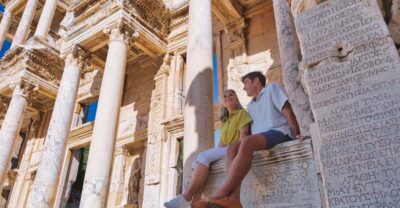
SKIP-THE-LINE: Group & Private Ephesus Tour ENTRY FEE & LUNCH
Read our review →Browse the lists this tour appears in