Reviewed · ISTANBUL TOURS
Tour to Byzantium
Constantinople is still under Istanbul, if you know where to look. This tour takes you beyond the usual imperial sights to the Golden Horn, old city walls, prison chambers, churches, and palace remains tied to more than 1,000 years of Byzantine rule. I like the way it connects scattered ruins into one clear story, and I like that it leads you into parts of Istanbul many visitors skip.
Guide Umut has been singled out for his grasp of Byzantine history, and that matters here. The main drawback is practical: the sightseeing portion is described as about three hours, while the booking information lists four hours, and hotel pickup can add 45 to 60 minutes before the tour even begins.
Key points to know
- The Golden Horn sets the scene: Begin at the natural harbor that helped make Constantinople a major imperial city.
- Fener links the city to Orthodox Christianity: Visit the Patriarchate, associated with the period after Constantine made Christianity official in the Roman Empire.
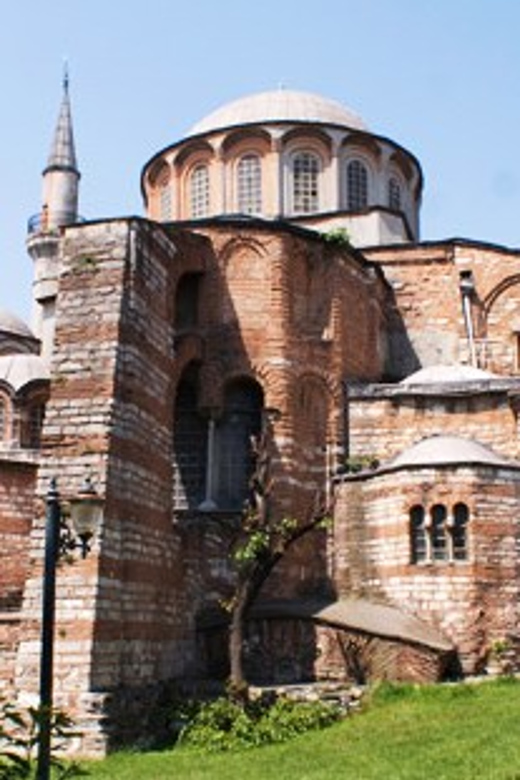
- Chora is an exterior visit: See the former St. Savior in Chora, now the Kariye Museum, without an interior viewing of its famous mosaics and frescoes.
- Anemas Dungeons are unusual: Examine part of the Blachernae Palace complex, once used to hold high-ranking prisoners.
- Tekfur Palace is a rare survivor: Visit the only surviving pavilion of the Blachernae Palace.
- The walls put imperial scale in perspective: See remains of a fifth-century defensive system that once stretched 22 kilometers, with 96 towers and nine main gates.
Why Byzantine Istanbul deserves a half-day
Most first visits to Istanbul focus on Ottoman monuments near Sultanahmet: Hagia Sophia, the Blue Mosque, and Topkapi Palace. Those are important, but they can leave you with the impression that Istanbul’s great story began in 1453. It did not.
Byzantium, later called Constantinople, was the center of the Eastern Roman Empire for more than 1,000 years, from the fourth to the fifteenth century. This tour takes you west across the Golden Horn and into the old imperial quarters, where the remains are less polished and often harder to find on your own.
That rougher setting is part of the appeal. You are not moving from one perfectly preserved monument to the next. You are reading the city through fragments: a church foundation, a prison structure, a palace wall, and defensive towers rising beside modern streets.
I especially like this outing for visitors who want context. The sites can feel disconnected if you see them alone. With a guide, the Golden Horn becomes more than a scenic inlet, the walls become more than old stone, and the Chora church becomes part of the final chapter of Byzantine Constantinople.
A few more Istanbul half-days to weigh up
- Istanbul: Bosphorus Dinner Cruise & Show with Private Table
★ 4.8 · 44,561 reviews - Istanbul: Daytime or Sunset Sightseeing Cruise & Audio Guide
★ 4.8 · 14,430 reviews - Istanbul: Bosphorus Dinner Cruise with Turkish Night Show
★ 4.8 · 10,127 reviews
Starting at the Golden Horn
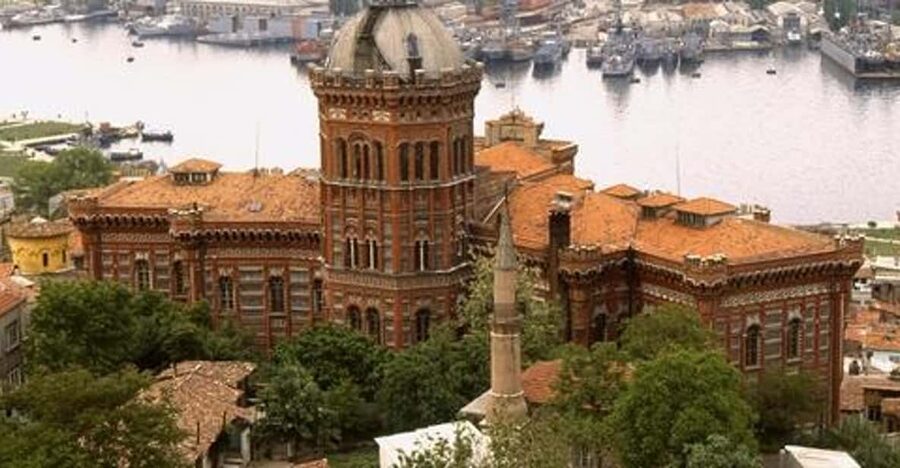
The tour begins at the Golden Horn, the natural naval harbor that reaches inland from the Bosphorus. Its curved, hornlike shape gave it its name, and the water could take on a golden reflection when seen from Istanbul’s hills in bright sunshine.
The important point is not only the view. The harbor helped explain why this location mattered. Constantinople sat between Europe and Asia, with the Bosphorus controlling passage between the Black Sea and the Mediterranean. The Golden Horn offered a sheltered anchorage close to the city.
You will cross to the western side of the water and begin walking through districts tied to Byzantine Constantinople. The phrase walk through Byzantine streets should not make you picture a preserved medieval town. Modern Istanbul surrounds the remains. The value comes from seeing how old imperial traces survive inside a living city.
This is also where a guide can help you get your bearings. The route covers several sites in a short time, so the wider story is just as important as each stop. Ask your guide to point out how the harbor, palace district, churches, and walls fitted together.
Fener and the Orthodox Patriarchate
The next major stop is Fener, home to the Patriarchate. This is one of the tour’s strongest links between political power and religious change.
Constantine the Great declared Christianity the official religion of the Roman Empire, and the Patriarchate became the seat of Orthodox Christianity after that shift. The site gives you a direct connection to the Christian institutions that shaped Constantinople for centuries.
The visit is especially useful if your knowledge of Byzantine history begins and ends with the empire’s name. Byzantine rulers saw themselves as Roman emperors, while the city developed a distinct Greek-speaking Christian culture. The Patriarchate helps explain that blend of Roman government, Greek language, and Orthodox faith.
Do not expect a long indoor museum visit here based on the information provided. The stop works best as a historical marker within the route. Your guide’s explanation will likely do much of the work, so stay close and listen for the links between Constantine, the church, and the city’s changing identity.
Panagia of Blachernae and its sacred water
The Church of Panagia of Blachernae is one of the most important religious stops on the route. It was the best-known shrine to the Holy Virgin in Byzantine Constantinople, famous for its Hagiasma, or holy water, and its Hagion Lousma, a sacred bath.
This site takes you beyond grand imperial politics. Byzantine life was also shaped by pilgrimage, prayer, healing traditions, and devotion to particular churches. Panagia of Blachernae was celebrated not simply as a building but as a place of spiritual power.
The church is connected to the Blachernae district, which also contained palace buildings and defensive works. That makes it a useful bridge between the religious and political sides of the empire. In this part of the city, churches, palaces, prisons, and walls were not isolated attractions. They belonged to the same imperial zone.
The exact condition and access of historic religious sites can vary, so you should follow the guide’s instructions and dress in a respectful way. The tour information does not promise an extended interior visit here. Its main value is the setting and the story attached to the shrine.
Same base, a completely different sort of day:
- Best of Istanbul 1, 2 or 3-Day Private Guided Istanbul Tour
★ 5.0 · 8,922 reviews - Istanbul: Basilica Cistern Fast-Track Entry and Audio Guide
★ 4.6 · 7,521 reviews - Istanbul: Hagia Sophia Skip-the-Line Ticket & Museum Option
★ 3.7 · 4,958 reviews - Istanbul: Hodjapasha Whirling Dervishes Show & Exhibition
★ 4.4 · 4,790 reviews
Chora and the limits of an exterior visit
St. Savior in Chora, now known as the Kariye Museum, is often the most anticipated name on this route. The former Byzantine monastery is famous for mosaics and frescoes depicting scenes from the Bible.
There is an important catch: this tour visits the site from outside, with no interior visit. That makes a real difference if you are booking mainly to see the artwork. You can appreciate the building’s place in the old city and hear about its decoration, but you should not expect to stand beneath the mosaics during this outing.
Even from outside, Chora matters because it represents the artistic and religious culture of late Byzantium. The church was not simply a defensive or administrative building. Its decoration expressed theology through images, arranging biblical scenes in a carefully planned visual program.
I would treat this stop as a strong historical introduction rather than a full museum visit. If the interior mosaics are a top priority for you, check the current access arrangements separately before booking. Museum entrance fees are included in the tour, but the itinerary specifically limits this visit to the exterior.
Anemas Dungeons below Blachernae Palace
The Anemas Dungeons are one of the more unusual stops. They formed part of the Blachernae Palace complex and were used as a prison for high-ranking statesmen.
The architecture is the main draw. The dungeons consisted of 14 separate chambers, each with two basements below sea level. That design makes the site feel very different from a church or palace ruin. It gives you a physical sense of how Byzantine rulers controlled powerful political opponents.
This is a stop where good guiding matters. Empty stone chambers can be hard to interpret without context. A guide can explain who was imprisoned, how the structure related to the palace, and why the lower levels made the prison especially secure.
The supplied details call the architectural arrangement unique in the world. You should still approach that claim as a description of the site’s unusual form, not as a reason to expect a large, fully restored attraction. The dungeons are valuable because they are stark and specific. They show the harsher side of imperial rule.
Wear shoes suitable for walking on uneven historic surfaces. No special equipment is listed, but the route includes old walls, dungeons, and streets rather than smooth museum floors.
Tekfur Palace, a surviving piece of Blachernae
Tekfur Palace was built in the twelfth century beside the city walls. It is described as the only surviving pavilion of the Blachernae Palace, making it one of the clearest physical links to the imperial residence in this part of Constantinople.
The word palace can create the wrong expectation. You are not entering a vast, furnished royal complex like Topkapi. Tekfur Palace is a surviving section of a much larger palace area, and its importance comes from what it represents.
The building helps you picture the Blachernae district as an imperial center during the later Byzantine period. By this stage, Constantinople was still a major Christian capital, but the empire had suffered losses and political pressure. A surviving palace pavilion beside the walls carries that sense of a city defending and adapting itself.
This is also a good place to ask your guide about the relationship between the palace and the fortifications. The tour is strongest when you connect each stop to the next rather than treating them as separate photo opportunities.
Walking the fifth-century city walls
The final major focus is the Byzantine city walls. The remains date to the fifth century and once surrounded the acropolis of Byzantium. The full defensive system was about 13 miles, or 22 kilometers, long, with 96 towers and nine main gates.
Those numbers change the way you see the ruins. A single tower might look modest on its own, but it was one part of a huge system built to protect the capital. The walls marked the edge of the city and helped Constantinople withstand repeated threats over many centuries.
You will see remains rather than a complete, uninterrupted circuit. Modern roads and neighborhoods have grown around the fortifications, and the condition of historic sections can vary. Still, this is one of the tour’s most useful stops because it makes the city’s scale visible.
I like ending here. The walls pull together the whole outing. The Golden Horn explains the city’s location, Fener and Panagia explain its religious power, Chora and Tekfur Palace reveal its culture and court life, and the walls show how seriously the empire had to defend it all.
What the guide adds to the experience
This is a guide-dependent tour. Several stops are best understood through explanation rather than through grand interiors, and the surviving structures do not always announce their importance.
English and Spanish guiding are available. Guide Umut is specifically praised for his historical knowledge and for adding an extra site to the scheduled route. That should not be treated as a guaranteed feature, since the guide and conditions on the day can vary, but it gives you a useful sense of what a strong tour leader can add.
Ask questions as you go. The most helpful ones are simple:
- How did this site fit into the Blachernae Palace district?
- What changed after 1453?
- Which parts are Byzantine, and which were altered later?
- How did the Golden Horn affect the city’s defenses?
- What should I look for in the Chora church exterior?
A good guide should help you separate the original Byzantine story from later changes. That is especially important in Istanbul, where buildings have often been repaired, repurposed, or surrounded by newer construction.
Timing, pickup, and the real cost
The price is $85 per person. Air-conditioned transportation, museum entrance fees, and pickup from centrally located Istanbul hotels are included. There is no hotel drop-off, so you need to plan your return from the tour’s endpoint.
For a four-hour guided route through several outlying historic areas, the price can be reasonable if you value transport and interpretation. You are not paying only to look at ruins. You are paying to connect locations that would take more effort to arrange independently.
The timing requires attention. The activity is listed as four hours, while the itinerary describes the tour itself as three hours. Pickup is offered between 1:00 and 2:00 p.m., depending on your hotel, and the shuttle can take 45 to 60 minutes. That means you should keep a larger part of your afternoon free.
A minimum of six people is required for the tour to operate, with departure guaranteed on Tuesday afternoons. On other days, confirm that the group has reached the minimum before building an important evening plan around it.
After booking, you need to call the local supplier to learn the exact start time and confirm free shuttle availability. Pickup is limited to centrally located hotels. If your hotel cannot be reached, the supplier will provide an alternative meeting point.
The cancellation policy is generous: you can cancel up to 24 hours in advance for a full refund. You can also reserve now and pay later, which helps if your Istanbul plans are still shifting.
Who should book this Byzantine tour?
I would choose this tour if you have already seen the main Sultanahmet monuments, or if Byzantine Constantinople is a central reason for your visit. It suits you if you enjoy churches, ruins, fortifications, and political history more than polished attractions.
It is also a good fit if you want transportation between scattered sites. Reaching Fener, Chora, the Blachernae area, Tekfur Palace, and the city walls independently takes planning. The air-conditioned vehicle saves time, while the guide provides the connections that signs and maps may not.
You should think twice if you mainly want Byzantine art indoors. The Chora stop is from outside only, despite the church’s celebrated mosaics and frescoes. You should also allow extra time for pickup and avoid scheduling a tight appointment immediately afterward.
The tour is less suitable for visitors who want a slow, leisurely pace at one monument. It covers several sites in a short period. You will get breadth and historical connection, but not long, unhurried time at every stop.
Should you book Tour to Byzantium?
Book it if you want to see the less familiar side of Istanbul and understand how Constantinople functioned as a Christian imperial capital. The Golden Horn, Patriarchate, Panagia of Blachernae, Anemas Dungeons, Tekfur Palace, and city walls form a worthwhile route, especially with a strong guide such as Umut.
Before paying, confirm the exact departure time, pickup point, and the current access arrangements at Chora. If you accept the exterior-only visit and the extra transport time, the $85 price offers a practical way to reach several difficult-to-link Byzantine sites in one afternoon.
FAQ
How long does Tour to Byzantium last?
The booking information lists a four-hour duration. The itinerary describes the guided sightseeing portion as three hours, so you should allow about four hours for the activity and extra time for hotel pickup.
What sites are included?
The route includes the Golden Horn, the Patriarchate at Fener, the Church of Panagia of Blachernae, St. Savior in Chora, Anemas Dungeons, Tekfur Palace, and remains of the Byzantine city walls.
Can I go inside the Kariye Museum?
No. The Chora, or Kariye Museum, stop is an exterior visit only. The site is known for its Byzantine mosaics and frescoes, but the tour does not include an interior visit.
Is hotel pickup included?
Pickup is included from centrally located Istanbul hotels. Free shuttle pickup operates between 1:00 and 2:00 p.m., depending on your hotel, and the ride can take 45 to 60 minutes.
Which languages are available?
Live guiding is available in English and Spanish.
Does the tour operate every day?
A minimum of six people is required for the tour to operate. Departure is guaranteed on Tuesday afternoons. For other dates, confirm operation with the local supplier after booking.
Just added around Istanbul
- Istanbul: Private Guided Tour★ 4.7 · 81 reviews
- Luxury Private Yacht Rental★ 4.4 · 54 reviews
- Learn Turkish Cuisine from a Local Mom★ 5.0 · 32 reviews
- From Istanbul Airport: Layover City Tour with Options★ 4.7 · 67 reviews
- Istanbul: Ertugrul and Osman Ghazi Movie Set Tour with Lunch★ 4.4 · 145 reviews
- Istanbul: Zipline Adventure with Bosphorus View★ 3.8 · 159 reviews
- Istanbul:Basilica Cistern Skip-the-Line Ticket & Audio Guide★ 3.8 · 38 reviews
- Istanbul: Bursa and Uludag Full-Day Trip with Cable Car Ride★ 3.6 · 164 reviews
Istanbul Tours, compared.
Bosphorus Dinner Cruise & Show with Private Table
Read our review →
Daytime or Sunset Sightseeing Cruise & Audio Guide
Read our review →
Bosphorus Dinner Cruise with Turkish Night Show
Read our review →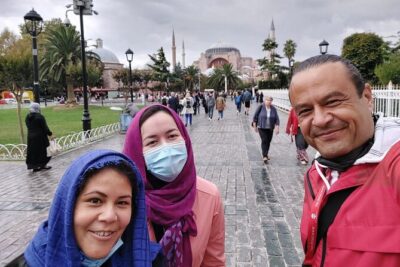
Best of Istanbul 1, 2 or 3-Day Private Guided Istanbul Tour
Read our review →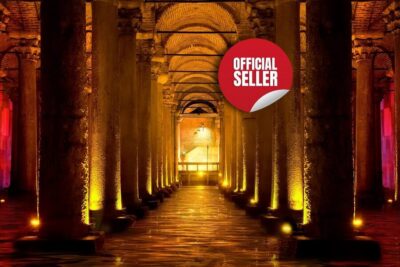
Basilica Cistern Fast-Track Entry and Audio Guide
Read our review →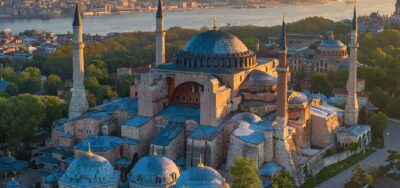
Hagia Sophia Skip-the-Line Ticket & Museum Option
Read our review →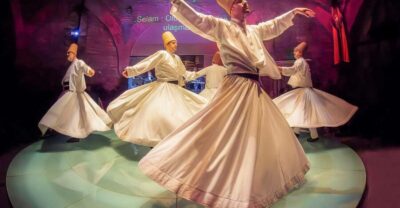
Hodjapasha Whirling Dervishes Show & Exhibition
Read our review →