Reviewed · ISTANBUL TOURS
Istanbul Private Full-Day Classics Tour with Options
Istanbul’s great monuments sit close together, but they tell very different stories. This private six-hour tour links the Byzantine Hippodrome, the Ottoman Topkapi Palace, the Blue Mosque, Hagia Sophia, and the Grand Bazaar into one focused day. I like the private format, which lets your guide adjust the pace, and I like the way the route brings architecture, politics, religion, and daily life into the same picture.
I also appreciate the chance to walk between the main sights rather than spend the day in a vehicle. The main caution is time: five major stops in six hours is a lot, and the listed $244 price is for a group up to one, with entrance costs paid separately to the guide. A guide who keeps the day moving matters.
Key points to know before booking
- Five famous sights in six hours: The route covers the Hippodrome, Blue Mosque, Topkapi Palace, Hagia Sophia, and Grand Bazaar.
- Private guiding: You have your own guide, with English, French, and German available, rather than joining a large shared group.
- Strong historical range: You move from Byzantine public life to Ottoman court life, Islamic worship, Christian heritage, and modern market culture.
- Salim is a memorable guide option: His warm manner and ability to handle children’s changing energy made him a particularly good fit for families.
- Tickets cost extra: Entrance tickets are pre-reserved, but their value must be paid to the guide separately.
- Plan around Tuesday: Topkapi Palace is closed on Tuesdays, so this tour needs a different date if that palace is a priority.
Why this route works in Istanbul’s historic center
Istanbul can feel like several cities layered on top of one another. The morning begins at the Hippodrome, moves into Ottoman imperial power, then turns toward sacred buildings and commercial life. That order gives you a useful framework before the visual details start to blur together.
The private setup is the main reason to choose this experience over a basic group walk. You can ask why a building matters, pause over a detail, or signal that your children need a short break. One guide, Salim, is especially good at reading a family’s energy, while another guide with a PhD background has been praised for explaining the historical, cultural, and theological forces that shaped Istanbul.
That depth is useful here. These monuments are not just photo stops. They involve competing empires, changing faiths, royal power, and centuries of trade. A strong guide helps you connect those pieces instead of giving you a string of dates.
The tradeoff is pace. Six hours sounds generous until you divide it among five major sights, lunch, walking, and ticket procedures. You should expect a full day with plenty of standing and walking, not a slow museum visit with long breaks.
A few more Istanbul half-days to weigh up
- Istanbul: Full-Day Highlights Tour with Guide and Lunch
★ 4.6 · 1,662 reviews - From Istanbul: Full-Day Princes Island Tour with Lunch
★ 4.0 · 1,550 reviews - ISTANBUL BEST: Iconic Landmarks Full Day PRIVATE Guided City Tour
★ 5.0 · 1,032 reviews
The Hippodrome and the remains of Byzantine public life
The Hippodrome is the best first stop because it places you in the old center of Byzantine social life. This was once a huge venue for races, ceremonies, and public gatherings. Only parts of the original site remain, but the surviving monuments help you picture the scale and importance of the place.
You will see the Obelisk of Thutmose III and the Serpent Column. The obelisk began in ancient Egypt before being brought to Constantinople, while the Serpent Column reflects the city’s long connection to the wider ancient world. Their presence in the same square is a quick lesson in how Istanbul collected pieces of earlier civilizations.
I like this opening because it gives context to the monuments that follow. The Blue Mosque sits next to the Hippodrome, so you can see how Byzantine urban space was later reshaped by Ottoman rule. Your guide can make that change easier to understand through the buildings themselves.
Do not expect a complete ancient arena. The Hippodrome is an open historical area with only a few original elements left. Its value comes from imagining the vanished setting and understanding its place in the city, not from walking through a fully preserved structure.
The Blue Mosque and its six minarets
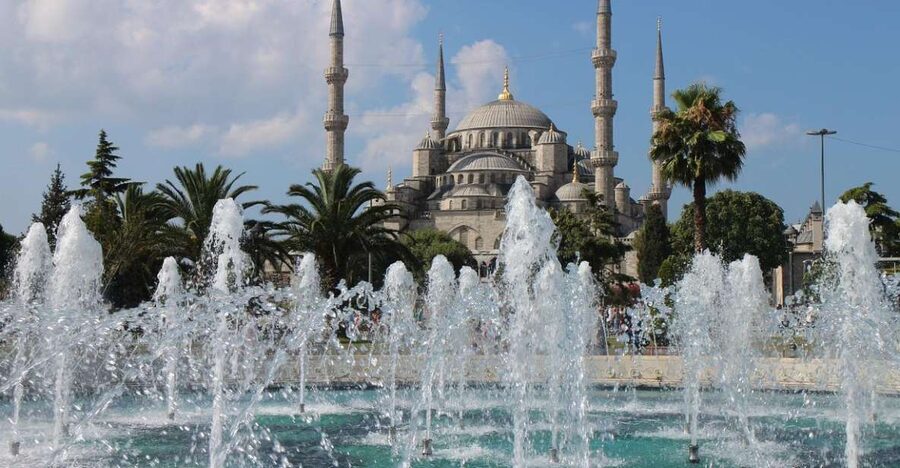
The Blue Mosque, also called the Sultan Ahmed Mosque, is one of Istanbul’s defining sights. Its design includes one main dome, eight secondary domes, six minarets, and a large number of blue tiles that gave the building its familiar name.
The mosque was built during the reign of Ahmed the First and still functions as a mosque. That matters for your visit. It is both an active place of worship and one of the city’s major attractions, so the experience is not simply a museum tour.
Inside, your guide can help you read the building as architecture rather than just decoration. The domes direct your eye upward, while the tiles and broad interior create a strong sense of scale. From outside, the six minarets form one of the most recognizable profiles in Istanbul.
Because it remains a working mosque, your guide’s instructions are important. You should be ready for the visit to follow the site’s operating rules rather than your preferred schedule. The tour description does not give specific clothing requirements or visiting hours, so check the day’s arrangements when booking.
The Blue Mosque is also a place where a private guide can be especially useful. Without context, you may simply notice blue tilework and a large dome. With explanation, you can understand how the mosque expressed royal ambition, faith, and Ottoman architectural skill.
Topkapi Palace, the Ottoman court for nearly four centuries
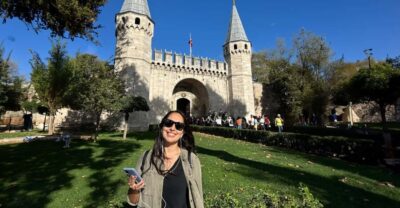
Topkapi Palace is the largest stop on the route and one of the day’s major highlights. Dating from 1459, it served as the main residence of Ottoman sultans for nearly four centuries. In 1924, it became a museum.
The palace covers a large site and includes several buildings. You will see collections of imperial and Ottoman utensils, relics, caftans, and portraits of the sultans. These objects make the palace feel more personal than a series of grand rooms alone. They show how power was displayed, used, and preserved.
I would allow your guide to set the order and keep an eye on the clock here. Topkapi can easily absorb much of the day, especially if you stop at every display. The palace is not one single hall that you can understand in a few minutes. It is a broad complex, and the private format helps your guide choose what deserves the most attention for your interests.
This is the stop most likely to suffer if the itinerary runs late. You are covering five important places, so you may not have time to examine every collection in detail. If Ottoman court life is your main interest, tell the guide at the start. If you prefer the grand architectural story, you may want more time for the buildings and grounds.
Topkapi Palace is closed on Tuesdays. That is the clearest scheduling issue in the entire tour. If the palace is central to your Istanbul plans, do not book this route for Tuesday.
Same base, a completely different sort of day:
- Istanbul: Bosphorus Dinner Cruise & Show with Private Table
★ 4.8 · 44,561 reviews - Istanbul: Daytime or Sunset Sightseeing Cruise & Audio Guide
★ 4.8 · 14,430 reviews - Istanbul: Bosphorus Dinner Cruise with Turkish Night Show
★ 4.8 · 10,127 reviews - Best of Istanbul 1, 2 or 3-Day Private Guided Istanbul Tour
★ 5.0 · 8,922 reviews
Lunch and the value of a local recommendation
After Topkapi Palace, you get a lunch break. The guide recommends restaurants where you can try Turkish food, but lunch is not included in the price.
That arrangement gives you some choice and keeps the tour from locking you into one meal. It also means you should budget for lunch separately. The supplied details do not identify a specific restaurant or menu, so your guide’s recommendation will shape this part of the day.
A lunch break is more than a practical pause. After the Hippodrome, Blue Mosque, and Topkapi Palace, you will have taken in a great deal of information. A meal gives you time to rest before Hagia Sophia and the Grand Bazaar. Still, with only six hours overall, do not expect a long, leisurely restaurant stop unless the schedule allows it.
Hagia Sophia and the meeting of two faiths
Hagia Sophia brings the tour’s religious and architectural story into sharp focus. When it was built in 537, it served as an Eastern Orthodox church. After Constantinople was conquered by the Ottoman Turks in 1453, the building became an imperial mosque. About five centuries later, it was converted into a museum.
That sequence is what makes Hagia Sophia so important. You are not looking at one tradition in isolation. The building reflects the city’s changing rulers and religious life across many centuries.
I especially value having a guide here because the building’s scale can overwhelm the details. Your guide can explain how the structure served Christianity and Islam at different points, and how its role changed as the city changed. A guide with strong theological and historical training can add real value at this stop, particularly if you want more than an architectural overview.
The experience is also connected to the day’s earlier stops. The Hippodrome represents public life in Byzantine Constantinople. Hagia Sophia represents the religious center of that world and its later transformation under the Ottomans. Topkapi then shows how Ottoman rulers organized imperial power. Together, the three stops create a much clearer picture than any one building alone.
The supplied information describes Hagia Sophia as a museum. Since the site’s role and visiting arrangements can change, confirm the current conditions when you book. Your guide will be the best source for how much time is available and what areas you can visit.
The Grand Bazaar, Istanbul’s commercial maze
The Grand Bazaar provides a lively change of pace after the formal monuments. Built between 1455 and 1461, it is part of the walled city and includes 61 covered streets with more than 3,000 shops.
The market offers almost anything you might need, from the usual souvenirs to household goods and other merchandise. The point is not only to shop. The Grand Bazaar shows how trade fits into Istanbul’s historic center, and its covered lanes offer a different kind of architectural and social experience from the mosques and palaces.
A guide is handy here because the market can feel confusing. You can ask for help understanding what you are seeing and use the visit as a short introduction before deciding if you want to return on your own. The tour does not promise a particular shopping list or special market demonstration, so keep your expectations practical.
You should also remember that this is the final stop after a demanding day. If you are tired, the bazaar may feel like sensory overload rather than a relaxed browse. If shopping interests you, tell your guide early so the final portion gets the attention it deserves.
Price, tickets, and what you actually receive
The listed price is $244 per group up to one, which makes the value depend heavily on your party size and priorities. You are paying for a private guide and a concentrated route through Istanbul’s most famous historic sites, not for an all-inclusive package.
Transportation is not included. Hotel pickup is available on foot, so this works best if you are staying near the historic center and can meet the guide without a vehicle. You should not assume that a private car, taxi, or transfers are part of the arrangement.
Lunch and personal expenses are also extra. Entrance tickets are pre-reserved, which can save time at the sites, but the admission value must be paid separately to the guide. Read that detail carefully when comparing the total cost with other tours.
The price can make sense if you value private attention, language choice, and historical explanation. It is less attractive if you mainly want transportation, a quick photo stop at each monument, or an all-inclusive day with meals and entry fees already bundled.
The tour has free cancellation up to 24 hours before the start time, and you can reserve now and pay later. Those policies add flexibility, but they do not change the need to check the final cost of tickets and lunch.
The guide can make or break the six-hour schedule
The strongest part of this experience is the guide. Salim is a good match for families because he brings a friendly manner and can adjust when children’s energy rises and falls. That is not a small detail on a six-hour walking tour.
Another guide has been described as a PhD-level historian who explains the cultural, historical, and theological influences behind Istanbul’s buildings. If you care about religion and political history, ask about the guide’s background when arranging the tour.
The language choices are English, French, and German. A private group also gives you a better chance to ask direct questions and request a different balance between architecture, history, religion, and shopping.
There is one fair warning: one guest found the guide spent too much time on a cellphone. That appears to be an individual issue rather than a problem built into the tour, but it is worth remembering that guide quality affects a private experience more than a shared one. If the guide is attentive, the format feels personal. If not, the premium is harder to justify.
Who should book this private Istanbul tour
I would recommend this tour to a first-time visitor who wants a strong introduction to the historic center in one day. It also suits families who want a guide capable of adjusting the pace, couples who prefer private attention, and history-minded visitors who want more explanation than a self-guided walk provides.
It is a good choice if you want to see the classic monuments without spending time arranging separate tickets and routes. The pre-reserved entries and walking pickup can simplify the day, even though you still pay admission separately.
I would be more cautious if you dislike packed itineraries. Five major sights, a meal break, and walking in six hours leaves little room for lingering. You may prefer a shorter tour focused on two or three sites if your goal is a slow look at every room and exhibit.
This is also not the right date for anyone who wants Topkapi Palace on a Tuesday. Choose another day, since the palace is closed then.
Final call: a strong introduction, with costs to check
Book this tour if you want Istanbul’s essential historic sights explained by a private guide in a single, well-organized route. The best reasons are the personal format, the range of historical periods, and the chance to ask questions at places as complex as Hagia Sophia and Topkapi Palace.
Before paying, confirm three things: the guide language, the separate entrance costs, and the walking pickup point. Ask how the six hours will be divided if you have a strong interest in Topkapi Palace, religious history, or shopping at the Grand Bazaar.
The tour earns its high rating because the right guide can turn a fast day into a meaningful one. Just keep your expectations clear: this is a concentrated overview, not a slow private study of every monument.
FAQ
How long does the Istanbul Classics Tour last?
The tour lasts six hours.
What sites are included?
The route includes the Hippodrome, Blue Mosque, Topkapi Palace, Hagia Sophia, and the Grand Bazaar.
Is the tour private?
Yes. It is offered as a private group experience.
Which languages are available?
Live guiding is available in English, French, and German.
Is hotel pickup included?
Pickup from your hotel is available on foot. Transportation is not included.
Are entrance fees included in the price?
No. Entrance tickets are pre-reserved, but the admission value must be paid separately to the guide.
Is lunch included?
No. Lunch is not included. The guide recommends restaurants where you can eat Turkish food.
Can I take the tour on a Tuesday?
Topkapi Palace is closed on Tuesdays, so choose another day if you want that palace included in the visit.
Just added around Istanbul
- istanbul airport transfer★ 3.5 · 43 reviews
- Istanbul Private Guiding Service★ 5.0 · 68 reviews
- Flying Dress Photography on an Iconic Rooftop in Istanbul★ 5.0 · 87 reviews
- Best Istanbul tour with private guide by skipping ticket line★ 5.0 · 103 reviews
- Food Tour in Istanbul with Local Guide★ 5.0 · 37 reviews
- istanbul old city private tour★ 5.0 · 19 reviews
- Istanbul Private Tour (Licensed Guide)★ 5.0 · 17 reviews
- Istanbul Airport (IST) To Hotels Transfer★ 5.0 · 80 reviews
Istanbul Tours, compared.
Bosphorus Dinner Cruise & Show with Private Table
Read our review →
Daytime or Sunset Sightseeing Cruise & Audio Guide
Read our review →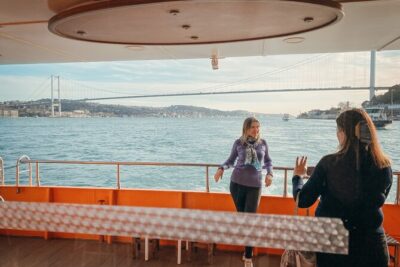
Bosphorus Dinner Cruise with Turkish Night Show
Read our review →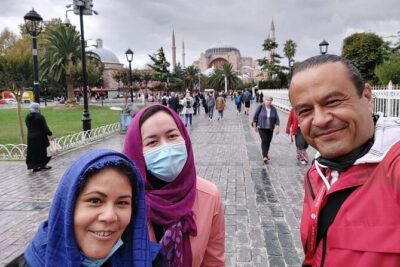
Best of Istanbul 1, 2 or 3-Day Private Guided Istanbul Tour
Read our review →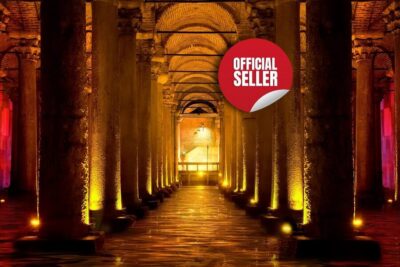
Basilica Cistern Fast-Track Entry and Audio Guide
Read our review →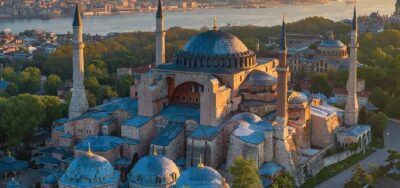
Hagia Sophia Skip-the-Line Ticket & Museum Option
Read our review →
Hodjapasha Whirling Dervishes Show & Exhibition
Read our review →