
Reviewed · ISTANBUL TOURS
10 Days Turkey Tour to Istanbul, Cappadocia, Antalya, Ephesus
Turkey packs several eras and regions into one remarkable trip: Byzantine domes in Istanbul, cave churches in Cappadocia, Mediterranean views in Antalya, Roman ruins at Ephesus, and the white terraces of Pamukkale. This 10-day route gives you a ready-made way to connect them without arranging each flight, hotel, and transfer yourself.
I especially like the small groups of up to 15 and the mix of guided sightseeing with free time in the evenings. The itinerary also handles the awkward parts of a large-country trip, including domestic air travel and city-to-city transportation. The main caution is pace: you cover a lot of ground, and entrance fees are mostly extra.
The trip at a glance
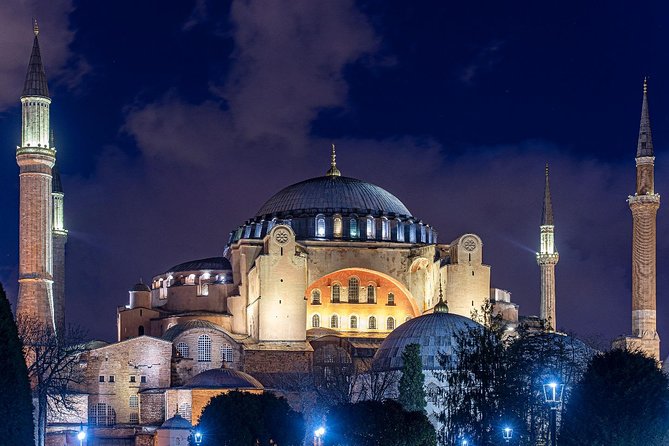
- Istanbul’s imperial core: Hagia Sophia, the Blue Mosque, Topkapi Palace, the Hippodrome, the Grand Bazaar, and the Spice Market.
- Two full days in Cappadocia: Fairy chimneys, Red Valley, Goreme, Uchisar, Cavusin, Pigeon Valley, and Derinkuyu underground city.
- Antalya from city to coast: Lower Duden Waterfalls, Kaleici, a short boat ride, and the Tünektepe cable car.
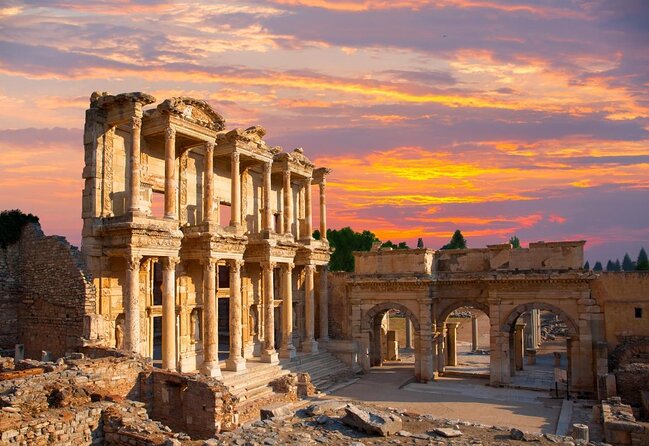
- Pamukkale and Ephesus: Walk among Roman remains, see the famous thermal terraces, and visit the Temple of Artemis.
- Practical setup: Nine hotel nights, domestic flights, airport and hotel pickup in Istanbul, nine breakfasts, and five lunches.
- Personal service: The arrangements are managed by City of Sultans, with guides and local contacts in each region.
Why this route works for a first visit
At $1,699 per person, this is not a bare sightseeing package. The price includes nine nights of accommodation, domestic flight tickets, breakfasts, five lunches, transfers, and guided excursions in four major areas. That can be good value if you want someone else to coordinate a country where distances between highlights are considerable.
The strongest feature is the route itself. Istanbul, Cappadocia, Antalya, Pamukkale, and Ephesus each feel different, so the trip avoids giving you ten days of similar monuments. You move from city museums to outdoor rock formations, then to the Mediterranean and the Roman world.
Still, check the meal count before booking. The tour description refers to 16 provided meals, while the inclusions specify nine breakfasts and five lunches, which adds up to 14. Also budget for museum and site admissions, since several major stops list entrance fees separately.
The tour averages booking about 66 days ahead, which is a useful hint that you should not leave planning until the last minute if your dates are fixed. Pickup is offered from Istanbul airports, cruise ports, and centrally located Istanbul hotels.
More ways to see Ephesus:
- 4 Days Turkey Tour – Cappadocia, Ephesus and Pamukkale Tour
★ 5.0 · 138 reviews - 6 Days Turkey Tour Cappadocia, Pamukkale, Ephesus, Gallipoli Troy
★ 5.0 · 109 reviews - Daily Ephesus & House of Virgin Mary from Istanbul – Small Group
★ 4.0 · 95 reviews
Istanbul begins with the city’s great monuments
Your first day is deliberately light. You arrive in Istanbul, meet the transfer at the airport or your hotel, and settle in for the night. That matters after an international flight, especially since the next day is packed with major sights.
Day two focuses on the historic center. Hagia Sophia Grand Mosque is the headline stop, and you should allow yourself time to look up at its enormous interior. The building’s long life as a Byzantine church, mosque, museum, and mosque again gives it unusual importance, though admission is not included.
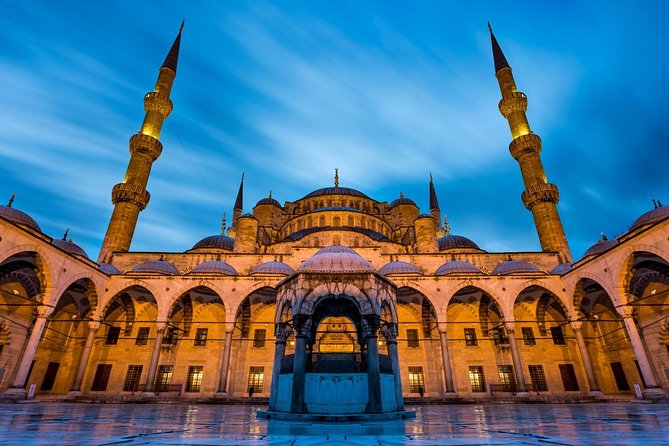
The Blue Mosque follows. Its blue interior tiles and six minarets make it one of Istanbul’s most recognizable buildings. The visit is listed at 45 minutes, so expect an introduction rather than a slow, unhurried examination of every detail.
Topkapi Palace gets two hours, which is a better amount of time for a former imperial residence. The treasury and porcelain collections are central attractions. Admission is extra, and the palace is closed on Tuesdays, when the itinerary substitutes the Basilica Cistern. Confirm the day of your visit so you know which site to expect.
The Hippodrome is a short outdoor stop with the Egyptian Obelisk, Serpentine Column, and Wilhelm II fountain. It was once the center of public life in Constantinople, and the open-air setting gives you a helpful sense of how the old city was organized.
You finish at the Grand Bazaar. The hour and a half gives you time to browse carpets, jewelry, leather goods, and souvenirs. Shopping is part of the experience, but you do not have to buy anything. Go with curiosity, keep your pace relaxed, and remember that a guided bazaar visit can be as much about orientation as shopping.
Day three includes the Spice Market, where the focus shifts from imperial architecture to smells, food, and daily commerce. The route also offers a chance to cross from Europe to Asia in about two minutes. That short continental hop is a fun feature, though the provided details do not specify the exact boat or transport used.
Cappadocia trades domes for fairy chimneys
The itinerary then turns to Cappadocia, a UNESCO World Heritage area spread across central Anatolia. Here the main attraction is not one building, but a broad region shaped by volcanic rock and human settlement.
Day four begins with Cappadocia before moving through Devrent Valley, known for its unusual fairy chimneys. The stops are fairly short, about 45 minutes each, so you will have time for viewpoints and photographs but not a long walk at every location.
The Fairy Chimneys stop highlights the mushroom-shaped pinnacles that make the area so recognizable. Goreme Open-Air Museum is the historical center of the day. Its cave churches were built and used by early Christians, and the painted interiors give the rocks a human story beyond their strange shapes. Entrance is not included, so set aside money for this and other paid sites.
Uchisar closes the day with a high viewpoint over the surrounding area. The village and castle-like rock provide one of Cappadocia’s best broad views. If you enjoy seeing how geography shapes settlement, this is one of the more useful stops on the route.
Day five adds a different side of the region. Red Valley is known for its colored rock and fairy chimneys, while Cavusin offers distinctive formations and a more atmospheric setting. Pigeon Valley is suited to walking, trekking, and hiking, though the listed one-hour visit means you should expect a short outing rather than a full trail day.
Derinkuyu Underground City is the most physically demanding stop in Cappadocia. This large underground settlement is well preserved, but narrow passages and uneven surfaces can make it tiring. The tour requires moderate physical fitness, and that note is especially relevant here and during the old-city walks in Istanbul.
Cappadocia is also the place where you may have the most flexibility. One detailed account of the trip describes an optional hot-air balloon ride and a cave hotel stay, with Hakan guiding the Cappadocia portion for two full days. Those details are not listed as standard inclusions, so ask specifically if a balloon flight or cave-style accommodation is important to you.
Antalya brings a welcome change of pace
Day six moves to Antalya, on Turkey’s Mediterranean coast. After the stone valleys and underground chambers of Cappadocia, the shift to sea views and warmer air can feel like a relief.
The next day starts at Lower Duden Waterfalls. The park is described as shady and cool, with cascading water and a calmer atmosphere than the city streets. The stop lasts an hour and admission is included.
Kaleici, Antalya’s old town, brings Ottoman-style houses, the harbor, Hadrian’s Gate, and views over the water. A short boat trip is also included. The combined visit lasts about 90 minutes, so you will see the key sights without having a full free day to wander every lane.
The Tünektepe cable car climbs to a 618-meter hill west of Antalya. From the top, you get wide views of the city and nearby pine-covered slopes. The hill has observation terraces, a cafeteria, and a rotating restaurant listed among its facilities. The cable car is included, making this one of the route’s easy scenic highlights.
Antalya is less about ancient sites than Istanbul, Cappadocia, and Ephesus. That is a strength if you need variety, but a weakness if your only goal is archaeology. I would use the evening here for a quiet meal or independent walk rather than trying to add another major excursion.
A few more Istanbul half-days to weigh up
- Istanbul: Bosphorus Dinner Cruise & Show with Private Table
★ 4.8 · 44,561 reviews - Istanbul: Daytime or Sunset Sightseeing Cruise & Audio Guide
★ 4.8 · 14,430 reviews - Istanbul: Bosphorus Dinner Cruise with Turkish Night Show
★ 4.8 · 10,127 reviews - Best of Istanbul 1, 2 or 3-Day Private Guided Istanbul Tour
★ 5.0 · 8,922 reviews
Pamukkale’s white terraces lead to Kusadasi

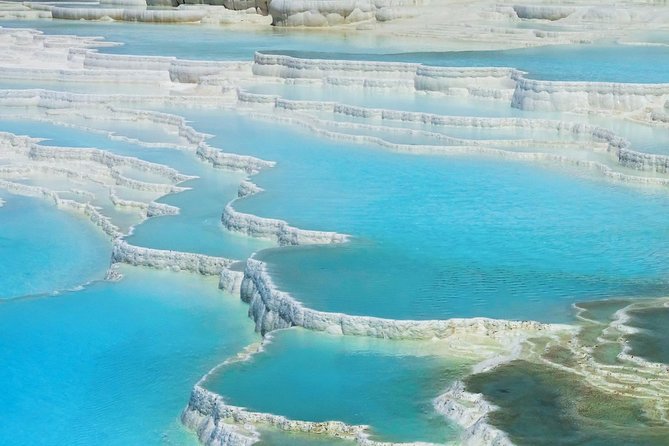
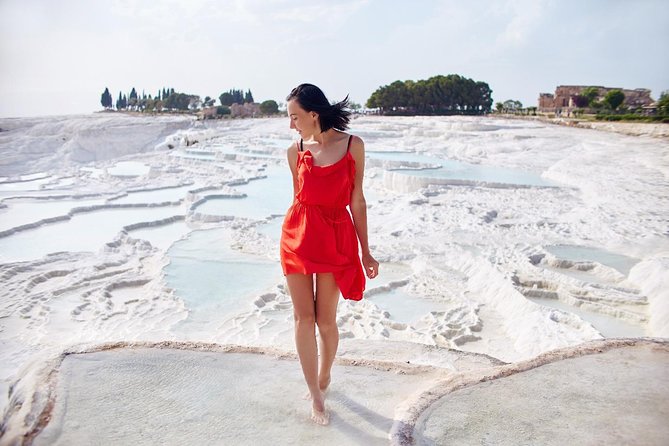
Day eight links two very different sights. Hierapolis and Pamukkale combine an ancient city with the famous white travertines, often called the Cotton Castle. The terraces were formed by mineral-rich thermal water, and their bright appearance is one of Turkey’s most distinctive natural sights.
The schedule gives two hours to Hierapolis and another hour to the thermal pools. The ancient site includes Roman remains and sarcophagi, while Pamukkale provides the visual centerpiece. Admission to both is not included.
This is a place where practical planning matters. The terraces can be bright and exposed, and walking among ancient remains adds up quickly. Wear comfortable shoes and be prepared for a fair amount of time on your feet. The tour does not promise a long bathing session, so think of the thermal pools primarily as a sight and walking area unless your guide confirms otherwise.
Kusadasi follows as the overnight base near Ephesus. It is a resort and port town with beaches and clear water, offering a more relaxed setting after a full day at Pamukkale. The route only lists an hour here, so you get an introduction rather than a full coastal stay.
Ephesus rewards a careful two-hour walk
Day nine is the archaeological high point for many people. At Ephesus, you enter through the Magnesia Gate and walk downhill with your guide through the former Roman provincial capital.
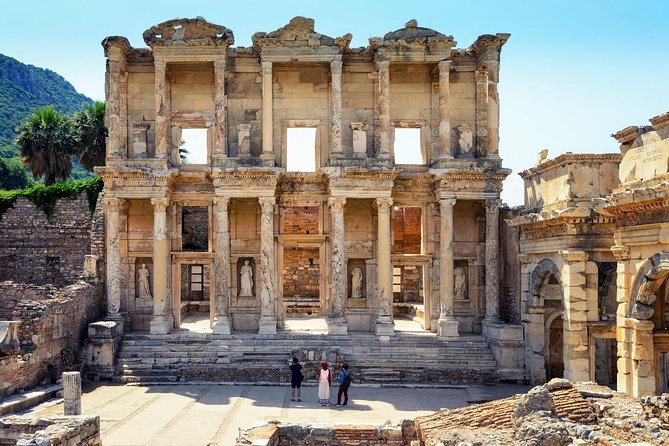
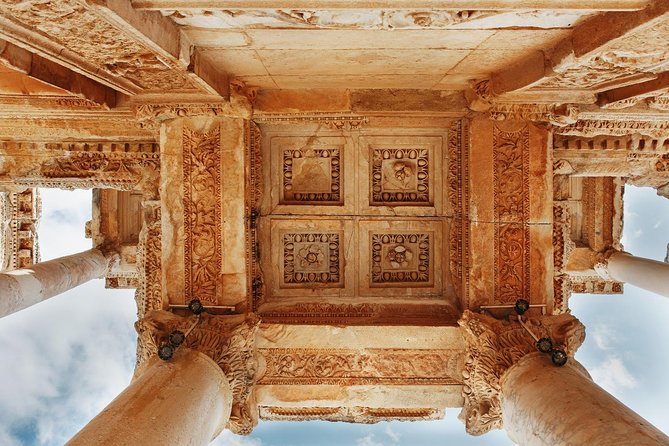
The route includes the Odeum, Celsus Library, Temple of Hadrian, Fountain of Trajan, and Great Theater. The two-hour visit gives enough time to understand the major buildings, but the downhill walk and uneven ancient paving call for sensible footwear.
A private three-hour transfer has been used for the Ephesus portion on one trip, and Orgun is identified as the guide for the ruins. If you care about detailed explanations of Roman urban life, ask how much of the visit is guided and how much is independent time.
Meryemana, known as the House of the Virgin Mary, is another one-hour stop. The itinerary also includes the Basilica of St. John, associated with the final years and burial of the evangelist, within the description of this area. The Temple of Artemis gets 45 minutes. Only fragments remain, but its place among the Seven Wonders of the ancient world makes it worth seeing in context.
The day has several sacred and archaeological stops close together. That is useful for people who want a strong historical finish, but it can feel full if you prefer slow museum visits or long meals.
Hotels, flights, and the guided structure
The tour provides nine nights of accommodation and domestic flights, with the final transfer from your Kusadasi-area hotel to Izmir Airport before a flight to Istanbul on day ten. The tour ends when you arrive in Istanbul.
You should understand the operating style before booking. This is not one continuous group traveling with the same guide from morning to night. Instead, local guides and transfers handle different parts of the route, and you may need to follow daily instructions and make your own way through airports.
That arrangement can work well. One detailed account describes guides and drivers assisting with airport questions, and notes that the groups were sometimes very small, even private. Another account praises Ozgur for responding quickly, arranging hotels and flights, and helping recover a bag left at a hotel in another city.
The guide names connected with different sections include Hakan in Cappadocia, Cem in Antalya, and Orgun around Ephesus. Treat those names as useful points of reference, not a guarantee of who will lead your departure.
The group limit of 15 is a real advantage. Small groups make it easier to hear explanations, ask questions, and adjust when someone needs a slower pace. The tradeoff is that the schedule may still feel fixed, since several regions must fit into ten days.
What the $1,699 price really covers
The value depends on how much planning you want to avoid. Booking hotels, internal flights, airport transfers, guides, and intercity transportation separately can take time, especially across four regions. Here, those pieces are organized into one route, and five lunches are included along with nine breakfasts.
The price does not cover entrance fees to museums and archaeological sites. Hagia Sophia, Topkapi Palace, Goreme Open-Air Museum, Derinkuyu, Pamukkale, Hierapolis, Ephesus, Meryemana, and the Temple of Artemis all need careful checking because several are explicitly listed as extra.
The headline also says 16 meals are provided, but the detailed inclusions list 9 breakfasts and 5 lunches. Since that totals 14, ask for clarification before paying. This is a small but important budgeting point.
Free cancellation is available up to 24 hours before the experience begins. Changes or cancellations inside that window are not accepted for a refund.
Who will get the most from this Turkey tour
I would choose this trip if you want to see Turkey’s major regions without spending weeks on research. It suits first-time visitors who value local guides, arranged transport, and a small group, but still want some evenings to eat and explore independently.
It also fits people who like variety. You get mosques and palaces, markets, rock valleys, underground chambers, waterfalls, cable-car views, thermal terraces, and Roman ruins.
I would hesitate if you dislike early departures, frequent hotel changes, or handling airports on your own. I would also hesitate if you want long, unstructured stays in each city. Ten days is enough for a strong first look, not enough for every museum, village, beach, and archaeological site.
Should you book it?
Book this tour if your priority is efficient coverage and reduced planning. The small groups, internal flights, included breakfasts and lunches, and local guides make $1,699 a reasonable package price, provided you account for site admissions and confirm the meal total.
Skip it if you want a slow trip centered on one or two regions. For everyone else, this is a practical first route through Turkey, with enough guided structure to make the major sites meaningful and enough independent time to keep the experience from feeling fully scripted.
FAQ
How long is the Turkey tour?
The tour lasts approximately 10 days and includes nine nights of accommodation.
Which destinations are included?
The route visits Istanbul, Cappadocia, Antalya, Pamukkale, Kusadasi, and Ephesus, with the final flight returning from Izmir to Istanbul.
Are domestic flights included?
Yes. Domestic or internal flight tickets are included, including the flight from Izmir to Istanbul on day 10.
How many people can join the group?
The maximum group size is 15 people. The group may be smaller, and some departures may operate with very few participants.
Are meals included?
The detailed inclusions specify nine breakfasts and five lunches. The tour description also refers to 16 provided meals, so confirm the exact total before booking.
Are entrance fees included?
No. Entrance fees to museums and archaeological sites are not included. Several listed stops, including Hagia Sophia, Topkapi Palace, Ephesus, Pamukkale, and Goreme Open-Air Museum, specify separate admission.
Where is pickup available?
Free pickup is offered from Istanbul airports, cruise ship ports, and centrally located Istanbul hotels.
Is the tour suitable for people with limited mobility?
A moderate level of physical fitness is required. The itinerary includes walking through historic districts, ancient ruins, valleys, and Derinkuyu underground city.
What happens on the final day?
You are picked up from your hotel and transferred to Izmir Airport for a flight to Istanbul. The tour ends when you arrive in Istanbul.
Just added around Istanbul
- istanbul airport transfer★ 3.5 · 43 reviews
- Istanbul Private Guiding Service★ 5.0 · 68 reviews
- Flying Dress Photography on an Iconic Rooftop in Istanbul★ 5.0 · 87 reviews
- Best Istanbul tour with private guide by skipping ticket line★ 5.0 · 103 reviews
- Food Tour in Istanbul with Local Guide★ 5.0 · 37 reviews
- istanbul old city private tour★ 5.0 · 19 reviews
- Istanbul Private Tour (Licensed Guide)★ 5.0 · 17 reviews
- Istanbul Airport (IST) To Hotels Transfer★ 5.0 · 80 reviews
Istanbul Tours, compared.
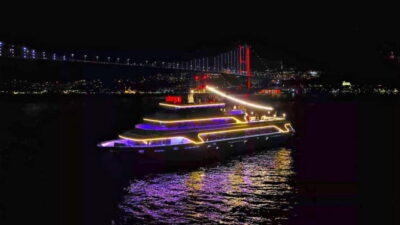
Bosphorus Dinner Cruise & Show with Private Table
Read our review →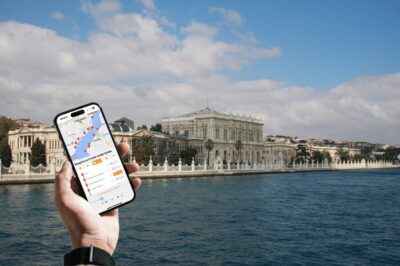
Daytime or Sunset Sightseeing Cruise & Audio Guide
Read our review →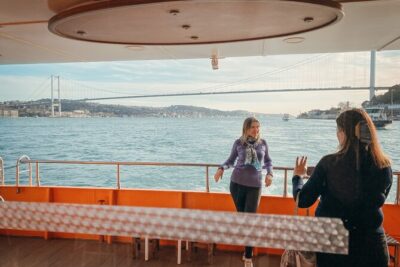
Bosphorus Dinner Cruise with Turkish Night Show
Read our review →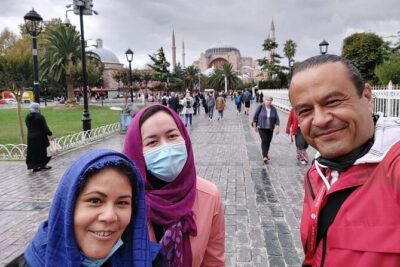
Best of Istanbul 1, 2 or 3-Day Private Guided Istanbul Tour
Read our review →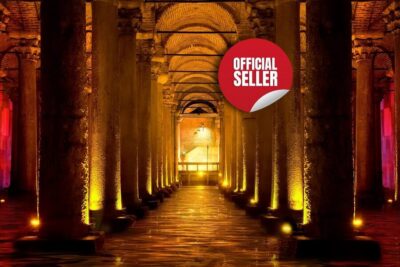
Basilica Cistern Fast-Track Entry and Audio Guide
Read our review →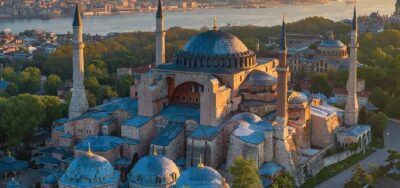
Hagia Sophia Skip-the-Line Ticket & Museum Option
Read our review →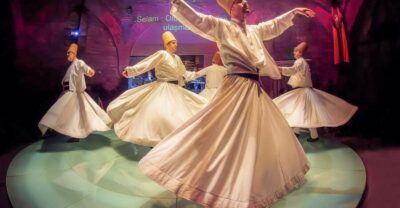
Hodjapasha Whirling Dervishes Show & Exhibition
Read our review →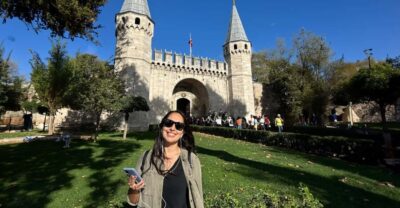
Topkapi Palace & Harem Museum Ticket & Audio Guide
Read our review →Browse the lists this tour appears in