
Reviewed · ISTANBUL TOURS
Byzantion Walk Path and City Walls of Istanbul
The most striking part of this Istanbul walk is its focus on the Theodosian Walls, the huge defensive system that protected Constantinople for centuries. You begin at Yedikule, see the Golden Gate, then trace the walls north through several historic gates before finishing at Chora Museum.
I like the route’s strong sense of place, and I like having a private guide who can adjust the pace and answer questions. Guides Taha and Ally are named in the tour feedback, with Taha especially praised for clear history, friendly conversation, planned routes, and regular breaks.
The main drawback is practical: this is not an easy sightseeing stroll. You may use a taxi or public transport to reach Yedikule, walk over uneven ground, and spend much of the day outdoors. Chora Museum is closed on Fridays, and its admission is not included.
Key points to know before booking
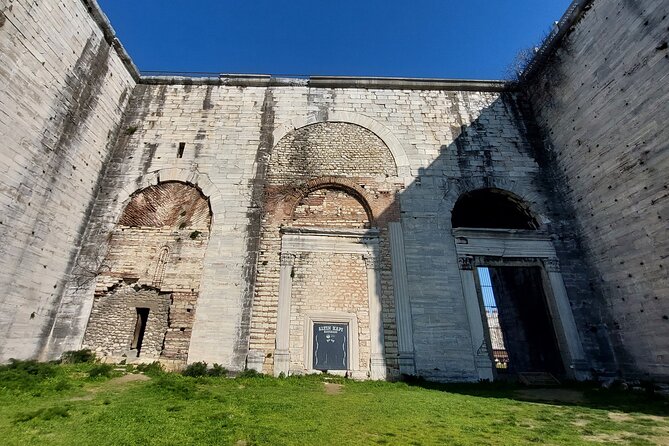
- The Golden Gate at Yedikule: Begin with the most imposing surviving section of Istanbul’s land walls and an important Ottoman-era gate and dungeon area.
- A private group of up to 15: You get a guide focused on your party rather than a large shared group, with room for questions and breaks.
- Three wall districts in one route: Yedikule, Silivrikapı, and Mevlanakapı show how the defenses changed from gate to gate.
- Chora Museum adds superb Byzantine art: Mosaics and frescoes from the 14th century give the walk an artistic finish.
- A physically active history tour: Expect roughly one to five hours, depending on the plan, transport, walking pace, and time at Chora.
- Strong current satisfaction: The experience has a five-star rating from 19 ratings, with 100 percent recommendation shown in the supplied tour information.
Why Istanbul’s land walls are worth your time
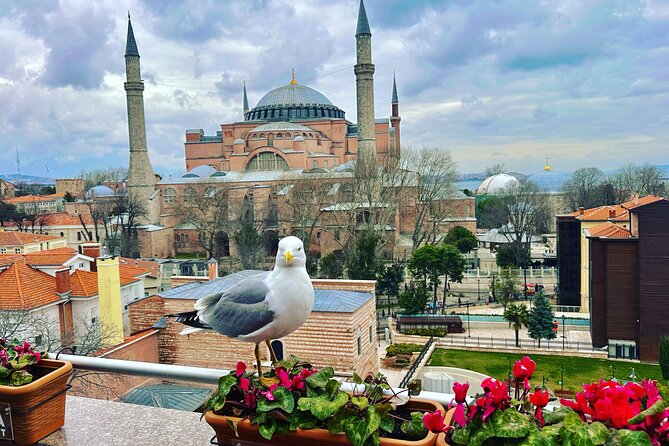
Istanbul’s famous sights cluster around Sultanahmet, where Hagia Sophia, the Blue Mosque, and the Hippodrome can fill a first day. The Byzantion Walk takes you away from that compact core and toward the old city’s western edge, where the story is told through stone, gates, towers, and changing neighborhoods.
The walls were not a single barrier. The defensive system included a moat, an outer wall, and a much taller inner wall, described on the tour as reaching about 12 meters. That layered design mattered. An attacking force first had to cross open ground and the moat, then deal with another wall before reaching the main fortification.
I like this route because it turns military history into something you can read with your eyes. At one gate, you see irregular stones and brick courses. At another, you see polygonal towers. Along the route, the size of the fortifications helps explain why Constantinople resisted so many attacks.
The walk also gives you a useful contrast between Byzantine and Ottoman Istanbul. Yedikule links the old imperial defenses with Ottoman dungeons and gate use, while Chora Museum shifts the subject from war to art, devotion, and the late Byzantine court.
More walking tours in Istanbul:
- Istanbul: Fener Balat Half-day Guided Walking Tour
★ 4.9 · 1,711 reviews - Istanbul Highlights Small-Group Walking Guided Tour
★ 4.5 · 1,346 reviews - Istanbul: European and Asian Side Guided Foodie Walking Tour
★ 4.9 · 1,038 reviews
Yedikule and the Golden Gate
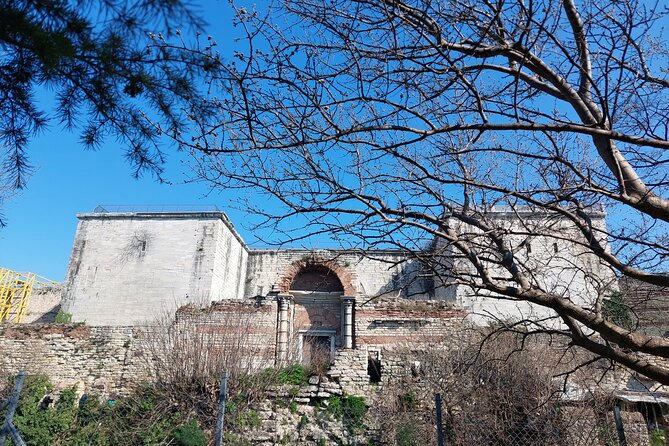
Yedikule is the natural opening for this experience. It contains one of the largest and most impressive surviving sections of the city walls, along with the Golden Gate, a ceremonial and strategic entrance with a long role in the city’s story.
The Golden Gate was built into the Theodosian wall system and later became associated with Ottoman-era use of the Yedikule area. The tour also presents Yedikule as a place of dungeons during the Ottoman period, so you are not looking at an isolated medieval ruin. You are seeing a site reused and reinterpreted across different periods of Istanbul’s past.
The scheduled visit here is about 1 hour and 30 minutes, the longest stop on the route. That makes sense. Yedikule is the place where the scale of the defenses comes through most clearly, and you will want time for the guide to explain how the gates and walls worked together.
Your guide can also help you notice details that are easy to miss on your own. The point is not simply to photograph a large wall. It is to understand why this section mattered, how an entrance could serve both ceremony and defense, and how the Ottomans later used the site.
The tour description lists admission here as free. Still, the exact condition and accessibility of old wall areas can vary, so wear shoes suited to uneven surfaces. The experience is not recommended for anyone with leg problems, and a moderate level of fitness is expected.
Silivrikapı and the marks of repair
From Yedikule, the route continues to Silivrikapı, another major gate north of Belgrad Kapı. The stop is planned for about 40 minutes, making it shorter and more focused than Yedikule.
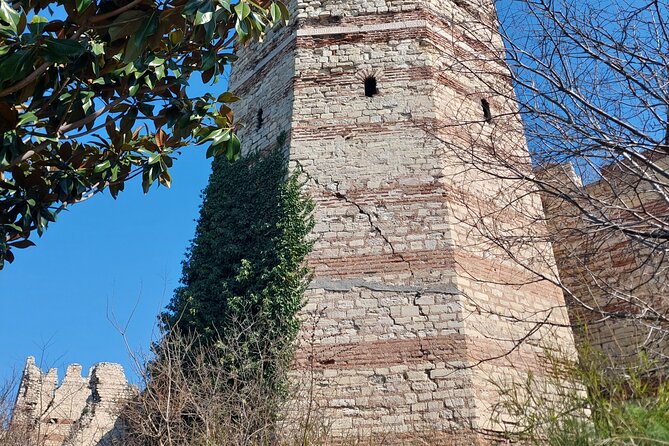
Silivrikapı is set between two polygonal gateway towers. It was renewed during the Late Byzantine period, using irregular stones with rows of brick between them. That construction detail gives your guide a chance to explain that the walls were not frozen in one building campaign. They were repaired, reinforced, and altered as military needs changed.
This is one of the places where a private guide adds real value. Without context, mixed stone and brick can look like ordinary old masonry. With a good explanation, you begin to read the repairs as evidence of repeated pressure, rebuilding, and adaptation.
I would pay close attention here to the relationship between the towers and the gate opening. The route is about military design, not just age. Towers allowed defenders to watch approaches and protect the entrance, while the surrounding walls formed part of a much broader system.
Silivrikapı may appeal most to people who enjoy details. If you want only grand monuments and polished interiors, this section may feel rough around the edges. If you like seeing how an old city was built and maintained, it is a useful stop.
Mevlanakapı and the full defensive system
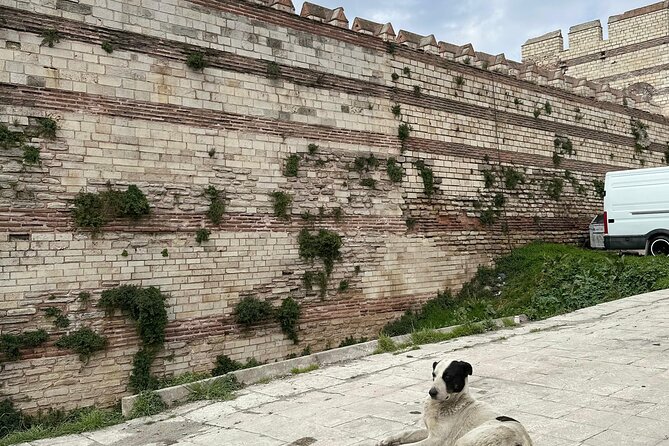
The Mevlanakapı section gives the tour its clearest explanation of the wall system as a whole. The planned visit lasts about 45 minutes, and the emphasis is on the military engineering behind the defenses.
Here, you can picture the layered arrangement: a deep moat, an outer wall, and the massive inner wall. The design created several obstacles rather than relying on one tall barrier. The system was intended to slow attackers, limit siege equipment, and give defenders more than one line from which to respond.
The tour presents the walls as defenses that held off invaders for more than a millennium. That broad span is one reason the walk is so worthwhile. You are not studying one isolated battle. You are looking at a structure that shaped the fate of Constantinople over centuries.
The guide’s storytelling is important here. Taha is repeatedly praised for explaining the important points clearly, answering questions when he could, and making a sensible plan that saved time. That approach fits this route well because the walls can feel confusing without a map in your head.
You should expect walking rather than a bus-style view from the road. The route information specifically warns against the experience for anyone with leg problems. If you need frequent pauses, say so at the start. The guide has been praised for checking whether breaks were needed, and a private tour makes that kind of adjustment more realistic.
A few more Istanbul half-days to weigh up
- Istanbul: Bosphorus Dinner Cruise & Show with Private Table
★ 4.8 · 44,561 reviews - Istanbul: Daytime or Sunset Sightseeing Cruise & Audio Guide
★ 4.8 · 14,430 reviews - Istanbul: Bosphorus Dinner Cruise with Turkish Night Show
★ 4.8 · 10,127 reviews - Best of Istanbul 1, 2 or 3-Day Private Guided Istanbul Tour
★ 5.0 · 8,922 reviews
Chora Museum and the late Byzantine finish
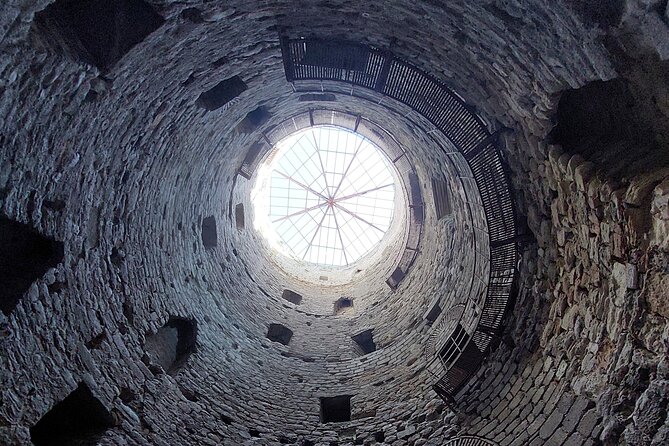
The final stop is Chora Museum, originally the Church of the Holy Savior in Chora. The planned visit lasts about 1 hour and 20 minutes, and admission is not included in the tour price.
Chora is an excellent counterpoint to the walls. After spending much of the route thinking about sieges and stonework, you turn to some of the finest surviving Byzantine mosaics and frescoes. The works date mainly from the 14th century and belong to the period often called the Palaeologan Renaissance.
What makes the art special is its emotional and natural treatment of religious subjects. The scenes are not simply flat symbols. Figures show movement, expression, and human feeling, giving you a glimpse of the artistic changes taking place in late Byzantine Constantinople.
I would not treat Chora as an optional extra if art and history matter to you. It gives the walking route a fuller shape. The walls show how the city defended itself, while Chora shows the belief, wealth, and artistic skill that those defenses protected.
There is one essential planning point: Chora Museum is closed on Fridays. Check your chosen date before booking, since the tour includes the museum in its stated program. If your schedule places the walk on a Friday, ask about the planned arrangement before committing.
What the private format adds
This is a private activity for your group, with up to 15 people, and it is offered in English. The group limit is generous, so the experience could feel intimate with two or four people but more like a small group with a full party of 15.
The private format matters most on a route like this. You can ask why one gate differs from another, stop when you need a clearer explanation, and discuss how much time to give the museum. You are not tied to the interests of strangers.
The guide feedback points to a personable style as well as historical skill. Taha is described as friendly, professional, flexible, and willing to shape a route around what a group wanted to see. Ally and Taha are also praised for building an itinerary suited to the party. Those details suggest a guide who treats the tour as a conversation rather than a memorized speech.
The meeting point is the German Fountain near the Hippodrome in Sultanahmet at 9:00 am. From there, the party goes to Yedikule by taxi or public transport. The tour ends back at the meeting point, so you do not need to work out a separate return arrangement.
Because the advertised duration ranges from one to five hours, confirm the exact plan when booking. The listed stop times alone add up to nearly four hours, before transport and transitions. In practice, this is best viewed as a flexible half-day outing rather than a tightly timed one-hour walk.
Price and what you receive
The price is $372.07 per group of up to 15 people. That is expensive for one or two people, but the calculation changes quickly if you are traveling with family or friends. Split among 10 people, the guide cost is about $37 per person. With a full group of 15, it is about $25 per person, before museum admission and food.
You receive an in-person, licensed or certified English-speaking guide and a private route through several parts of the old city. The major wall stops list free admission, while Chora Museum costs extra. Lunch is also not included, with the supplied estimate ranging from 300 to 6,000 Turkish lira, a very broad range that depends on where and what you eat.
I see the best value here for a small group that wants context rather than transportation alone. You are paying for route planning, explanations, flexibility, and the ability to connect Yedikule, Silivrikapı, Mevlanakapı, and Chora in one outing.
For a solo visitor or couple, the price is harder to justify unless the subject is a major priority. If your main goal is simply to see the walls, you might prefer to explore independently. If you want the military design and Byzantine art explained in one carefully arranged visit, the private format makes more sense.
Who should book this walk
I would recommend it most strongly to people who enjoy history, architecture, and old defensive structures. It suits a first visit if you have already seen the central Sultanahmet sights, and it can also work well on a return visit when you want a different side of Istanbul.
Art lovers should pay attention to the Chora stop. The mosaics and frescoes are the artistic high point of the route, but remember the Friday closure and extra admission cost.
Families and mixed-interest groups may also benefit from the guide. The route combines outdoor walls, gates, historical stories, and an interior museum rather than asking you to spend the whole day in one type of place. Still, younger children or anyone who tires quickly may find the walking demanding.
The tour is not a good choice if you have leg problems or want a fully relaxed sightseeing day with little movement. It also depends on good weather. If poor weather causes cancellation, you are offered another date or a full refund.
Free cancellation is available up to 24 hours before the 9:00 am start time. Changes or cancellations made less than 24 hours ahead are not refunded, and a minimum number of participants is required for the experience to run.
Should you book the Byzantion Walk?
Book this tour if you want Istanbul’s western walls explained by a private English-speaking guide, and if you value the combination of military architecture and Byzantine art. The route has a clear arc: Yedikule gives you the great entrance and Ottoman dungeon story, Silivrikapı shows later repair, Mevlanakapı explains the defensive system, and Chora finishes with art.
I would be especially comfortable booking with a group of several people, since the per-person cost becomes reasonable. Ask for the exact duration, confirm Chora’s availability if your date is near Friday, and be ready for steady walking.
Skip it if your time in Istanbul is very short, your mobility is limited, or you only want the city’s best-known central monuments. For everyone else, this is a thoughtful way to see a less familiar side of the old city, with enough flexibility to make the history personal rather than hurried.
FAQ
Where does the tour begin?
It begins at the German Fountain, Binbirdirek, At Meydanı Cd, in Istanbul’s Fatih district.
What time does the tour start?
The stated start time is 9:00 am.
Where does the tour end?
The activity ends back at the meeting point.
How long does the experience last?
The listed duration is approximately one to five hours. The scheduled visits at the four stops total nearly four hours, not including transport between locations.
What language is offered?
The tour is offered in English with an in-person licensed or certified guide.
Is this a private tour?
Yes. Only your group participates, with up to 15 people.
Is admission included at the City Walls?
Admission is listed as free at Yedikule, Silivrikapı, and Mevlanakapı.
Is Chora Museum admission included?
No. Admission to Chora Museum is not included in the tour price.
Is Chora Museum open every day?
The supplied tour information states that Chora Museum is closed on Fridays.
Is lunch included?
No. Lunch is not included. The stated estimate is about 300 to 6,000 Turkish lira.
Can I cancel for a full refund?
Yes, if you cancel at least 24 hours before the experience start time. Cancellations made less than 24 hours ahead are not refunded.
What happens if the weather is poor?
If the experience is canceled because of poor weather, you are offered a different date or a full refund.
Just added around Istanbul
- istanbul airport transfer★ 3.5 · 43 reviews
- Istanbul Private Guiding Service★ 5.0 · 68 reviews
- Flying Dress Photography on an Iconic Rooftop in Istanbul★ 5.0 · 87 reviews
- Best Istanbul tour with private guide by skipping ticket line★ 5.0 · 103 reviews
- Food Tour in Istanbul with Local Guide★ 5.0 · 37 reviews
- istanbul old city private tour★ 5.0 · 19 reviews
- Istanbul Private Tour (Licensed Guide)★ 5.0 · 17 reviews
- Istanbul Airport (IST) To Hotels Transfer★ 5.0 · 80 reviews
Istanbul Tours, compared.

Bosphorus Dinner Cruise & Show with Private Table
Read our review →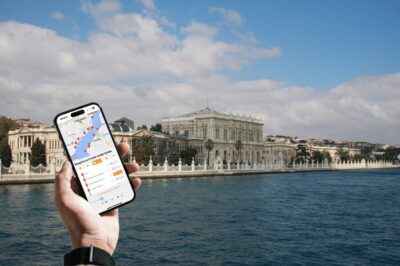
Daytime or Sunset Sightseeing Cruise & Audio Guide
Read our review →
Bosphorus Dinner Cruise with Turkish Night Show
Read our review →
Best of Istanbul 1, 2 or 3-Day Private Guided Istanbul Tour
Read our review →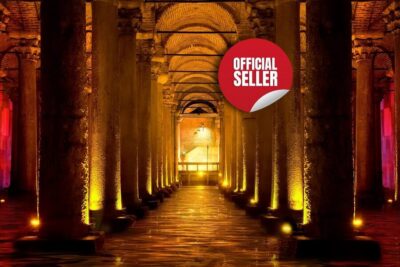
Basilica Cistern Fast-Track Entry and Audio Guide
Read our review →
Hagia Sophia Skip-the-Line Ticket & Museum Option
Read our review →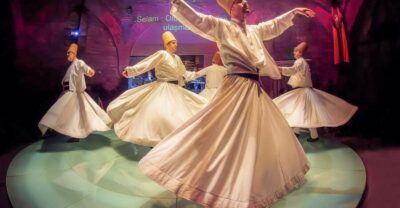
Hodjapasha Whirling Dervishes Show & Exhibition
Read our review →
Topkapi Palace & Harem Museum Ticket & Audio Guide
Read our review →Browse the lists this tour appears in