
Reviewed · ANTALYA TOURS
Antalya: Pamukkale Hot Springs & Hierapolis Small Group Tour
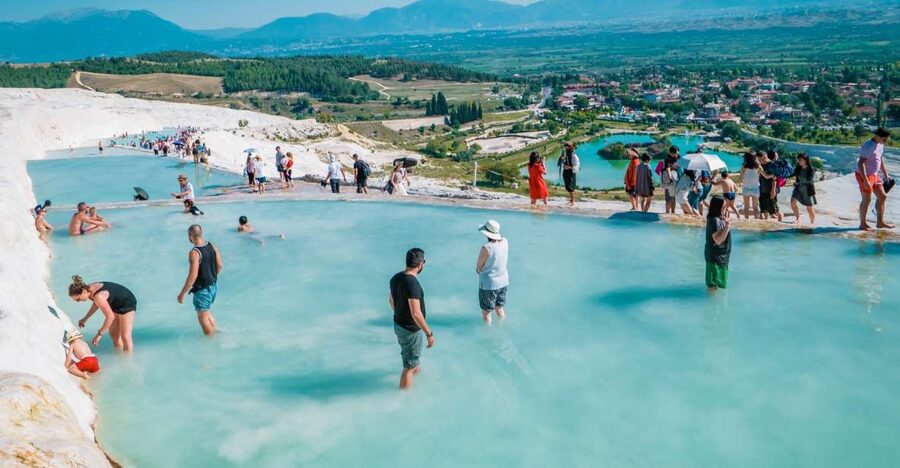
Pamukkale is one of Turkey’s great visual surprises: a hillside of white mineral terraces that looks more like snow than stone. Beside it, Hierapolis adds Roman streets, a huge Necropolis, a theater, and the remains of a spa town built around hot springs.
I like the way this tour combines nature and archaeology in one day, and I like that lunch is included, usually as a broad buffet with vegetarian choices. Guides such as Mery, Melissa, Baran, Fatima, and Sunay have been singled out for clear explanations, good timing, and a friendly manner.
The catch is the road from Antalya. You will spend roughly three hours each way in a vehicle, making this a long 12-hour day. Also, Cleopatra’s Antique Pool is currently closed for renovation, so do not book this tour expecting to swim there.
Key points to know before booking
- Pamukkale and Hierapolis share one remarkable setting: White thermal terraces sit directly beside a major Greco-Roman spa city.
- The drive takes about three hours each way: This is a serious day trip, not a quick outing from Antalya.
- The €30 entrance ticket is extra: The advertised $50 price does not cover admission to Pamukkale and Hierapolis.
- Lunch is included: Expect buffet-style food, with vegetarian options available, though choices may be more limited than meat and vegetable dishes.
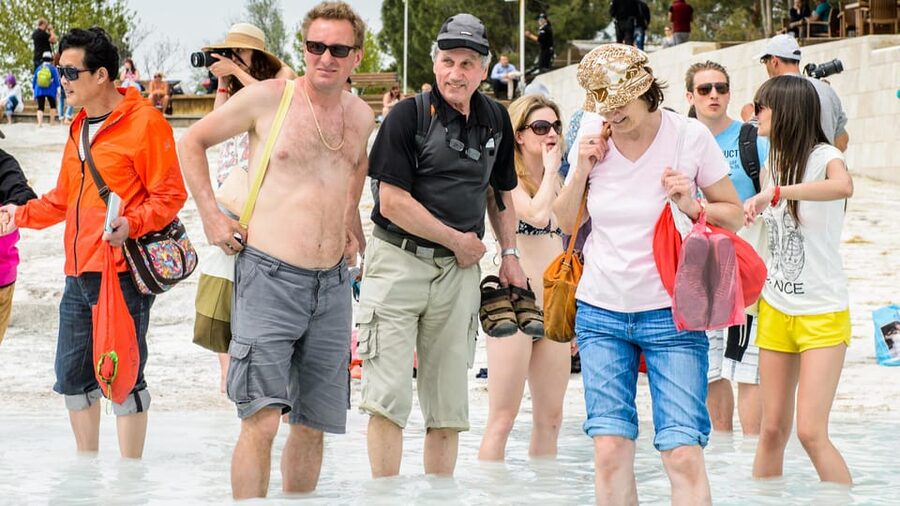
- Warm-water foot baths are possible: Bring swimwear and a towel, but Cleopatra’s Pool is temporarily unavailable.
- The guide makes a real difference: The strongest feedback centers on clear English, useful history, humor, and help keeping the group together.
Why Pamukkale is worth the long ride from Antalya
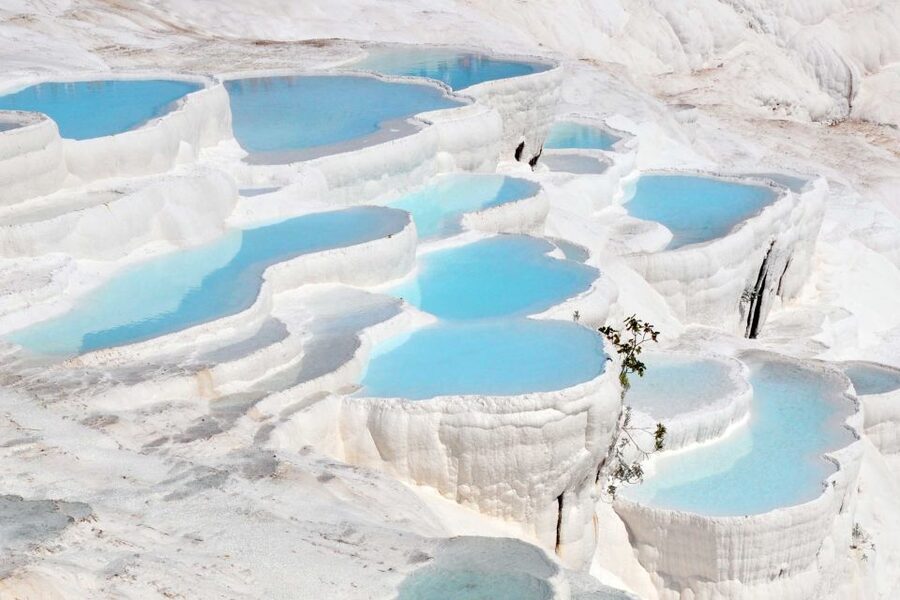
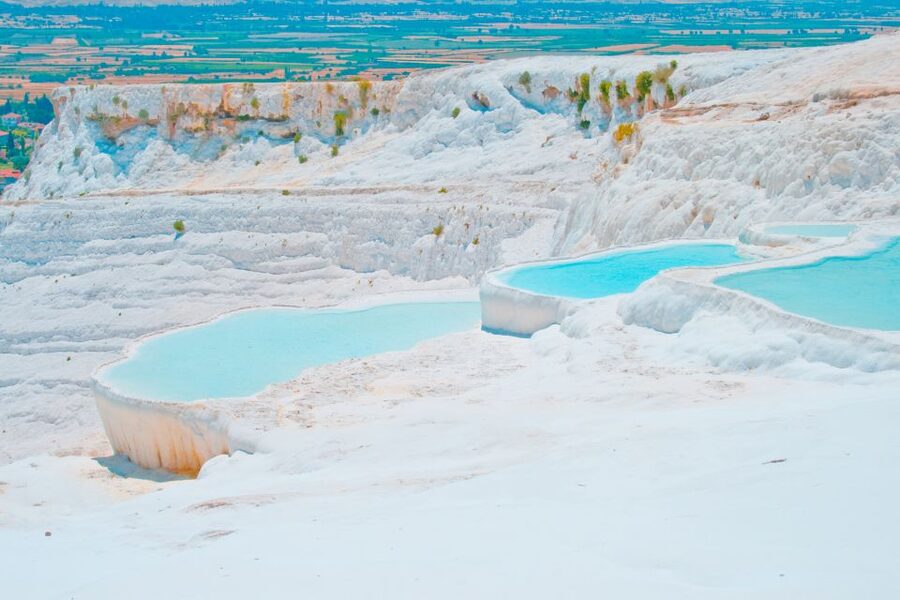
The name Pamukkale means cotton castle, a good description of the white calcium terraces climbing the hillside. Hot spring water flows over the rock, leaving behind calcium deposits that form shallow pools and rounded shelves.
This is not a beach-style thermal resort. The terraces are a protected natural site, and access is controlled. You will walk across designated areas, often barefoot or in minimal footwear where required, and stop for photographs as the white formations open out below you.
The springs range from about 30 to 100 degrees Celsius, though the water you encounter in accessible areas can vary with weather and site conditions. Several small thermal pools may be available, but the exact access changes. A warm foot bath can be one of the nicest parts of the visit, especially after walking around the ruins.
The visual effect is strongest in bright weather, when the white terraces contrast with the surrounding hills. Cloudy or rainy conditions do not ruin the site, but they can make the calcium formations look less dazzling. Pack sunglasses and a sun hat, since the open hillside offers limited shade.
More spa and hot spring stops in Antalya:
- Antalya Pamukkale Hot Springs & Hierapolis Tour With Lunch
★ 5.0 · 1,092 reviews - Antalya: Spa and Skin Care Experience with Massage and Drink
★ 4.8 · 628 reviews - Antalya / Lara : Traditional Turkish Bath & Oil Massage & Spa
★ 4.5 · 90 reviews
The Antalya pickup and the long road south
Pickup is offered from hotels in Antalya, including the Konyaaltı area. Departure can be very early, with one reported schedule beginning at 6:30 AM. The full day runs for about 12 hours, and a typical return to Antalya is around 6 PM.
The distance is approximately 230 to 235 kilometers. In practical terms, plan on about three hours in the vehicle each way, with the exact timing affected by pickup arrangements and road conditions. This is the main drawback, and you should think carefully about it before booking.
The good news is that the drive gives the guide time to explain Turkish culture, the region’s agriculture, and the sites ahead. Baran was praised for sharing small cultural details, while other guides, including Sunay and Gamzee, were noted for adding useful information beyond the basic ruins.
Transport is described as comfortable, and the driver and guide generally work together to keep the schedule moving. One departure had an 18-minute pickup delay without an update, so it is sensible to keep your phone available in the morning and allow a little flexibility.
Walking across Pamukkale’s white terraces
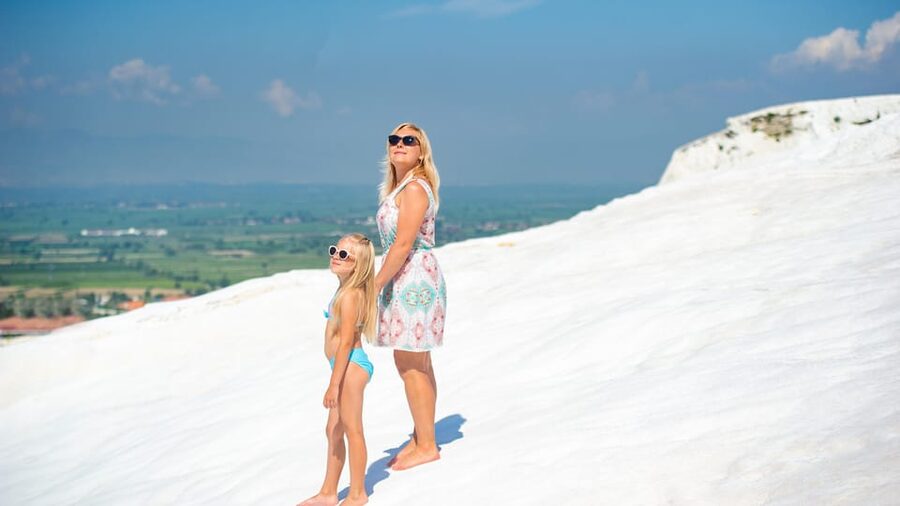
Your first major stop is Pamukkale itself. The terraces are the tour’s main visual prize, but the visit is more active than simply stepping off a bus for a photograph.
You will walk along the formation, stop at viewing points, and have time to take pictures. Depending on conditions, you may also find open thermal pools where you can place your feet in the warm water. Wear shoes that are easy to remove and comfortable enough for a long day of walking.
The bright white surface can be hard on the eyes, so sunglasses are useful rather than decorative. A sun hat, drinking water, and a camera belong in your day bag. The supplied information recommends a T-shirt, swimwear, and towel, which tells you something about the mix of walking and water access.
Pamukkale can feel crowded at busy times, but the small-group format and guided route help you get your bearings. You still need to watch the clock. There is a lot to see, and the terraces themselves can take longer than expected because every turn offers another photograph.
Hierapolis, the spa city above the springs
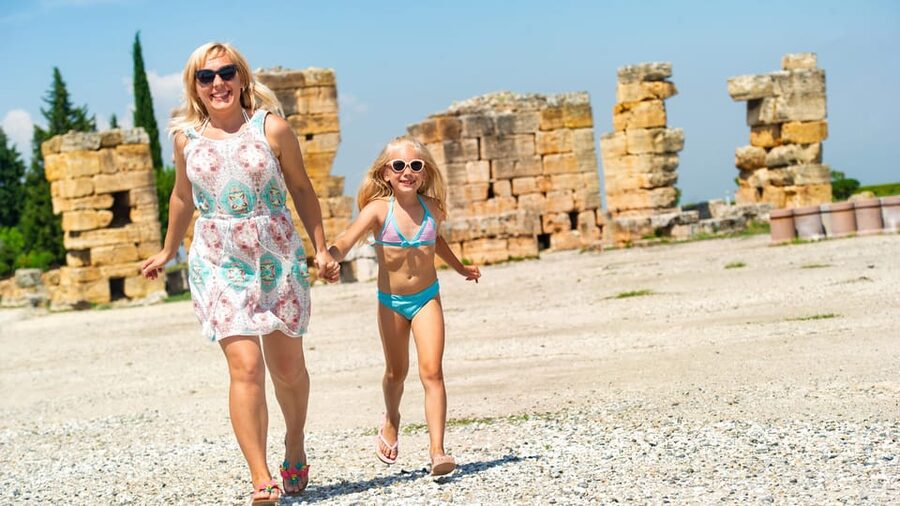
Hierapolis was built beside the hot springs as a spa town and religious center. Its name means Holy City. The city began under the kings of Pergamon in the 2nd century BC and later became part of the Roman province of Asia after the kingdom passed to Rome.
The ruins stretch across a large area, roughly 2.7 kilometers long. This is not a compact site where you can see everything in twenty minutes. You will walk along ancient streets and open ground, with the guide explaining what once stood around you.
The scale helps explain why people came here for more than a quick bath. Hierapolis had public buildings, religious spaces, baths, a theater, and a large burial area. The springs made the city a place for treatment, leisure, worship, and trade.
Some historical claims about the waters are based on local tradition, which credits them with helping conditions involving digestion, rheumatism, skin problems, circulation, breathing, and heart health. You should treat these as cultural beliefs, not medical advice. The water can be pleasant, but it is not a substitute for treatment.
A few more Antalya half-days to weigh up
- Antalya/Kemer: Suluada Island Small-Group Boat Tour w/ Lunch
★ 4.4 · 4,207 reviews - Antalya: Ziplining, Rafting, Jeep Tour & Quad Safari w/Lunch
★ 4.6 · 3,260 reviews - Antalya/Kemer: Old City, Waterfalls, Olympos Cable Car, Boat
★ 4.5 · 2,896 reviews - Pamukkale Hierapolis and Cleopatra’s Pool Tour with lunch from Antalya
★ 5.0 · 2,188 reviews
The Theater, Temple of Apollo, and Gate of Domitian
The tour includes the Roman theater, one of Hierapolis’s most impressive structures. Its preserved seating and broad stage area give you a clear sense of the city’s public life. It is also one of the best places for photographs, especially when the guide points out how the structure used the slope of the site.
The Temple of Apollo brings a different mood. This was a religious center, and the nearby Plutonium was associated with the underworld in ancient belief. The area is interesting because it shows how the hot springs were viewed not only as useful but also as sacred.
At the Gate of Domitian, you get a strong sense of the city’s formal entrance. The gate led toward the main street and the Necropolis. It is a useful place to pause, since the ruins here connect the civic center with the enormous burial ground beyond.
A good guide matters at these stops. Without explanation, you may see broken columns and walls. With context, you can understand how the gate, street, theater, baths, and religious spaces fitted together.
Walking through the huge Necropolis
The Necropolis is one of the most memorable parts of Hierapolis. It stretches along the approach to the city and contains tombs from different periods.
You will see a range of burial styles, including sarcophagi, family tombs, and larger monuments. The sheer length of the cemetery is striking. It reflects the city’s long use as a thermal center, where people came from other places and sometimes died there.
This section also adds a practical warning: the site is spread out, and the ground is uneven in places. Comfortable walking shoes are essential. You should not expect a short, flat stroll from one attraction to the next.
The Necropolis is less polished than the theater and less immediately photogenic than the terraces, but it gives the visit weight. It shows that Hierapolis was a real city with a large population and a long connection to the springs.
The Hierapolis museum and Roman bath remains
The Hierapolis Museum houses objects from Hierapolis and nearby sites such as Attuda, Tripolis, Laodicea, and Colossae. Its displays include material from the city’s baths and other buildings.
The museum has three enclosed sections of the Hierapolis Bath, along with open areas in the eastern part that are believed to have served as a gymnasium and library. If museum access is part of your route on the day, it provides useful detail after the wide outdoor ruins.
Do not expect a large museum visit to replace the outdoor tour. The main appeal of this excursion is the combination of terraces and ruins, and the amount of time available depends on the group schedule, walking pace, and any optional bathing.
Cleopatra’s Antique Pool is currently closed
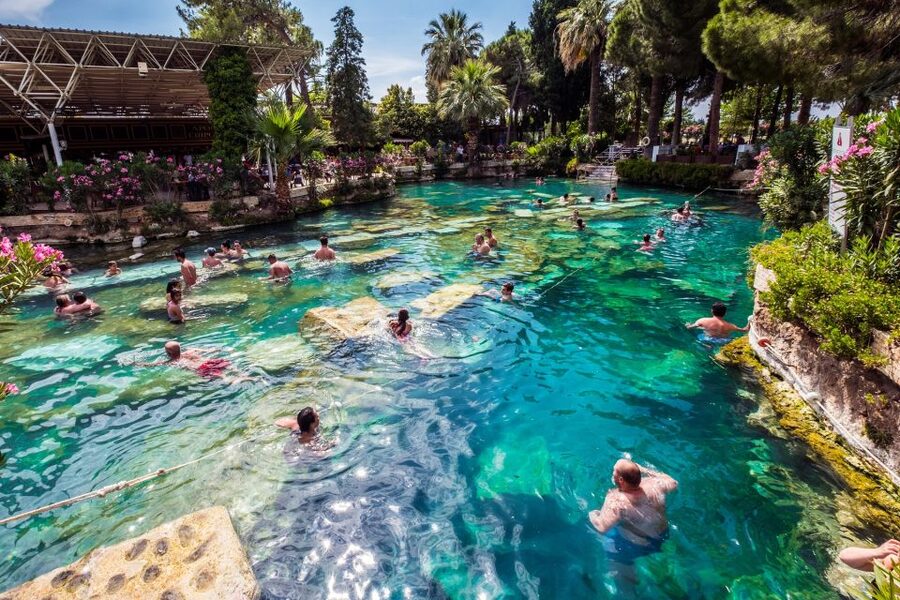
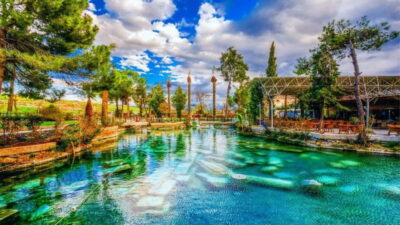
Cleopatra’s Pool is usually one of the most talked-about attractions at Pamukkale. It is an artificial pool built over ancient columns and architectural fragments that fell during an earthquake. When open, the unusual feature is that you can swim among those submerged remains.
At present, the pool is temporarily closed for renovation, and access to the pool area is not available. This is important because the tour information includes swimming as an option, while the current site notice removes that option.
You can still bring swimwear and a towel for other possible thermal-water access, but do not pay for this tour on the assumption that Cleopatra’s Pool will be operating. If the pool reopens before your date, confirm the current entry arrangements and any separate swimming charge.
Older departures included reports of a separate fee for swimming, so the entrance ticket and bathing cost should be treated as different expenses. The €30 admission charge for Pamukkale and Hierapolis is already outside the tour price.
Lunch, shopping, and the real cost
At $50 per person, this tour is reasonably priced for a full-day outing that includes hotel pickup, return transport, a bilingual guide, and lunch. The value depends on whether you are comfortable paying for the site ticket separately.
Admission to Pamukkale and Hierapolis costs €30 and is not included. Drinks are also extra. Add those costs before comparing this tour with a more expensive package that may include tickets.
Lunch is generally buffet style, with a large selection of food. Vegetarian dishes are available, though one departure found the vegetarian range could be improved. The meal is a useful break after the morning walking, and the food has been described as clean and satisfying.
The day may also include a shopping stop in Denizli. This can be useful if you want to browse local products, but it is not the reason to choose the tour. If you prefer every minute at the ruins, remember that a shopping visit takes time from the main sites.
How much free time will you have?
The schedule provides time to explore Pamukkale and Hierapolis rather than rushing from one photo stop to another. One departure allowed about three hours in the park, which was enough for the major sights but felt short for anyone wanting both a full ruins walk and swimming.
That trade-off matters. If you skip swimming, the time should be more comfortable for the terraces, theater, Gate of Domitian, Temple of Apollo, and Necropolis. If bathing becomes available again, you may need to choose between a relaxed swim and seeing every corner of the archaeological site.
Follow the guide’s meeting instructions closely. The site is large, and the group cannot wait indefinitely for someone who wanders far from the meeting point. Several guides have been praised for giving free time while still keeping the day on schedule.
The guides who shape the day
The strongest part of this tour is the guiding. Mery, Melissa, Baran, Fatima, Gamzee, and Sunay are among the guides praised for clear English, good explanations, humor, and a calm approach.
Sunay received special praise for explaining each stop, sharing information about Turkey, and helping with onward travel. Other guides were described as friendly and careful about making sure nobody was left behind.
You should still expect different personalities from one departure to another. The tour is offered in English, and the guide is your main source of context during the outdoor visits. That makes the guide’s timing and storytelling more important than the exact order of every stop.
The small-group setup is useful here. You can hear explanations more easily than in a large coach group, and the guide can usually respond to questions. It does not eliminate the long road or the walking, but it makes the day feel more organized.
Who should book this Antalya day trip?
I would choose this tour if you are staying in Antalya and do not have time to arrange an overnight visit to Pamukkale. It is especially good for first-time visitors who want the major natural sight and the main Hierapolis ruins in one outing.
It also suits you if you enjoy a guide-led day. The history is easier to understand with someone explaining the Roman theater, sacred sites, thermal baths, and Necropolis as you walk.
You may want a different plan if you dislike long road journeys, have limited mobility, or want a slow photography day. The site covers a wide area, and the combination of walking, heat, uneven ground, and a return drive makes this a demanding schedule.
Book with realistic expectations. The white terraces are the star, the ruins give the day substance, and the lunch keeps the price practical. But the trip is not a leisurely resort outing, and Cleopatra’s Pool is not currently available.
Final verdict: a worthwhile but lengthy day
I recommend this tour for most people who have only Antalya as a base and want to see Pamukkale without arranging their own transport. The $50 starting price is good value once you understand that the €30 entrance ticket, drinks, and any future pool charge are separate.
The best reasons to book are the extraordinary terraces, the large and varied ruins of Hierapolis, included lunch, and guides who have repeatedly made the long journey more enjoyable. The main reasons to hesitate are the three-hour drive each way, the spread-out archaeological site, and the current closure of Cleopatra’s Pool.
Bring water, sun protection, comfortable shoes, swimwear, and a towel. If you can accept the early start and long return, this is one of the most rewarding day trips available from Antalya.
FAQ
How far is Pamukkale from Antalya?
Pamukkale is about 230 to 235 kilometers from Antalya. The drive takes roughly three hours each way, depending on road conditions and pickup timing.
How long does the tour last?
The tour lasts about 12 hours. One reported schedule began at 6:30 AM and returned to Antalya around 6 PM.
Is hotel pickup included?
Yes. Pickup and drop-off from hotels in Antalya are included, with Antalya and the Konyaaltı area listed as pickup and return locations.
Is the entrance ticket included in the $50 price?
No. The entrance fee for Pamukkale and Hierapolis is listed separately at €30 per person.
Is lunch included?
Yes. Lunch is included and is generally buffet style. Vegetarian food is available, although the range may be more limited than the other choices.
Can I swim at Cleopatra’s Antique Pool?
No. Cleopatra’s Pool is currently closed for renovation, and access to the pool area is not available at this time.
Can I swim in the Pamukkale thermal waters?
Swimming or bathing access depends on the areas open during your visit and current conditions. Warm-water foot baths may be available, but Cleopatra’s Pool is closed.
What should I bring?
Bring comfortable walking shoes, sunglasses, a sun hat, swimwear, a towel, a camera, a T-shirt, and drinking water. Drinks are not included in the tour price.
Just added around Antalya
- Antalya: Olympos Cable Car & Tahtali Mountains with Transfer★ 4.5 · 36 reviews
- From Antalya: Full-Day Boat Tour with Lunch and Foam Party★ 4.4 · 68 reviews
- From Antalya: Koprulu Canyon Rafting and Zip Line Adventure★ 4.6 · 95 reviews
- Antalya: Green Canyon Boat Trip w/Lunch near Green Lake★ 4.0 · 165 reviews
- Side: Koprulu Canyon Whitewater Rafting with Lunch★ 4.2 · 175 reviews
- From Kemer, Antalya, Belek: Adrasan Suluada Island Boat Tour★ 4.5 · 17 reviews
- From Belek, Antalya Thrilling Buggy Safari Adventure★ 3.8 · 16 reviews
- From Belek, Antalya Thrilling Quad Safari Adventure★ 4.0 · 16 reviews
Antalya Tours, compared.
Suluada Island Small-Group Boat Tour w/ Lunch
Read our review →
Ziplining, Rafting, Jeep Tour & Quad Safari w/Lunch
Read our review →
Old City, Waterfalls, Olympos Cable Car, Boat
Read our review →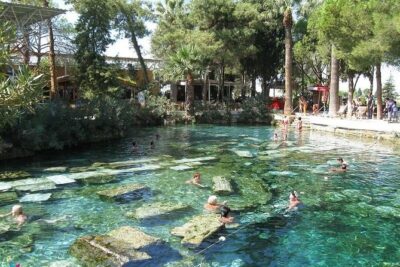
Pamukkale Hierapolis and Cleopatra’s Pool Tour with lunch from Antalya
Read our review →
Antalya Luxury Old Town Tour with Cable Car & Boat Trip
Read our review →
Suluada Island Boat Trip with Lunch & Hotel Pickup
Read our review →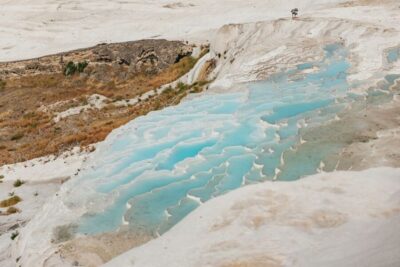
Browse the lists this tour appears in