
Reviewed · ISTANBUL TOURS
Istanbul Hodjapasha Whirling Dervishes Show & Exhibition
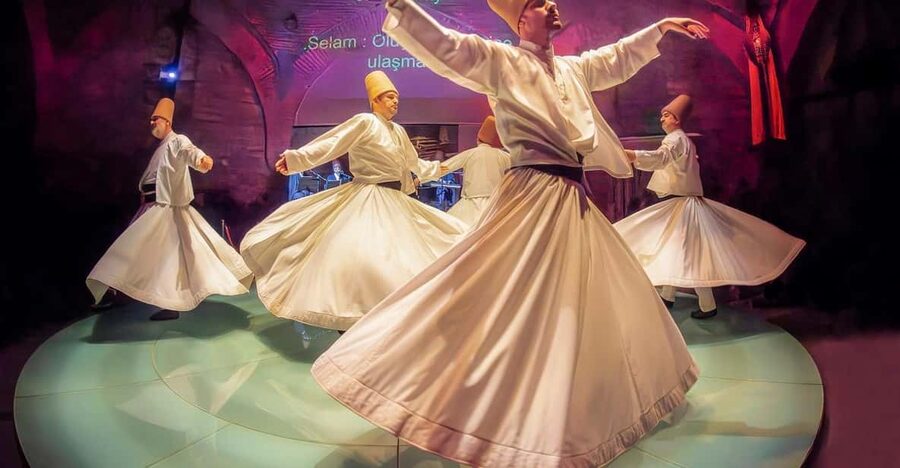
The striking thing about the Hodjapasha Whirling Dervishes presentation is its calm. Men in white robes turn slowly to live music, arms raised, while the room remains quiet and dim. This is not a concert or a folk-dance performance. It is a staged presentation of a Sufi devotional ceremony, offered in the presence of an audience.
I like the useful exhibition before the ceremony, where you can read about Rumi, Sufism, and the meaning of each stage. I also like the central location, near the Spice Market, restaurants, cafés, and public transport. The main drawback is simple: if you need action, variety, or a show that builds toward a big finale, an hour of repeated movements may feel slow.
Key points to know before you book
- The ceremony begins with explanation and prayerful movement: The whirling is only one part of the hour.
- The exhibition is worth arriving early for: Allow at least 20 minutes to read the displays and poems.
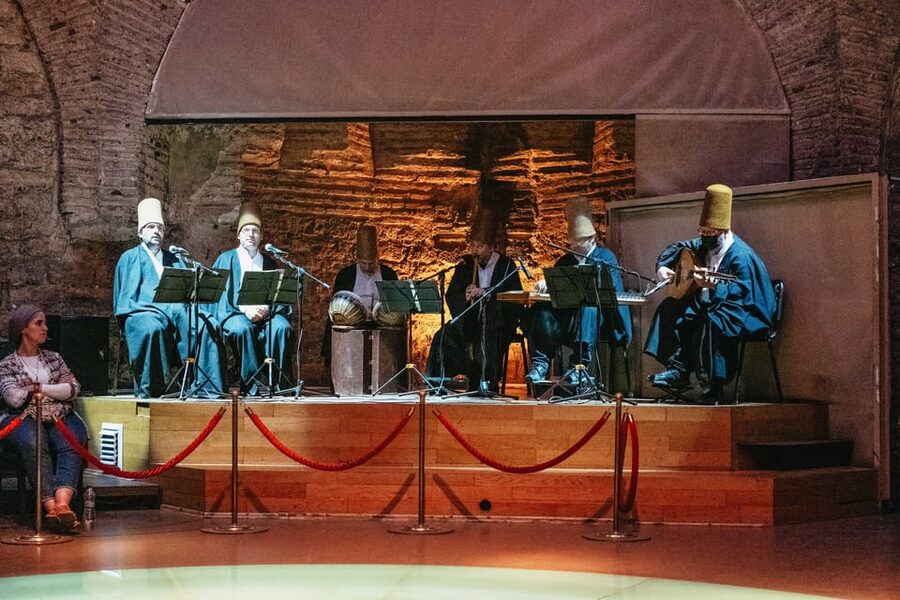
- The music is performed live: Traditional instruments, singing, and soft vocals shape the mood.
- Photography, video, and applause are not allowed: You are expected to watch quietly and respectfully.
- Hodjapasha is central but can be hard to find: Taxis stop on the main street, not in the small lane by the venue.
- The $32 price buys a focused cultural visit: It includes admission, bottled water, and a multilingual booklet, but no meal or transport.
What the Hodjapasha ceremony really is
The name Whirling Dervishes can make this sound like a theatrical dance show. That expectation causes the biggest mismatch. At Hodjapasha, you are watching a public presentation of the Mevlevi Sufi sema, a spiritual ceremony connected with prayer, music, disciplined movement, and reflection.
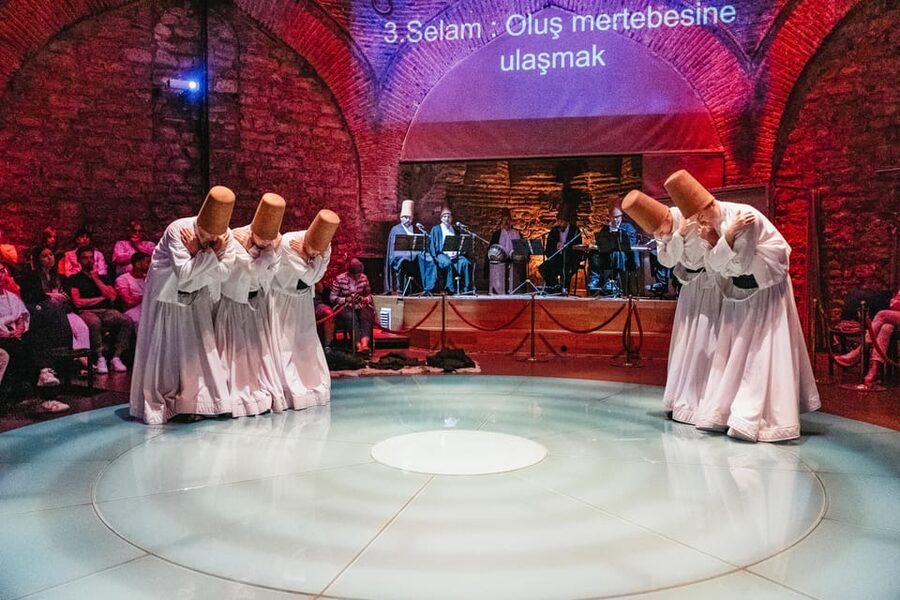
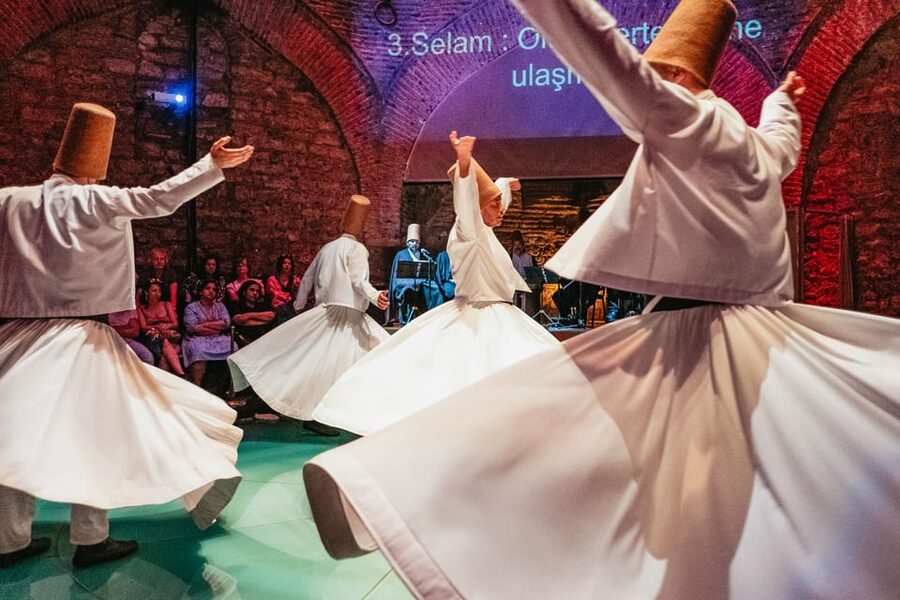
The dervishes bow, listen, turn, and hold their arms in a symbolic posture. The ceremony unfolds at a measured pace. The whirling itself is impressive, but the meaning comes from the full sequence, not from spinning alone.
You might find the repeated movements peaceful and absorbing. You might also find them monotonous. Both reactions are reasonable. The value of the event depends greatly on your interest in religious practice, music, Turkish culture, and quiet observation.
I would not book this expecting audience interaction or entertainment in the usual sense. You will not get a chatty guide, comic remarks, or a dramatic dance routine. Instead, the room asks you to slow down and pay attention.
More museums and galleries in Istanbul:
- Istanbul: Hagia Sophia Skip-the-Line Ticket & Museum Option
★ 3.7 · 4,958 reviews - Istanbul: Hodjapasha Whirling Dervishes Show & Exhibition
★ 4.4 · 4,790 reviews - Istanbul: Topkapi Palace & Harem Museum Ticket & Audio Guide
★ 4.1 · 3,977 reviews
Arrive early for Rumi, Sufism, and the exhibition
The foyer exhibition is one of the smartest parts of the visit. Displays explain the ceremony and its origins, while information about Sufi traditions and Rumi’s poetry gives you a frame for what follows.
If you walk straight into the hall and know nothing about the ceremony, the first part may seem formal or obscure. Spend at least 20 minutes with the exhibition if you can. The poems and explanations help you understand why the dervishes bow, how the music fits the ritual, and why the turning is treated as prayer rather than performance.
This preparation changes the evening. Instead of watching people spin for an hour, you begin to notice the ceremony’s order and restraint. The displays are especially helpful if this is your first encounter with Sufi practice.
A multilingual booklet is included, and the experience is offered in English. The presentation also uses illuminated explanations on a wall or screen during the ceremony, which helps you follow each stage without a long spoken lecture.
The exhibition is not a substitute for a full museum visit. It is a compact introduction attached to the performance space. Still, it adds real value to the ticket and gives you something useful to do before the doors open.
Inside the intimate Hodjapasha theatre
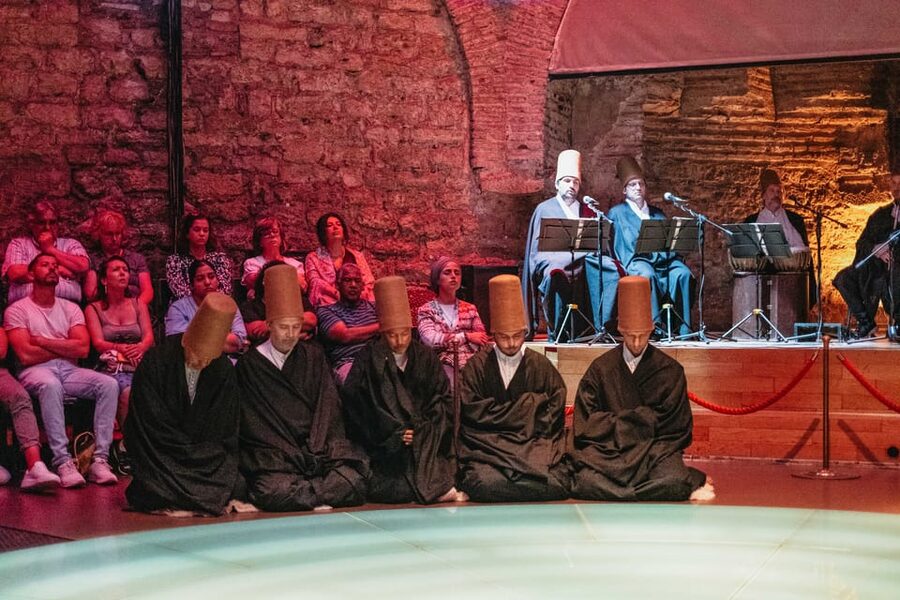
Hodjapasha Cultural Centre occupies a historic venue in Istanbul’s Fatih district. The performance room is small enough to feel close to the action. Seating is assigned, and the compact layout lets you see the dervishes’ expressions and movements clearly.
The published maximum is 170 people, though the room can feel much smaller depending on the evening. That closeness works well for a solemn ceremony. You are not watching from a distant auditorium. The musicians, singers, and dancers share a confined space with the audience.
The setting is comfortable and organized, but it is not designed for restless movement. You should settle into your seat and give the ceremony your full attention. The lighting is low, and the music is soft. That creates a meditative atmosphere, though it can also make tired people drowsy.
Photography and video are not allowed. Applause is also not part of the event. This rule may feel unusual if you are used to applauding after a performance, but it makes sense here. The silence protects the religious character of the ceremony and keeps the audience from turning a prayerful event into a photo opportunity.
I recommend putting your phone away before the ceremony begins. You will see more, hear more, and show proper respect for the performers’ concentration.
The one-hour sequence, from opening music to whirling
The full presentation lasts about one hour. Do not expect the turning to start at once. The ceremony includes musical passages, bows, symbolic movements, and stages of preparation before the whirling begins.
Traditional music and singing carry much of the opening. The sound is a major part of the experience, not background decoration. The string music and vocals create a gentle, serious mood, and the musicians deserve your attention as much as the dervishes do.
The ceremony then moves through its formal stages. Explanations shown on the wall help you understand what is happening. The movement is controlled rather than flashy, with repeated bows and careful changes in position.
When the whirling begins, the dervishes turn for an extended period. Their arms rise, their robes open, and the movement becomes steady and almost trance-like. Watching someone maintain that rhythm without becoming visibly unwell is remarkable.
This is also the point when your expectations matter most. Some people find the turning mesmerizing. Others see only the same motion repeated for too long. If you are easily bored by repetition, this may not be the right evening activity for you. If you enjoy ritual, music, and focused physical discipline, the repetition is part of the appeal.
The lack of applause and photography heightens the feeling that you are observing something sacred. Even though the event is presented for the public, it does not behave like a conventional stage show.
More shows in Istanbul:
- Istanbul: Bosphorus Dinner Cruise & Show with Private Table
★ 4.8 · 44,561 reviews - Istanbul: Bosphorus Dinner Cruise with Turkish Night Show
★ 4.8 · 10,127 reviews - Istanbul: Bosphorus Cruise with Dinner Show
★ 4.4 · 2,181 reviews - Bosphorus Dinner Cruise with Show and Private Table
★ 4.5 · 2,021 reviews
Why the music matters as much as the dancers
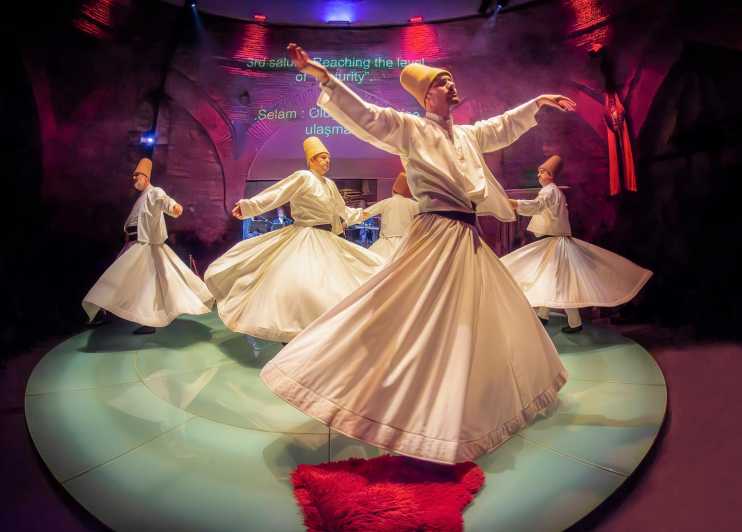
It is easy to focus on the white robes and turning figures. Do not overlook the live musicians and singers. The sound gives the ceremony its emotional direction and keeps the hour from becoming a silent display of physical skill.
The music is traditional, restrained, and reflective. Soft vocals may be more important to your experience than the whirling itself. If you sit quietly and listen, the ceremony feels less like a demonstration and more like a complete act of devotion.
You do not need to be religious to appreciate this. The presentation offers a look at a form of worship that may be unfamiliar, and it can be meaningful for people from many backgrounds. You can approach it as a cultural event, a religious ceremony, a musical performance, or all three.
That said, it helps to arrive with respect. The dervishes are not simply performers showing off a difficult turn. Their discipline is tied to belief and prayer. Understanding that distinction will make the evening more rewarding.
Is $32 a fair price?
At $32 per person, this is not the cheapest evening activity in Istanbul. It is also not an inflated ticket for a long dinner show. You are paying for about one hour in a central cultural venue, admission to the exhibition, a multilingual booklet, and bottled water.
The value is strongest if you take time with the exhibition and care about what you are seeing. The exhibition gives the ticket more substance than a simple seat at a performance. You also avoid the uncertainty of arriving without a reservation, since prebooking guarantees your entry.
The value is weaker if you expect a full evening of entertainment. Food is not included, and there is no hotel pickup or drop-off. You will need to arrange your own way to Fatih and make your own dinner plans.
The location helps. You can pair the ceremony with an evening around the Spice Market, nearby cafés, and the food streets around the venue. That makes the ticket easier to fit into a sightseeing day. Have dinner before or after rather than expecting the event to fill an entire night.
For a first visit to Istanbul, I see this as a reasonably priced cultural add-on, not a must-buy for every person in your group. It is worth the money for someone who wants to understand Turkish religious culture. It is less convincing for someone who wants a lively stage performance.
Finding Hoca Paşa Street without a taxi headache
The official address is Hodjapasha, Hoca Paşa Mahallesi, Ankara Caddesi, Hoca Paşa, Hocapaşa Hamamı Sokak No. 3, in Fatih. The venue is close to public transportation and sits in a useful central area.
The final approach can be confusing. The centre is reached through a small lane, while taxis stop on the main street rather than directly at the entrance. If you use a taxi, get out on the main road and walk the remaining short section. Do not assume the driver can pull up at the door.
Give yourself extra time for the first visit. One of the less pleasant ways to begin a quiet ceremony is to arrive flustered after searching through side streets. A mobile ticket makes entry easier, but it does not solve the problem of locating the lane.
The central setting is a real advantage after the ceremony. The Spice Market is close, and the surrounding area has many restaurants and cafés. You can walk or use the tram rather than dealing with evening traffic.
Who will enjoy this, and who may not
I recommend Hodjapasha most strongly if you enjoy:
- Religious and cultural traditions
- World music and live vocal performance
- Rumi and Sufi ideas
- Quiet, formal events
- Observing disciplined movement
- Small venues with a serious atmosphere
It is also a good choice if you want an evening activity that feels different from Istanbul’s usual food tours, monuments, and busy streets. The ceremony gives you a look at a side of Turkish culture that is easy to miss during a first visit.
Families can attend, since the minimum age is seven, but younger children may struggle with the pace. The ceremony is repetitive and quiet, and there is no playful element to hold a child’s attention. I would choose it for older children who can sit respectfully and understand that this is a religious event.
You should think twice if you want a dance show with changing scenes, energetic choreography, or a strong theatrical ending. The movement is intentionally limited. The point is concentration, not variety.
You also should not book it only because it appears on a list of Istanbul essentials. It is an essential experience only for the right kind of visitor. Read a little about Sufism and the Mevlevi ceremony first, and you will make a more informed choice.
Practical details that shape the evening
Confirmation arrives at booking, and the ticket is mobile, so you do not need to print paperwork. The activity begins and ends at Hodjapasha, with no hotel transfer included.
Most people can participate, and the venue is near public transport. The official maximum is 170 people. Seating is assigned, which removes the worry of competing for a chair once you enter.
The experience is available to book in English and includes a multilingual booklet. Bottled water is included, but food is not. Plan your meal separately.
The minimum age is seven. Free cancellation is available up to 24 hours before the start time for a full refund. Cancellations or changes made less than 24 hours before the start time are not accepted for a refund, and the cut-off follows Istanbul local time.
Because the event is commonly booked in advance, reserving ahead is sensible if your schedule is fixed. The average booking point is about 17 days before the date, which suggests that last-minute seats may not always be dependable.
Should you book the Hodjapasha Whirling Dervishes show?
Book it if you want a respectful introduction to Sufi ceremony, Rumi, Turkish religious culture, and live traditional music. Arrive early for the exhibition, allow time to find the small entrance lane, and approach the hour as a ritual rather than a dance spectacle.
Skip it if your ideal evening involves constant movement, audience energy, or a dramatic show. The ceremony is solemn and repetitive by design.
For the right audience, Hodjapasha offers a rare pause in a busy city. At its best, the room, music, turning robes, and silence work together to create a thoughtful cultural encounter. At its weakest, it feels like one movement repeated for too long. Knowing which kind of evening you want is the key to deciding.
FAQ
How long does the Hodjapasha Whirling Dervishes experience last?
The ceremony lasts approximately one hour.
Where does the experience begin and end?
It begins at Hodjapasha Cultural Centre at Hoca Paşa Mahallesi Ankara Caddesi, Hoca Paşa, Hocapaşa Hamamı Sokak No. 3 in Fatih, Istanbul. It ends back at the same meeting point.
Is the Whirling Dervishes event a dance show?
It is presented as a cultural and mystical ceremony. You should treat it as a religious ritual presented to the public, not as a conventional dance show.
Is photography allowed during the ceremony?
No. Photography and video are not allowed, and applause is not part of the ceremony.
Is there an age requirement?
Yes. The minimum age is seven.
Are food and hotel transfers included?
No. Food and hotel pickup and drop-off are not included. Bottled water and a multilingual booklet are included.
Can I cancel the booking for a refund?
Yes, if you cancel at least 24 hours before the experience start time. Cancellations or changes made less than 24 hours before the start time are not accepted for a refund.
Just added around Istanbul
- Luxury Private Yacht Rental★ 4.4 · 54 reviews
- Istanbul: Private Guided Tour★ 4.7 · 81 reviews
- Learn Turkish Cuisine from a Local Mom★ 5.0 · 32 reviews
- From Istanbul Airport: Layover City Tour with Options★ 4.7 · 67 reviews
- Istanbul: Ertugrul and Osman Ghazi Movie Set Tour with Lunch★ 4.4 · 145 reviews
- Istanbul: Zipline Adventure with Bosphorus View★ 3.8 · 159 reviews
- Istanbul:Basilica Cistern Skip-the-Line Ticket & Audio Guide★ 3.8 · 38 reviews
- Istanbul: Bursa and Uludag Full-Day Trip with Cable Car Ride★ 3.6 · 164 reviews
Istanbul Tours, compared.
Bosphorus Dinner Cruise & Show with Private Table
Read our review →
Daytime or Sunset Sightseeing Cruise & Audio Guide
Read our review →
Bosphorus Dinner Cruise with Turkish Night Show
Read our review →
Best of Istanbul 1, 2 or 3-Day Private Guided Istanbul Tour
Read our review →
Basilica Cistern Fast-Track Entry and Audio Guide
Read our review →
Hagia Sophia Skip-the-Line Ticket & Museum Option
Read our review →
Hodjapasha Whirling Dervishes Show & Exhibition
Read our review →
Topkapi Palace & Harem Museum Ticket & Audio Guide
Read our review →Browse the lists this tour appears in