
Reviewed · CANAKKALE TOURS
Canakkale: Full-Day Troy and Gallipoli Tour
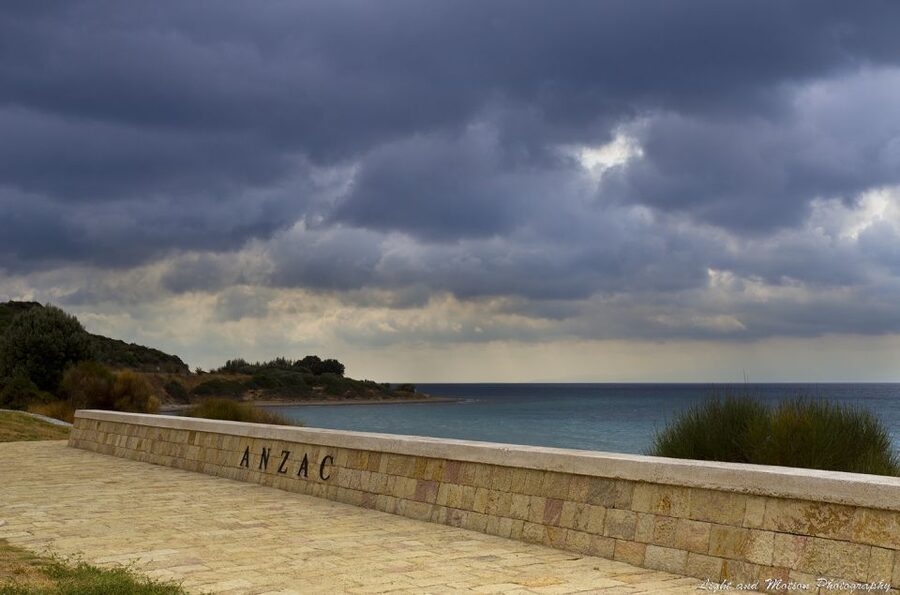
Troy and Gallipoli make an unusually powerful pair: one site explores a legendary Bronze Age conflict, the other a modern war that shaped Turkey, Australia, and New Zealand. In one long day, you walk through nine archaeological cities at Troy and then stand at ANZAC Cove, Lone Pine, The Nek, and Chunuk Bair.
I like the way the tour uses two specialist guides, one for Troy and another for Gallipoli. I also like the simple transport plan, with hotel pickup, air-conditioned vehicles, two ferry crossings, entrance fees, and lunch included. The main drawback is pace. Ten hours is enough to see both places, but you will make many short stops and spend plenty of time getting in and out of the minibus.
Key points to know before booking
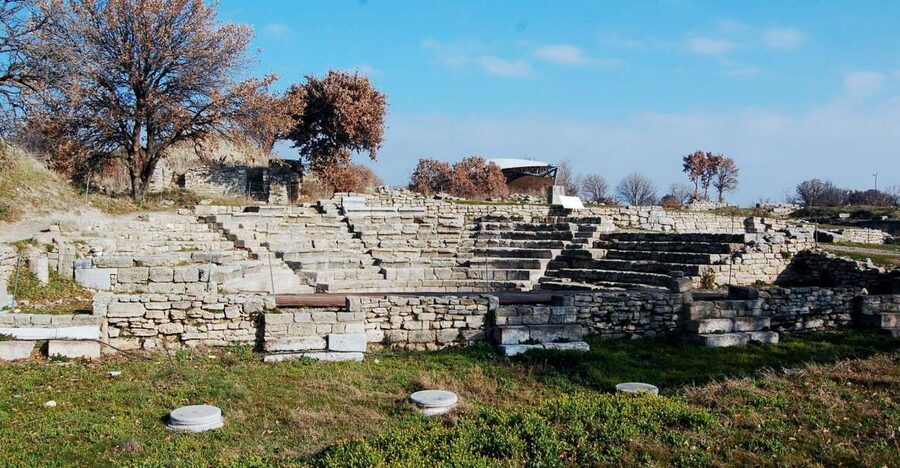
- Troy is nine cities in one archaeological site: The ruins make more sense once you understand that Troy was rebuilt again and again over thousands of years.
- Gallipoli receives the longer visit: The afternoon lasts about four and a half hours and covers 11 points in the ANZAC sector.
- The guides make the difference: Guides such as Burak, Charlie, Hasan, Ibrahim, and Mohammed have been praised for strong historical explanations, humor, and sensitivity.
- The ferry crossing adds real geography: You cross from Asia to Europe by ferry, then return to Canakkale at the end of the day.
- Lunch and major costs are covered: Troy admission, ferries, transport, and restaurant lunch are included, but drinks and tips are extra.
- Expect a full, active day: The tour is not suitable for wheelchair users, and Troy includes uneven archaeological ground plus repeated minibus stops.
Why combine Troy and Gallipoli in one day?
The connection between Troy and Gallipoli is more than simple geography. Troy tells the story of an ancient conflict remembered through Homer, myth, and archaeology. Gallipoli brings you to the battlefields of 1915, where the Ottoman Empire fought British, Australian, New Zealand, French, and other Allied forces during World War I.
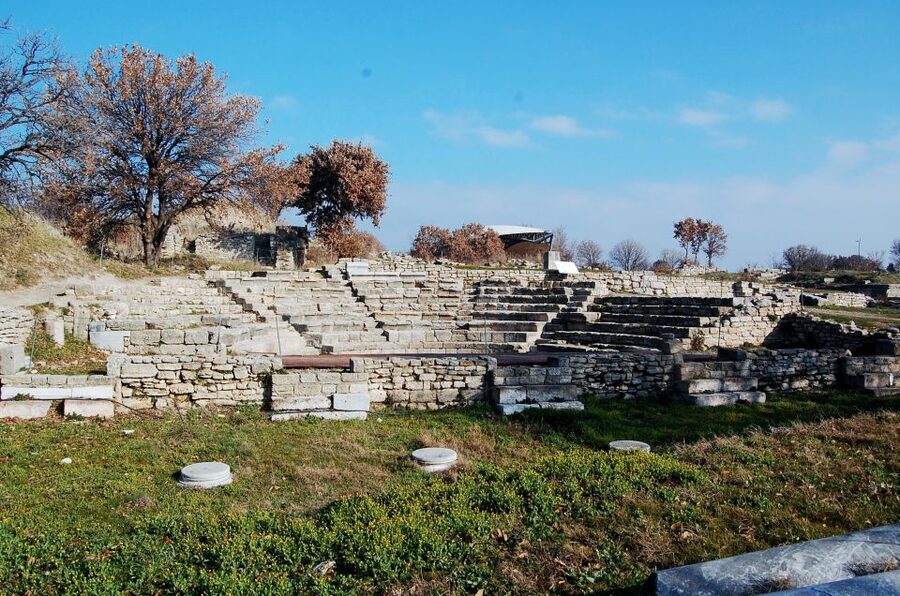
The contrast is useful. At Troy, much of what you see is fragmentary stone, defensive walls, and the remains of houses. The story fills in what the ruins cannot show. At Gallipoli, the terrain itself helps explain the campaign. Beaches, ridges, cemeteries, and narrow approaches make the military events easier to picture.
I would choose this tour if you have only one day in Canakkale and want both major sites handled efficiently. If Troy is your main reason for coming, remember that the schedule gives it about two hours, while Gallipoli gets roughly four and a half hours after lunch.
More Gallipoli battlefield days:
- Istanbul to Gallipoli Full Day Tour with Lunch and Transfers
★ 5.0 · 567 reviews - Gallipoli Full-Day Tour from Istanbul
★ 4.9 · 468 reviews - From Istanbul: Gallipoli and Anzac Full-Day Tour
★ 4.9 · 345 reviews
From Canakkale to Troy in 30 minutes
The day begins with pickup from selected Canakkale hotels, including the Grand Anzac Hotel, Hotel Helen, Hotel Akol, Büyük Truva Oteli, Kervansaray Canakkale, Hotel Kale 17, Kule Hotel, Anzac Hotel, and others listed by the operator. You are asked to wait in the hotel lobby five minutes before pickup.
The drive to Troy takes about 30 minutes. This short transfer is helpful because the tour gets moving quickly without wasting the morning on a long road journey. You will travel in an air-conditioned, non-smoking vehicle, then meet the Troy guide at the site.
Check your pickup details carefully before the tour. Hotel pickup and return are offered from specific locations, and one past booking involved a port drop-off rather than a nearby hotel. If you are catching a bus, ferry, or other connection later that day, confirm the exact return point with the local operator instead of relying only on the general booking information.
Walking through Troy’s nine cities
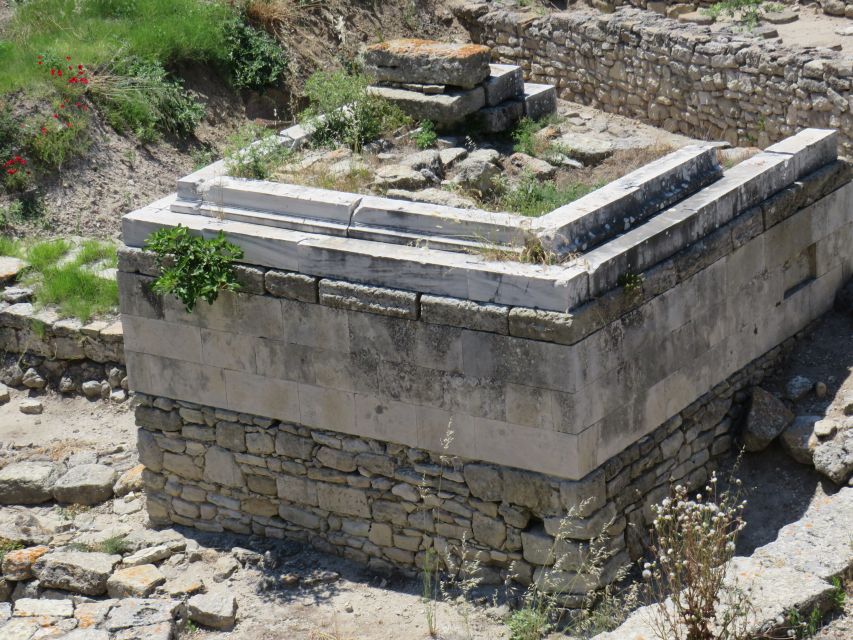
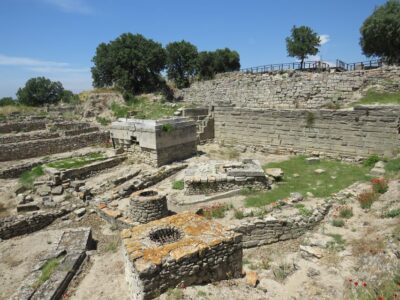
Troy is often harder to appreciate without a guide. The ruins do not offer one neatly preserved city. They show layers built over one another, representing nine major settlement phases from the Early Bronze Age through later Greek and Roman periods.
Your guide explains the myths connected with the Trojan War, then sets those stories beside the archaeological evidence. You will also hear about Heinrich Schliemann, whose excavations in the 1870s brought Troy to wide public attention. His work was important, but his methods caused serious damage to parts of the site, and a good guide can explain that complicated legacy without turning the visit into a dry lecture.
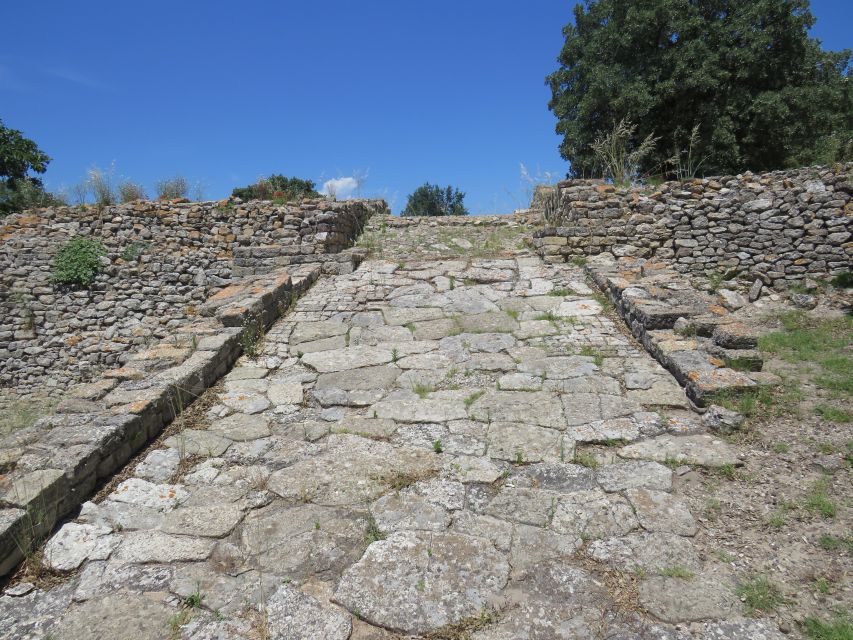
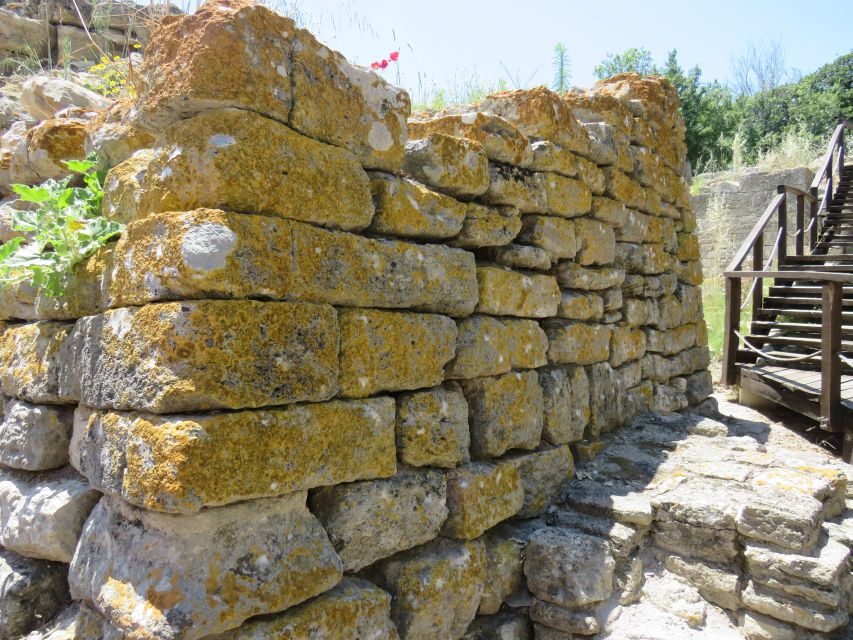
The defensive walls are among the clearest remains. They help you understand why the settlement mattered and why the location could support a major fortified city. You will also pass the ruins of ordinary homes, some more than 3,000 years old.
That everyday side of Troy is one of the best parts. Ancient history can feel distant when you see only temples and grand monuments. House foundations, streets, and walls suggest how people actually lived, moved, and defended their community.
You can walk along paths used by the city’s inhabitants many centuries ago. The site is not a polished reconstruction, so you need to pay attention to the guide and look closely at the ground. One visitor described Troy as little more than a pile of bricks without context. That is a fair warning. The archaeological remains are not visually dramatic at every turn, but the explanations give shape to what you are seeing.
The famous wooden horse connected with Troy is a modern reconstruction near the entrance area, not an ancient survivor. The genuine interest lies in the settlement layers, walls, streets, and debate over how the archaeological site relates to the city described in ancient literature.
A ferry across the Dardanelles
After Troy, the vehicle returns to Canakkale in about 30 minutes. From there, you board a ferry for a roughly 25-minute crossing from Asia to Europe.
This is more than a practical transfer. The Dardanelles have always been a key waterway, and the crossing gives you a clearer sense of the distance between Canakkale and the Gallipoli Peninsula. It also breaks up the morning and afternoon sections of the tour.
All ferry fees are included. You do not need to arrange separate tickets, which is one reason the tour works well for visitors who want a straightforward day without coordinating several local connections.
A few more Turkey half-days to weigh up
- Full Day Cappadocia Red and Green Combined Day Tour
★ 4.7 · 1,998 reviews - Full Day Cappadocia Tour( Red Tour + Underground City )
★ 5.0 · 1,862 reviews - Istanbul: Full-Day Highlights Tour with Guide and Lunch
★ 4.6 · 1,662 reviews - From Istanbul: Full-Day Princes Island Tour with Lunch
★ 4.0 · 1,550 reviews
Lunch in Eceabat
The group has about one hour for lunch at a restaurant in Eceabat. Restaurant lunch is included, but drinks are not, so bring some Turkish lira or another accepted form of payment for beverages. Tips are also not included.
The one-hour stop gives you a proper pause before the Gallipoli portion. Still, this is a group tour, so do not expect a long, leisurely meal. The value here is convenience. You can eat, rest, and continue without spending time searching for a restaurant between battlefield stops.
Gallipoli’s ANZAC sector
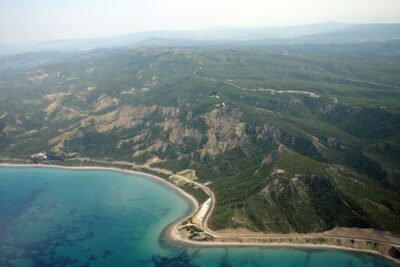
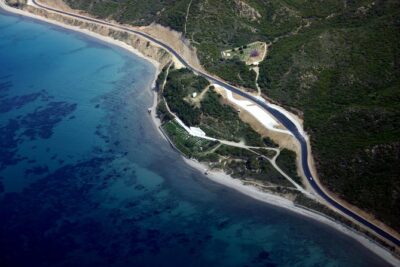
After lunch, the tour enters the Gallipoli Peninsula by air-conditioned minibus. The afternoon focuses on the ANZAC sector, where Australian and New Zealand troops landed and fought in 1915.
You will stop at 11 points of interest. The exact rhythm is active: get out, listen to the guide, walk or look around, then return to the minibus. One fair criticism of the tour is that this repeated boarding can become tiring. On the other hand, it allows you to cover a wide area in four and a half hours rather than seeing only one cemetery or memorial.
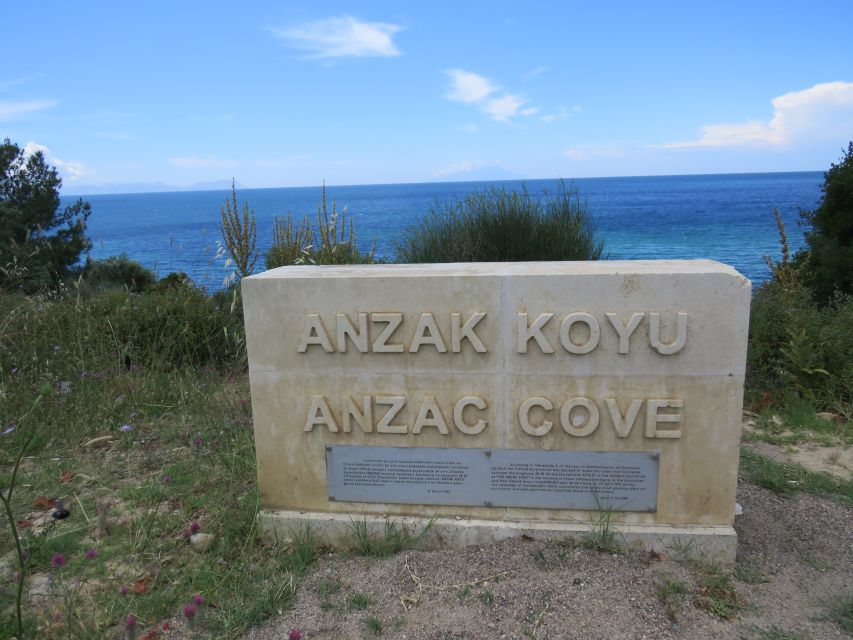
ANZAC Cove is central to the story. This was where the troops first landed and established their base. The narrow shore and surrounding hills help explain why the campaign quickly became so difficult. The tour does not treat Gallipoli as a simple tale of one side against another. The better guides explain both the Turkish and ANZAC experiences, including the cost paid by soldiers on all sides.
At Brighton Beach, you see another part of the landing area and the difficult coastal geography. The beaches may appear peaceful now, but the guide’s account of the operations changes how you read the shoreline.
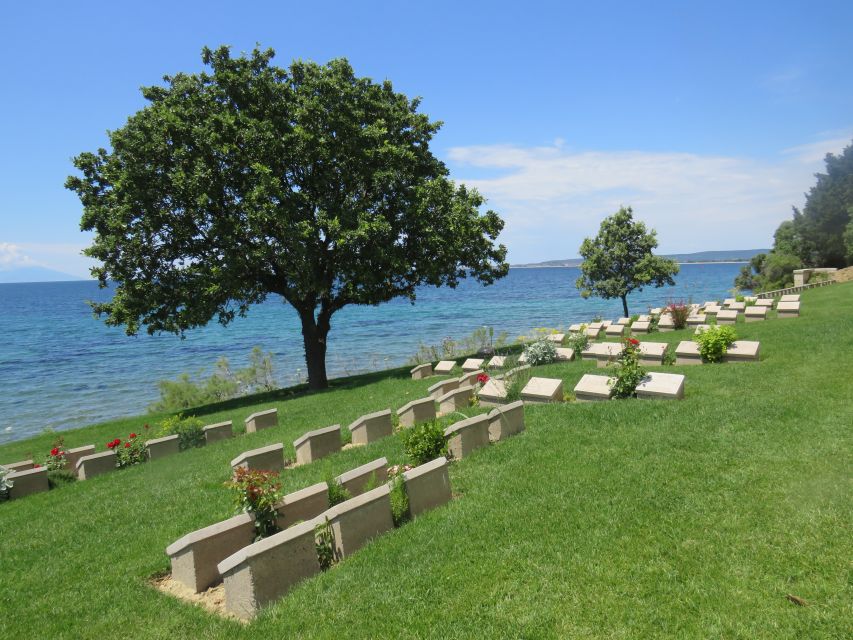
The cemeteries bring the human cost into sharper focus. Beach Cemetery contains the graves of many soldiers who died during the campaign. Arıburnu Cemetery and other burial sites are quiet places, and the tour gives you time to pause rather than rushing past every marker.
The Commemorative Site is connected with ANZAC Day ceremonies. If you have Australian or New Zealand family connections, this stop may feel especially personal. Even without that connection, the site helps explain how Gallipoli remains part of national memory more than a century later.
Lone Pine, The Nek, and Chunuk Bair
Lone Pine Memorial is one of five memorials on the peninsula honoring servicemen of the former British Empire who died in the campaign and have no known grave. It is both a battlefield memorial and a place of remembrance, with names that make the scale of the losses difficult to ignore.
The Nek is associated with one of the campaign’s most tragic attacks. The ground is open and quiet today, so the guide’s timing, maps, and explanation matter. You need that context to understand how a small area could become the scene of such heavy loss.
Chunuk Bair provides another important part of the Gallipoli story. It was a key height and a major objective during the campaign. The stop helps you understand that Gallipoli was not only about beach landings. Control of the ridges above the coast shaped the fighting and the chances of moving inland.
This is where guides such as Burak, Hasan, Ibrahim, and Charlie have received particular praise. Their strengths are not just factual detail. The best guides combine dates and military movements with personal stories, humor used carefully, and respect for Turkish and ANZAC memories.
Guide quality can vary from one departure to another, since Troy and Gallipoli normally have different guides. Several guides have been singled out for their warmth and skill, but you should think of those names as examples rather than a guarantee of who will lead your group.
How the $164 price holds up
At $164 per person, this is not the cheapest way to spend a day in the Canakkale area. The price becomes easier to justify when you count what is included:
- Hotel pickup and drop-off from listed Canakkale locations
- Air-conditioned, non-smoking transportation
- English-speaking guides
- Troy admission
- Two ferry crossings
- Restaurant lunch
You are paying for coordination as much as transport. Troy and Gallipoli require different guides, a return to Canakkale, ferry travel, lunch, and a long afternoon route across the peninsula. Organizing all of that independently may cost less, but it demands more time and planning.
The tour is especially good value for solo visitors, first-time visitors to the area, and anyone who wants historical explanation at both sites. It is less compelling if you prefer to linger for a long time at one ruin or memorial. The schedule is designed for coverage, not private reflection at every stop.
Drinks at lunch and tips are additional. Keep those small extras in your budget.
Pace, comfort, and physical demands
The total duration is about 10 hours. You will spend time in the vehicle, on ferries, at lunch, and on foot at archaeological and military sites.
The air-conditioned minibus helps during warmer months, and the ferry rides offer a chance to sit and reset. Still, Troy involves uneven ground, and Gallipoli includes walking at outdoor memorial and battlefield sites. The tour is not suitable for wheelchair users.
Wear practical shoes and bring water. A hat and sun protection are sensible in warm weather, while a light layer can help on ferry crossings or cooler days. Because the tour runs year-round, conditions can differ sharply between summer and the off season.
The tour’s organization is one of its strongest practical features. Drivers and guides coordinate the handoffs between Troy, Canakkale, the ferry, Eceabat, and Gallipoli. Past departures have included solo participants and small groups, while larger afternoon groups can join for the peninsula section.
Who should book this day trip?
I would recommend it to you if:
- You have one full day in Canakkale
- You want both Troy and Gallipoli without arranging transport
- You prefer stories and explanation to exploring ruins on your own
- You have an interest in World War I, ANZAC history, or Turkish history
- You are comfortable with a busy schedule and repeated minibus stops
You may want a different plan if Troy is your sole priority. The two-hour visit is enough for a guided introduction, but not for a slow, highly detailed archaeological study. Likewise, people who need accessible transport should not book this experience without speaking directly with the operator.
The overall rating is 4.8 from 79 reviews, and the pattern of praise is clear: organization, guide quality, and the Gallipoli interpretation receive the most attention. The strongest recurring names include Burak, Charlie, Hasan, Ibrahim, and Mohammed, though guide assignments can change.
Should you book the Troy and Gallipoli tour?
Book it if you want an efficient, well-supported day that joins two very different chapters of history. The Troy ruins need a strong guide to become meaningful, and Gallipoli benefits from someone who can explain the terrain, military decisions, and human cost with care.
Skip it if you want to set your own pace, spend most of the day at Troy, or avoid a full schedule. For everyone else, the $164 cost is reasonable because it covers the main practical expenses and removes the trouble of piecing together ferries, vehicles, admission, lunch, and local guides. Gallipoli is likely to be the emotional high point, while Troy rewards patience and close attention.
FAQ
How long does the Troy and Gallipoli tour last?
The tour lasts about 10 hours, including transport, ferry crossings, lunch, and guided visits.
Where does pickup take place?
Pickup is available from selected hotels in Canakkale, including Grand Anzac Hotel, Hotel Helen, Hotel Akol, Büyük Truva Oteli, Kervansaray Canakkale, Hotel Kale 17, Kule Hotel, Anzac Hotel, and other listed locations. Confirm the exact time and place with the local operator.
Is hotel pickup included?
Yes, pickup from listed Canakkale hotels is included. Drop-off is also provided at listed Canakkale locations, but you should verify the return point if you have onward travel plans.
Is Troy admission included?
Yes. The entrance fee to the ancient city of Troy is included in the tour price.
Are the ferry crossings included?
Yes. The ferry journey from Canakkale to Europe and the return crossing are included.
Is lunch included?
Yes, a restaurant lunch in Eceabat is included. Drinks during lunch must be paid for separately.
What language is the tour conducted in?
The live guided tour is conducted in English.
Is the tour suitable for wheelchair users?
No. The experience is listed as unsuitable for wheelchair users.
Just added around Turkey
- Marmaris: Cleopatra Island Boat Trip with Lunch and Transfer★ 4.4 · 109 reviews
- From Marmaris: Ephesus and Selcuk Tour with Buffet Lunch★ 4.6 · 135 reviews
- Marmaris: All-Inclusive Pirate Boat Trip with Pickup Option★ 4.3 · 95 reviews
- Marmaris: Atlantis Water Park Transfer and Entry Ticket★ 4.2 · 64 reviews
- Marmaris: Aqua Dream Waterpark Entry Ticket & Hotel Transfer★ 3.9 · 25 reviews
- Manavgat: Guided Aqueduct, Waterfall & Green Lake Tour★ 4.3 · 140 reviews
- Manavgat River Cruise With Waterfall & Bazaar Tour★ 3.1 · 41 reviews
- Manavgat Cruise & Grand Bazaar w/Lunch and Unlimited Drinks★ 3.8 · 71 reviews
Canakkale Tours, compared.
Gallipoli ANZAC Battlefields Tour from Canakkale
Read our review →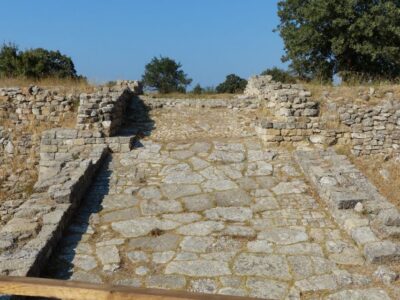
Browse the lists this tour appears in