
Reviewed · ISTANBUL TOURS
Istanbul Whirling Dervish Ceremony, A Mystical Sufi Experience
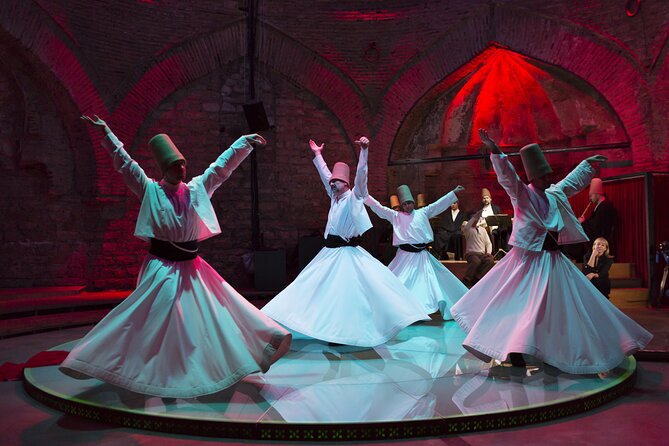
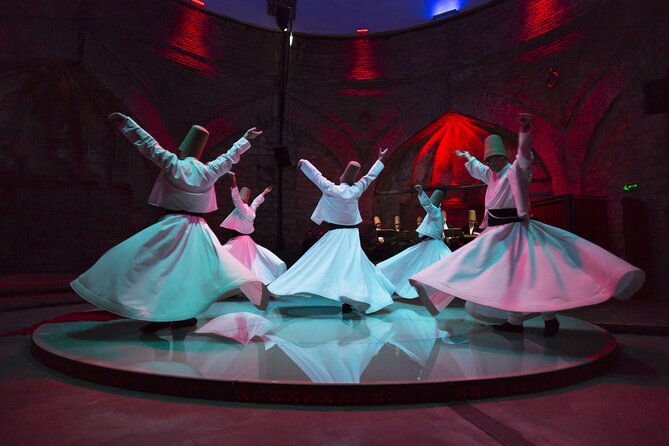
The striking thing here is not speed, color, or theatrical drama. It is the steady sight of whirling dervishes turning in silence and music, following an 800-year-old Mevlevi Sufi ritual. At Hodjapasha, the ceremony includes live orchestra, singing, and 360-degree video projections that add visual context without turning the event into a loud stage show.
I like two things right away: the central location near public transport makes this easy to fit into an Istanbul day, and the multilingual booklet gives you a useful way to understand the symbols rather than simply watch people spin. The small theater also puts you close to the performance.
The main caution is simple: this is a religious and meditative ceremony, not a lively folk show. The repeated movements and solemn music may feel slow, and some people find one hour too long. The venue also has stairs, so check access carefully if you use a wheelchair or have limited mobility.
Key points to know before you book
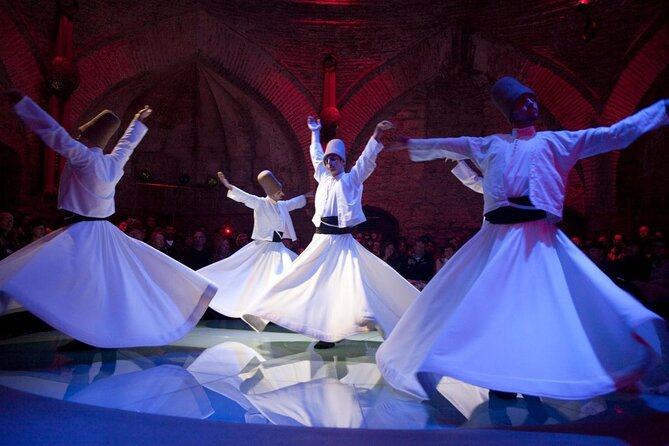
- The ceremony is spiritual first: Treat it as a sacred Sufi ritual, not a conventional dance performance.
- Hodjapasha is centrally placed: You can reach the cultural center by public transport and include it with sightseeing in central Istanbul.
- The program lasts about one hour: That is long enough to settle into the rhythm, though the repeated motion will not suit everyone.
- Live music matters: Singing, instrumental music, and the measured turning create the ceremony’s mood.
- Arrive early: The information displays and multilingual booklet help explain Rumi, Sufi thought, and the meaning of the ritual.
- Photography is not allowed: You will need to watch without taking photos or video during the ceremony.
What the Mevlevi Sema Ceremony means
The Whirling Dervish Ceremony is a Mevlevi Sema, a formal Sufi practice connected with spiritual reflection and the search for unity. The turning is not simply a dance move. It is part of a ritual shaped by music, prayer, movement, and concentration.
For a first-time viewer, the meaning can be hard to grasp without preparation. That is why the booklet and exhibit material are useful. Read them before the performance, and the white garments, controlled turns, musicians, and pauses begin to make more sense.
The tradition is associated with the teachings of the Persian poet and Sufi thinker Rumi. The program presents this heritage as a spiritual path, not as a piece of stage folklore invented for tourists. At the same time, it is fair to ask how a religious ritual changes when presented on a ticketed program for an audience. You may feel that tension during the performance.
I would approach it with respect and patience. The best response is not to search for constant action, but to watch how the rhythm builds a calm, focused atmosphere. If you expect entertainment in the usual sense, you may leave underwhelmed. If you want a short introduction to an important part of Turkish spiritual culture, it can be quite moving.
More Whirling Dervish Shows in Istanbul
- Istanbul: Whirling Dervishes Ceremony and Mevlevi Sema
★ 4.3 · 1,694 reviews - Istanbul: Whirling Dervish Ceremony next to Hagia Sophia
★ 4.5 · 906 reviews - Istanbul Traditional Turkish Dinner and Dervish Experience
★ 5.0 · 490 reviews
Entering Istanbul’s Hodjapasha Cultural Center
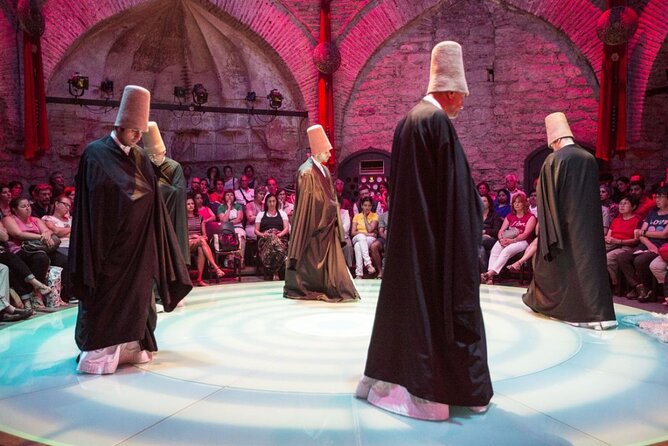
Hodjapasha is the only stop on this experience, and that keeps the evening straightforward. You go to the cultural center, take in the displays and information, then attend the approximately one-hour ceremony in the theater.
The location is one of the strongest practical features. It is centrally placed and close to public transportation, so you do not need a private transfer or a long trip outside the city. That makes it easy to pair with other sightseeing in central Istanbul.
Finding the exact entrance may take more effort than expected. Clearer signs would help, and the ticket collection point is upstairs at the venue. Give yourself extra time instead of arriving at the last minute. Arriving early lets you read the material and deal with the building before the lights go down.
The theater itself is part of the atmosphere. It is a distinctive old venue rather than a large modern auditorium, and the smaller scale can give you a close view of the performers. Seating arrangements may vary, though, and some seats are high stools. If a particular seat type matters to you, ask about it before booking.
The building’s historic character is not presented as a full architectural tour. You may see only part of the site, so do not buy this experience mainly to explore the structure. The ceremony is the reason to come.
What happens during the one-hour program
The performance combines several elements:
- A live orchestra
- Singing and instrumental music
- Whirling dervishes performing the Sema
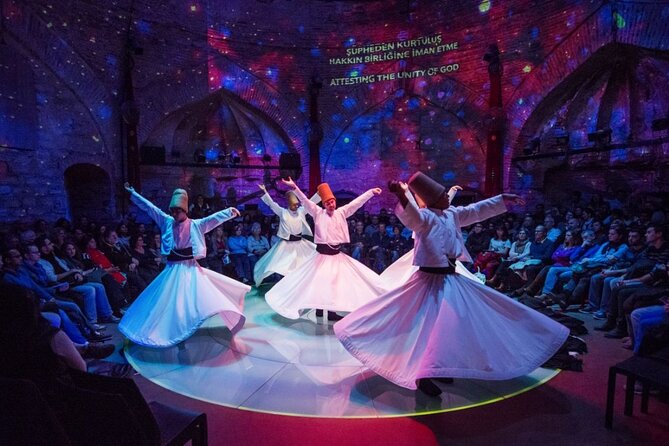
- 360-degree video projections
- Information about Sufi tradition and the ideas behind the ritual
The musicians and voices do much of the emotional work. Even people who find the turning repetitive often respond to the haunting sound of the singing and the measured instrumental accompaniment. The music gives the ceremony a shape, with moments of preparation, movement, and quiet concentration.
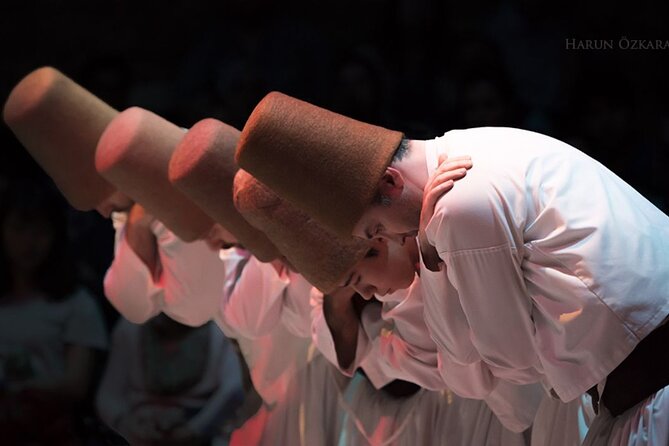
The dervishes turn repeatedly in a controlled pattern. Their physical endurance is remarkable, but the point is not to show off athletic skill. The movement is solemn and focused. You will see little of the cheerful energy found in a belly-dancing performance or a folk dance show.
The video projections provide another layer. They help present information and imagery connected with the dervishes, but they do not turn the ritual into a fast-moving multimedia spectacle. Think of them as support for the ceremony rather than the main event.
You are expected to sit quietly and watch. Photography and video are not allowed, which can disappoint anyone hoping to record the experience. I think the restriction also keeps the room calmer, but you should know about it before you arrive.
Why arriving early makes a real difference
The strongest practical tip is to arrive a few minutes early, and preferably early enough to read the displays. The educational material helps you understand what you are seeing, especially if Sufi practice is new to you.
Without that context, the program can look like one long sequence of people turning to music. With it, you can pay attention to the ceremony’s structure and symbolism. You also have time to collect your ticket at the venue, find the theater, and settle into your seat.
This is not an experience where arriving just as the doors close works well. You want to begin in a calm frame of mind. Rushing through an unfamiliar building and then sitting down immediately can make the opening feel confusing.
The booklet is multilingual, and English is among the languages offered for the experience. It is a modest inclusion, but a useful one. You do not need a private guide to gain basic background before the performance.
More dervish ceremonies in Istanbul:
- Whirling Dervish Ceremony: Go on a Spiritual Journey
★ 4.0 · 177 reviews - Istanbul: Whirling Dervishes Ceremony and Mevlevi Sema
★ 4.5 · 128 reviews - Istanbul: Traditional Turkish Dinner and Dervish Experience
★ 5.0 · 109 reviews - Whirling Dervish Ceremony Tickets in Istanbul
★ 4.0 · 30 reviews
A quiet experience, not a family entertainment show
Children under seven are not allowed. That rule makes sense given the quiet setting and serious tone, but families with older children should still think about attention span. A child who wants a lively show may find the repeated turning dull.
I would recommend the ceremony most to adults and older children who enjoy music, ritual, religion, or cultural history. It also suits anyone who wants an evening activity that is different from Istanbul’s usual food, shopping, and sightseeing choices.
You should be comfortable sitting quietly for about an hour. The program does not depend on audience participation, jokes, dramatic storytelling, or changing scenery. Its appeal comes from mood, ritual, and concentration.
Some people find this calming and almost meditative. Others find it somber and monotonous. Neither reaction is surprising. The ceremony asks you to slow down, and not every holiday evening needs that kind of pace.
Is $42.33 a fair price?
At $42.33 per person, this is not the cheapest cultural activity in Istanbul. The price pays for admission to Hodjapasha, the live musicians, the performance, the booklet, and bottled water. There is no food, hotel pickup, or drop-off.
The value depends heavily on what you want from the hour. If you are looking for a broad entertainment package with several acts, this will probably feel expensive. A belly-dancing show or another staged evening performance may offer more variety for the same budget.
If you want to see a Mevlevi Sema in a central cultural venue, the price is easier to justify. You are paying for access to a specific tradition and a carefully arranged ceremony, not simply for an hour of spinning. The live music and close theater setting add real value.
I would compare the cost with your overall Istanbul plans. If your schedule already includes mosques, museums, and historic sites, the ceremony adds a different view of Turkish culture. If your budget is tight, it may be better to spend the money on a major museum or a longer guided experience.
The high overall satisfaction and 4.7 rating from 123 ratings suggest that the program works well for people who understand its purpose. But the lower scores point to the same clear issue: the price feels high when the ceremony is judged as entertainment rather than spiritual culture.
Seating, access, and practical concerns
You receive a mobile ticket, but you still need to collect the entry ticket at the venue’s upper-level ticket office. Plan for that extra step. Do not assume you can walk straight into the auditorium from the street.
Seating deserves attention. Some people may be placed on high stools, while others may have regular chairs closer to the front. The arrangement can affect comfort and your view, particularly during a performance built around subtle movement rather than large scenery.
Accessibility is a serious concern. The theater includes stairs, and wheelchair access is not guaranteed. The experience information says most people can participate, but that should not be taken as confirmation of step-free access. Contact the provider before booking if you need an accessible route or adapted seating.
The experience is listed as requiring good weather. If poor weather causes cancellation, you are offered another date or a full refund. This is worth knowing even though the main program takes place indoors.
There is no hotel pickup or drop-off. That is not a problem for most people staying centrally, since public transport is nearby, but you need to arrange your own route. Allow extra time for Istanbul traffic, station changes, and finding the entrance.
How this compares with a livelier Istanbul show
Istanbul offers plenty of performances designed to entertain first. Those shows tend to use faster music, comic energy, colorful costumes, or several different acts. This ceremony does none of that.
The dervish program is more restrained. The music can be beautiful, the movement can be hypnotic, and the subject is culturally important, but the presentation remains repetitive by design.
If you want an exciting night out, choose something else. If you want to sit with a ritual and consider what it means, this is the better match. You can enjoy the physical skill of the dervishes while still remembering that the ceremony is not performed only for visual effect.
I also would not treat the program as a substitute for visiting a major religious site. It gives you one focused look at Sufi practice, but it does not provide a full lesson in Islam, Turkish history, or Rumi’s life. The booklet offers an introduction, not a complete course.
Who should book the Hodjapasha ceremony?
This experience is a good fit for you if:
- You are curious about Sufi ritual and Rumi’s ideas.
- You enjoy live vocal and instrumental music.
- You prefer a quiet cultural program to a loud stage show.
- You want an activity in a central Istanbul location.
- You appreciate short experiences that fit around a full sightseeing day.
- You can sit quietly for one hour and accept a slow, repeated performance.
Think twice if:
- You want constant action or comic entertainment.
- You dislike solemn religious settings.
- You expect to photograph or film the ceremony.
- You need guaranteed wheelchair access.
- You find repetitive movement difficult to watch.
- You are sensitive to paying more for a focused, one-hour program.
Free cancellation is available if you cancel at least 24 hours before the start time. Changes or cancellations inside that window are not refunded, so keep the deadline in mind when arranging your Istanbul schedule.
Should you book it?
Book this ceremony if you want a respectful introduction to Mevlevi Sufi tradition and are willing to watch slowly. Arrive early, read the information, collect your ticket upstairs, and treat the hour as a spiritual cultural program rather than a dance show.
Skip it if your main goal is lively entertainment or strong value measured by the number of acts. At $42.33, the experience needs to match your interests. For the right person, the music, turning, and quiet atmosphere can be unforgettable. For someone expecting a conventional performance, it may feel repetitive and overpriced.
FAQ
How long does the Whirling Dervish Ceremony last?
The ceremony lasts approximately one hour.
Where does the ceremony take place?
It takes place at Hodjapasha Cultural Center in Istanbul.
Is the experience available in English?
Yes. The experience is offered in English, and a multilingual information booklet is included.
What is included in the ticket?
Admission to Hodjapasha, the multilingual booklet, and bottled water are included.
Is hotel transportation included?
No. Hotel pickup and drop-off are not included. The venue is near public transportation.
Can children attend?
Children under seven years old are not allowed to attend.
Can I take photos or videos?
No. Photography and video are not allowed during the ceremony.
Can I cancel for a full refund?
Yes, if you cancel at least 24 hours before the experience start time. Cancellations or changes made less than 24 hours in advance are not refunded or accepted. If poor weather causes cancellation, you are offered another date or a full refund.
Just added around Istanbul
- istanbul airport transfer★ 3.5 · 43 reviews
- Istanbul Private Guiding Service★ 5.0 · 68 reviews
- Flying Dress Photography on an Iconic Rooftop in Istanbul★ 5.0 · 87 reviews
- Best Istanbul tour with private guide by skipping ticket line★ 5.0 · 103 reviews
- Food Tour in Istanbul with Local Guide★ 5.0 · 37 reviews
- istanbul old city private tour★ 5.0 · 19 reviews
- Istanbul Private Tour (Licensed Guide)★ 5.0 · 17 reviews
- Istanbul Airport (IST) To Hotels Transfer★ 5.0 · 80 reviews
Istanbul Tours, compared.
Bosphorus Dinner Cruise & Show with Private Table
Read our review →
Daytime or Sunset Sightseeing Cruise & Audio Guide
Read our review →
Bosphorus Dinner Cruise with Turkish Night Show
Read our review →
Best of Istanbul 1, 2 or 3-Day Private Guided Istanbul Tour
Read our review →
Basilica Cistern Fast-Track Entry and Audio Guide
Read our review →
Hagia Sophia Skip-the-Line Ticket & Museum Option
Read our review →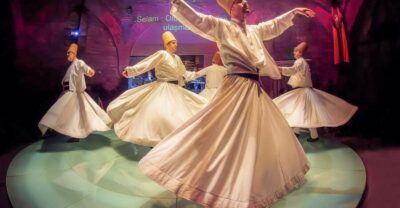
Hodjapasha Whirling Dervishes Show & Exhibition
Read our review →
Topkapi Palace & Harem Museum Ticket & Audio Guide
Read our review →Browse the lists this tour appears in