
Reviewed · ISTANBUL TOURS
Istanbul: Whirling Dervish Ceremony next to Hagia Sophia
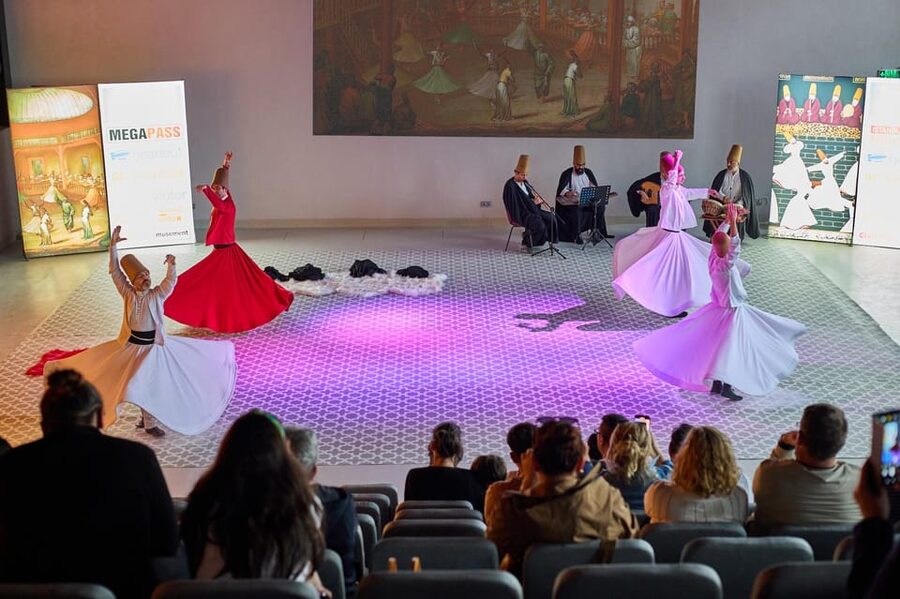
The most striking part of this 55-minute Sema ceremony is its calm. You are not watching a loud dance show. You are watching local Sufi followers perform a prayer ritual built around music, silence, and controlled turning, only steps from Hagia Sophia. I like the setting in a traditional wooden house, and I like the short explanation that gives meaning to what you see. The main consideration is that the pace is slow and devotional, so this suits you only if you can sit quietly and give it time.
I also like the value. At $17 per person, you receive live music, an English introduction, a multilingual audio guide, and tea or sherbet. The ceremony itself may feel brief to some people, and the music or spoken introduction may not sound equally clear from every seat, but the central experience remains distinctive and easy to fit into a day in Sultanahmet.
Key points to know before you go
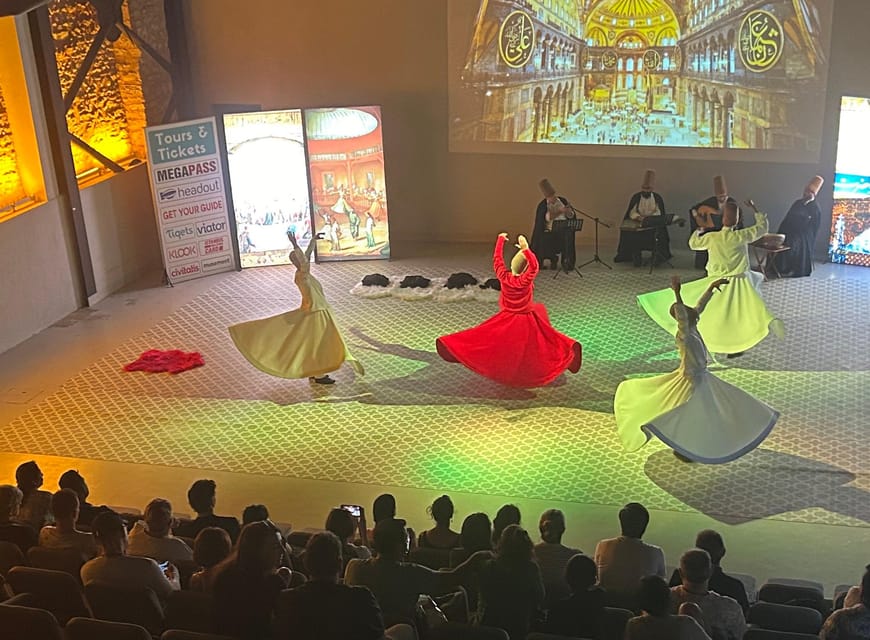
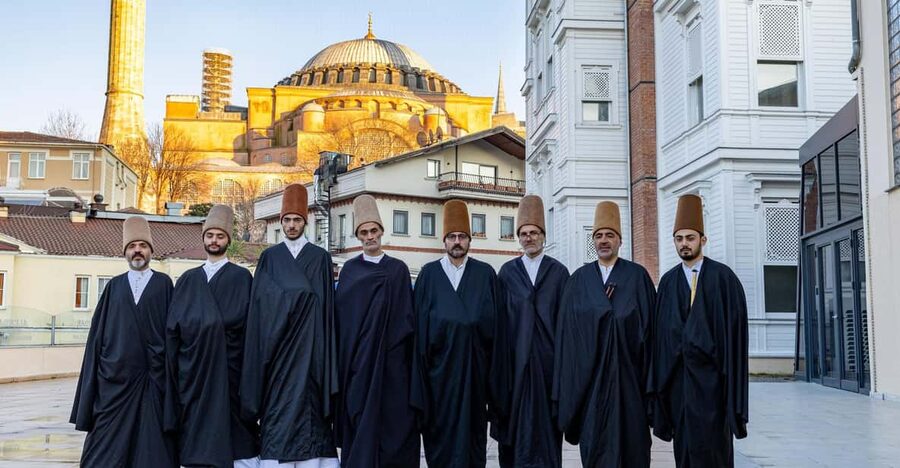
- The ceremony takes place beside Hagia Sophia: The central location makes this an easy evening addition to a Sultanahmet sightseeing day.
- It is a religious Sufi ritual, not a theatrical dance show: Silence and respectful behavior matter throughout.
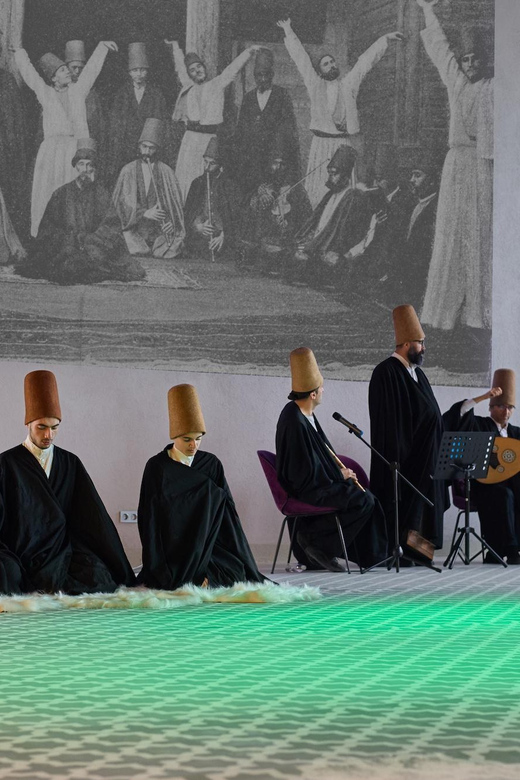
- Live music comes from traditional instruments: Strings, drums, and the ney flute shape the gradual rhythm of the Sema.
- An English-speaking host explains the meaning: You receive context before and after, with a digital guide in English, German, French, Italian, Russian, Spanish, and Arabic.
- Tea or sherbet is included: A small local drink is served after the ceremony, along with water.
- The $17 price is unusually modest: Ticket income also supports scholarships through the arts center, according to the information presented before the ceremony.
Entering the white wooden house near Basilica Cistern
Your meeting point is beside the entrance to the Basilica Cistern. Look for the large white wooden house and its gate, where the reception desk is located. The gate opens 30 minutes before the ceremony, giving you time to find the entrance and settle in without a frantic rush through Sultanahmet.
This is an important detail because the area around Hagia Sophia and the Basilica Cistern can be confusing, especially when map apps place the pin on the wrong side of the road. One person had trouble with the map link and found the correct building only after checking carefully. I would use the Basilica Cistern entrance as your visual landmark, then look for the giant white house rather than relying only on your phone.
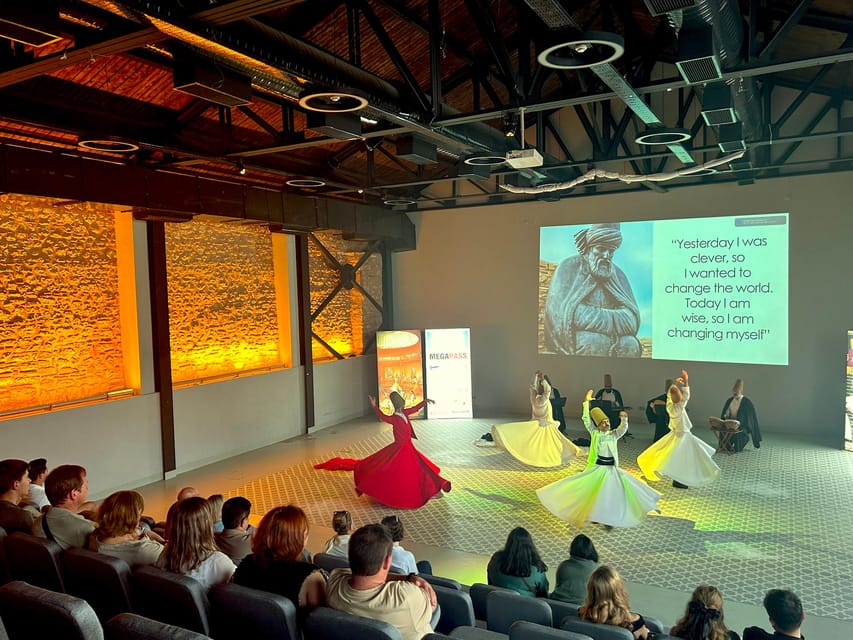
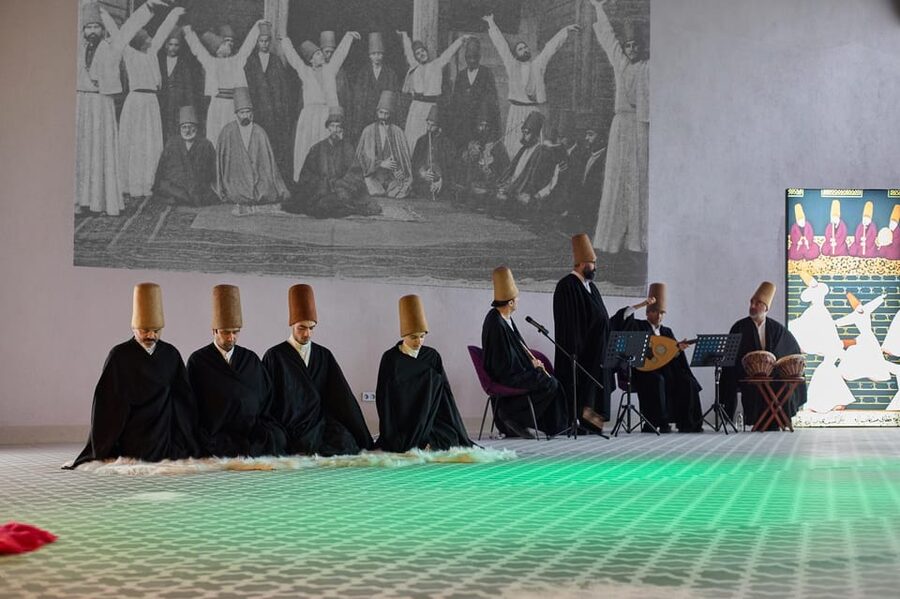
The venue gives the ceremony a different feel from a modern concert hall. It is a traditional, attractive wooden building used as an arts center, and the room is arranged so that the audience can see the ceremony from every seat. The seats are reported to be comfortable, a welcome feature during a ritual that asks you to remain still and attentive.
The center also has a community purpose. Ticket income helps fund scholarships, and the organization supports arts education. That does not change the ceremony itself, but it adds practical value to a low-cost cultural outing.
More Whirling Dervish Shows in Istanbul
- Istanbul: Whirling Dervishes Ceremony and Mevlevi Sema
★ 4.3 · 1,694 reviews - Istanbul Traditional Turkish Dinner and Dervish Experience
★ 5.0 · 490 reviews - Whirling Dervish Ceremony: Go on a Spiritual Journey
★ 4.0 · 177 reviews
The introduction explains what the turning means
Before the musicians begin, an English-speaking host gives a short explanation of Sufism, Rumi, and the origins of the whirling dervish ceremony. This introduction matters. Without it, you could easily mistake the turning for a display of physical skill and miss the religious meaning behind each movement.
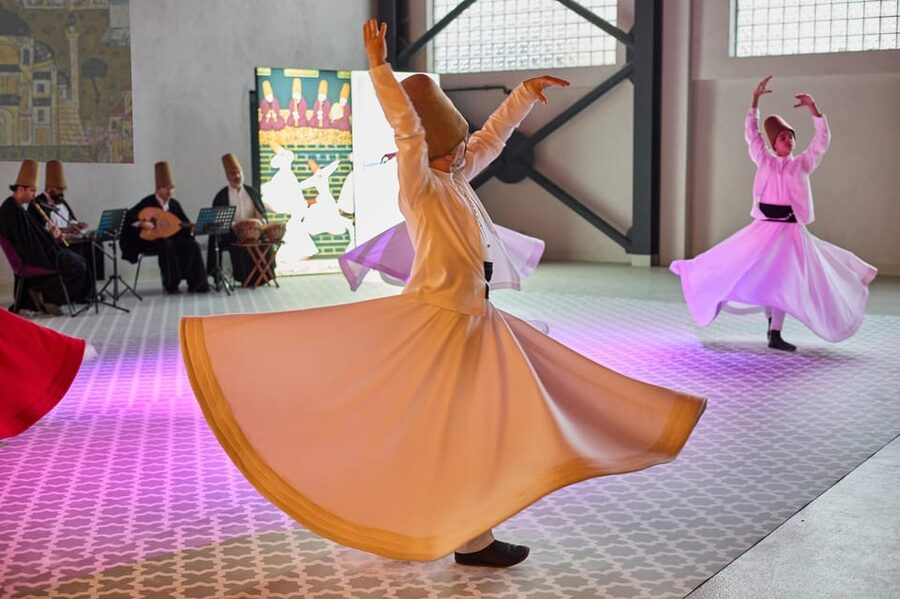
The host explains the Sema as a mystical journey toward divine love and unity. The turning represents the movement of the universe and the surrender of the ego. The familiar image of one hand raised toward heaven and the other turned toward the earth expresses receiving divine blessing and passing it on to the world.
You are also given background on the music and instruments. The musical pieces performed here were composed between the 1400s and the early 1800s, which connects the ceremony to the older artistic world of Istanbul and the wider Sufi tradition.
The explanation is useful, but it is not always perfect. Some people found that the speaker moved too quickly or that the sound was hard to hear at the start. If understanding every sentence matters to you, sit where you can hear clearly and use the digital information guide as a second source. The QR-based guide is available in seven languages: English, German, French, Italian, Russian, Spanish, and Arabic.
You can also ask questions after the ceremony. A host named Kasl was especially helpful to one party that included a wheelchair user, though the venue had to make extra effort to arrange access despite being advertised as wheelchair accessible. The activity is listed as wheelchair accessible, but I would still contact the provider in advance if access is essential for your visit.
Live Turkish music sets the pace
The ceremony begins with instrumental music. Strings, drums, and flutes establish the sound before the dervishes enter. The ney, a traditional reed flute, has a particularly important place in Sufi music, and its breathy tone helps create the quiet, inward mood of the ceremony.
This opening is not filler. It gives you time to adjust from the noise of Istanbul outside to the measured rhythm inside. The music may seem restrained at first, but it gradually prepares you for the ritual. Several parts of the ceremony build in stages, and the changing pace helps you understand that the turning is not a single repeated movement.
Do not expect a concert in the usual sense. The musicians support the prayer rather than compete with it. You may appreciate the music most if you listen for the instruments and the changes in rhythm instead of waiting for a dramatic climax.
The sound system can be a weak point. At least one person had difficulty hearing the opening explanation, and the room may not deliver every spoken word with equal clarity. That issue is less serious during the instrumental sections, but it is worth remembering if you have hearing difficulties.
Watching the dervishes perform the Sema
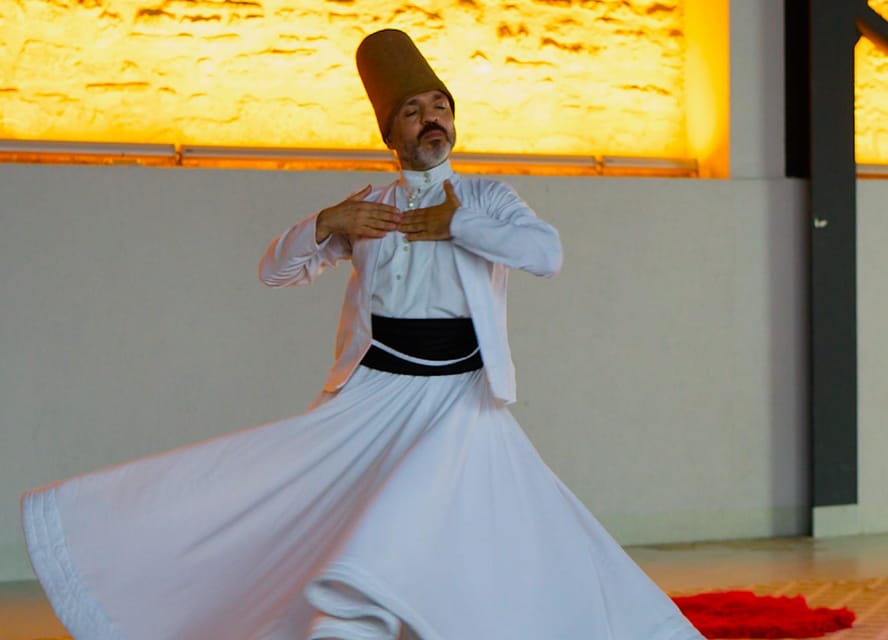
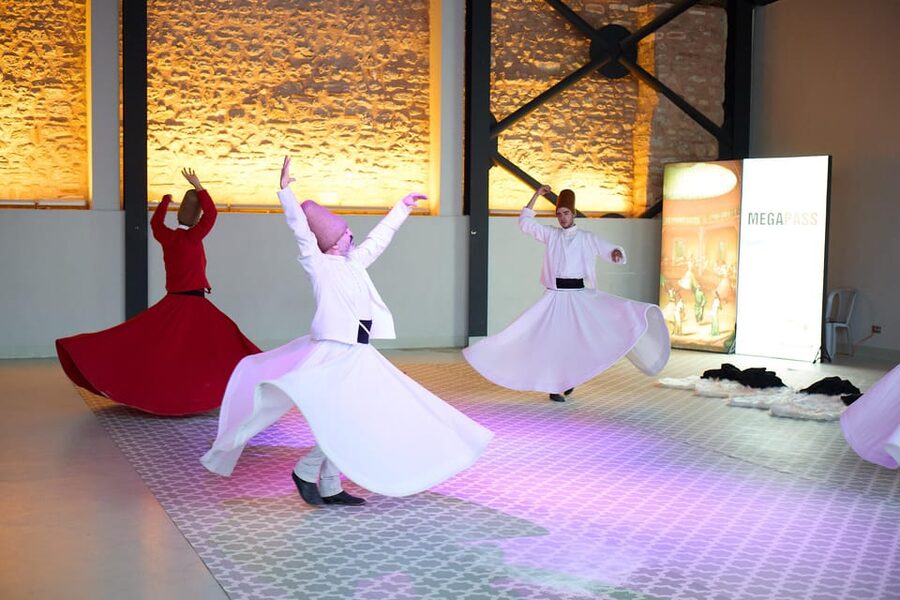
The dervishes enter quietly and begin the prayer ceremony with a measured sequence of movements. Their robes, posture, and turning have symbolic purpose. As the rhythm develops, the spinning becomes more sustained, creating the hypnotic effect most people associate with whirling dervishes.
The visual power comes from control rather than speed. The dervishes turn with one hand raised and one lowered, maintaining a steady relationship with the music. The motion suggests harmony between heaven, earth, and the individual, while the surrender of the ego remains central to the ritual.
I would not frame this as a dance show. The ceremony can feel moving and serene, but it asks you to watch respectfully rather than judge it by the standards of entertainment. There is no loud applause, comic relief, or rapid sequence of set pieces. The silence is part of the experience.
Some people find the pace too slow or the religious character too serious. That is a fair concern. If you want a lively cultural performance with narration throughout, this may not be the right choice. If you can sit quietly and allow the music and turning to develop, the ceremony can become a memorable moment of stillness in the middle of Istanbul.
Photography and video are allowed, according to the available information, but I would keep your phone away for most of the ritual. A screen pulls your attention back into ordinary sightseeing, exactly when the ceremony is asking for stillness. Reflections from illuminated panels at the sides of the hall can also make photography difficult, so you may not get the clean images you hoped for.
More Hagia Sophia visits:
- Istanbul: Hagia Sophia Skip-the-Line Ticket & Museum Option
★ 3.7 · 4,958 reviews - Istanbul: Blue Mosque & Hagia Sophia Guided Tour w/ Tickets
★ 4.8 · 3,600 reviews - Istanbul: Hagia Sophia Skip-the-Line Ticket and Audio Guide
★ 4.3 · 2,246 reviews - Istanbul: Basilica Cistern & Hagia Sophia Combo Ticket
★ 4.6 · 1,990 reviews
Why the intimate setting adds value
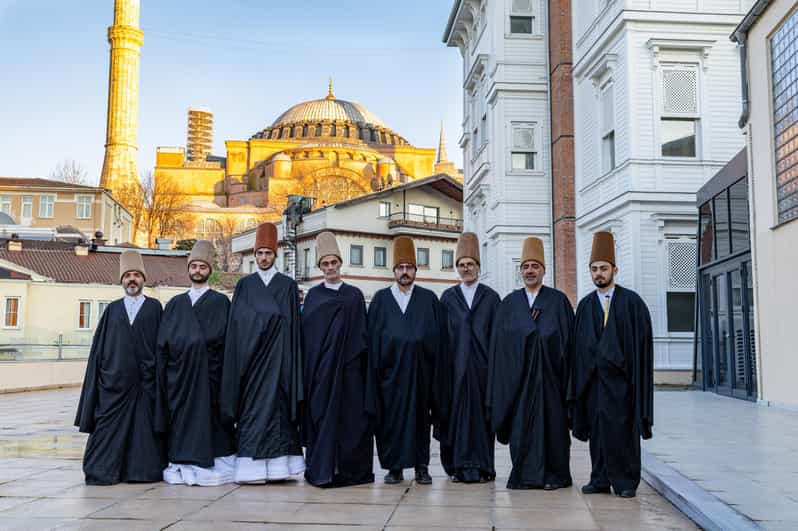
The location next to Hagia Sophia is convenient, but the wooden arts center does more than save you a taxi ride. It gives the ceremony a local cultural setting rather than placing it in a generic tourist venue.
The dervishes are presented as local followers of a Sufi tradition, and the organization has links to arts education. That helps the event feel connected to living culture instead of being only a staged reminder of Ottoman-era Istanbul.
The word authentic needs care here. You are attending a planned event for paying visitors, with a host, seating, and a set starting time. At the same time, the ritual is presented with seriousness, live music, and religious purpose. The distinction is useful: you are not dropping into a private worship service, but you are also not being sold a flashy stage act.
The room itself is another practical strength. Seats are comfortable, and sightlines are good from every place. The ceremony sometimes includes visual material or artwork in the background. This can add atmosphere, though one person found a paint-style video distracting and out of place. If you are sensitive to modern projections in a traditional setting, that visual element may not appeal to you.
Tea, sherbet, and the small details after the ritual
At the end, you receive a local drink, choosing tea or sherbet, as well as water. It is a modest inclusion, but it works well. The drink gives you a gentle transition back to conversation and sightseeing after a quiet ceremony.
The host may offer a short closing explanation and answer questions. This is the time to clarify the symbolism, ask about Rumi, or learn more about the music. Leave enough time for the ending if you want this exchange. One person had to leave as the ceremony ended and missed the final questions because the event started late.
The published duration is 55 minutes. That makes the experience easy to pair with the Basilica Cistern, Hagia Sophia, or other sights around Sultanahmet. Still, a 55-minute booking does not mean every part will feel equally long. The introduction, music, prayer, turning, and closing discussion each take a share of the time, and some people felt the ceremony itself was shorter than expected.
What the $17 ticket really gives you
The price is one of the strongest reasons to consider this experience. For $17, you receive entrance, live traditional music, the ceremony, an English-speaking host, a multilingual digital guide, water, and tea or sherbet.
I would not compare it with a standard theatrical ticket. The value is less about the number of minutes and more about access to a cultural practice with proper explanation in a central historic setting. Many Istanbul activities near Hagia Sophia can become expensive quickly, so this is a relatively gentle addition to your budget.
The scholarship purpose improves the value for me. Money from tickets supports education through the arts center, so your payment does more than cover seating and administration. You should not book it solely for that reason, but it is a useful factor when choosing between similar evening activities.
Children under two are not permitted. Older children can attend, but you should think about their ability to remain quiet for the full ceremony. One family brought young children and still considered the experience worthwhile, though the full adult price for children was seen as less appealing.
The cancellation policy is flexible: you can cancel up to 24 hours before the activity for a full refund, and a reserve-now, pay-later option is available. These terms are useful if your Istanbul plans may shift.
Who will appreciate this ceremony most
I would recommend it to you if you enjoy religious art, traditional music, history, and quiet observation. It is especially suitable for a first visit to Türkiye because the host gives enough background to make the ritual understandable without requiring prior study.
You can improve the experience by reading a little about Rumi, Shams Tabrizi, Sufism, and the ney flute before you go. You do not need a university course. Even a basic sense of the ceremony’s themes will help you see more than spinning robes and hear more than a repeating melody.
This is also a good choice for anyone who wants a break from Istanbul’s streets. After a day of traffic, vendors, tram bells, and crowds, the silence inside the hall feels meaningful. The ceremony offers a different side of the city, one shaped by prayer, poetry, music, and disciplined movement.
I would hesitate to recommend it if you want a fast, dramatic show or dislike sitting in silence. The ceremony is slow by design. Some people may find the music and recitation difficult to follow because English translations of the songs are not provided. The smart guide explains the tradition, but it does not turn every sung passage into a line-by-line translation.
Should you book the Whirling Dervish Ceremony?
Book it if you want a sincere, affordable cultural experience close to Hagia Sophia, especially if you are willing to treat it as a religious ritual rather than a performance. The live music, careful introduction, historic wooden venue, and included drink make $17 a fair price.
Before booking, accept three limits: the event lasts under an hour, the pace is meditative, and the spoken sound may not be perfect from every seat. Arrive with patience, keep your phone quiet, and leave time for the closing questions. For a first-time visitor who wants more than another busy sightseeing stop, this ceremony is a thoughtful choice.
FAQ
How long does the Whirling Dervish Ceremony last?
The activity lasts 55 minutes. The time includes the ceremony and the explanations provided before and after it.
Where do I meet the host?
Meet the host next to the entrance of the Basilica Cistern. The reception desk is at the gate of the large white wooden house, which opens 30 minutes before the ceremony.
Is the ceremony next to Hagia Sophia?
Yes. The venue is located next to Hagia Sophia in the historic center of Istanbul.
Is an English guide included?
Yes. An English-speaking host explains the ceremony. A smart audio guide is also available in English, German, French, Italian, Russian, Spanish, and Arabic.
Is a drink included?
Yes. You receive water and one local traditional drink, with a choice of tea or sherbet. Food and other drinks are not included.
Can I take photographs or videos?
Photography and video are allowed during the experience. Noise is not allowed, and you should keep your phone silent so the ceremony remains peaceful.
Is the ceremony wheelchair accessible?
The activity is listed as wheelchair accessible. If you need accessible seating or assistance, contact the provider ahead of time, since extra arrangements may be needed at the venue.
More Dervish Ceremonies in Istanbul
- Istanbul: Traditional Turkish Dinner and Dervish Experience
★ 5.0 · 109 reviews - Göreme: The Original Dervish Ritual in Konya or Cappadocia
★ 4.5 · 54 reviews - Cappadocia: the Original Whirling Dervish Ceremony
★ 4.8 · 50 reviews - Cappadocia Dervish Ritual with live music (With 2 options)
★ 4.4 · 43 reviews
Just added around Istanbul
- Istanbul: Private Guided Tour★ 4.7 · 81 reviews
- Luxury Private Yacht Rental★ 4.4 · 54 reviews
- Learn Turkish Cuisine from a Local Mom★ 5.0 · 32 reviews
- From Istanbul Airport: Layover City Tour with Options★ 4.7 · 67 reviews
- Istanbul: Ertugrul and Osman Ghazi Movie Set Tour with Lunch★ 4.4 · 145 reviews
- Istanbul: Zipline Adventure with Bosphorus View★ 3.8 · 159 reviews
- Istanbul:Basilica Cistern Skip-the-Line Ticket & Audio Guide★ 3.8 · 38 reviews
- Istanbul: Bursa and Uludag Full-Day Trip with Cable Car Ride★ 3.6 · 164 reviews
Istanbul Tours, compared.
Bosphorus Dinner Cruise & Show with Private Table
Read our review →
Daytime or Sunset Sightseeing Cruise & Audio Guide
Read our review →
Bosphorus Dinner Cruise with Turkish Night Show
Read our review →
Best of Istanbul 1, 2 or 3-Day Private Guided Istanbul Tour
Read our review →
Basilica Cistern Fast-Track Entry and Audio Guide
Read our review →
Hagia Sophia Skip-the-Line Ticket & Museum Option
Read our review →
Hodjapasha Whirling Dervishes Show & Exhibition
Read our review →
Topkapi Palace & Harem Museum Ticket & Audio Guide
Read our review →Browse the lists this tour appears in