
Reviewed · ISTANBUL TOURS
Istanbul: Whirling Dervishes Ceremony and Mevlevi Sema
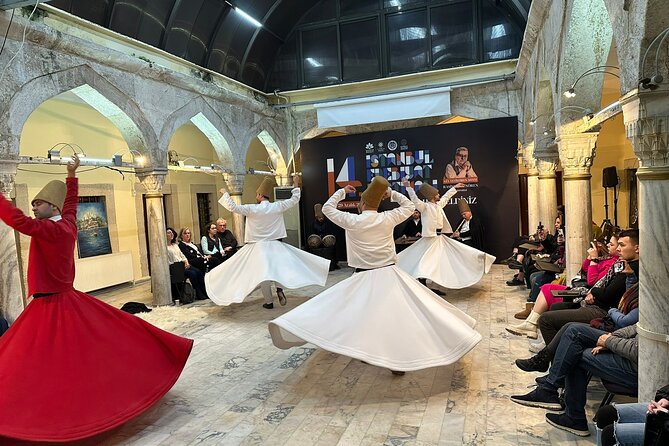
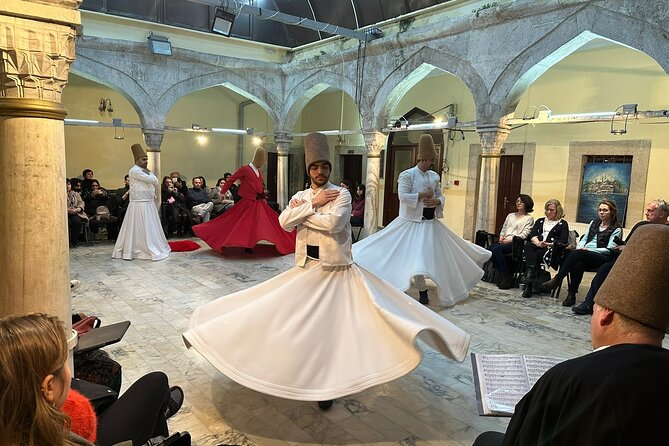
The most striking part of this Istanbul experience is that the whirling is not simply a dance. It is the central act of the Mevlevi Sema, a Sufi ritual shaped by centuries of Islamic spiritual tradition. Musicians and singers begin the ceremony, then the dervishes enter and turn with calm, exact movements in a small hall at Hoca Rüstem Medrese.
I like the intimate setting and the live music, which give the hour a quiet, focused feel. I also like the simple welcome tea and the central location, handy after a day around Sultanahmet. The main drawback is the lack of a spoken introduction. You need to read beforehand or use the audio guide to understand what you are seeing.
Key points to know before you go
- The ceremony lasts one hour: Expect roughly half an hour of music and chanting, followed by the dervishes’ ritual whirling.
- Arrive well before the required 15 minutes: The hall has limited seating, and an early arrival gives you a better view.
- This is a spiritual ritual, not a stage show: Quiet attention is more suitable than applause or casual conversation.
- The English audio guide adds useful context: Bring a charged smartphone and your own headphones.
- Tea may be served before the ceremony: It is a small but welcome touch, especially in cool weather.
- The $23 price is fair for a central cultural experience: You get admission, music, the ceremony, and an audio guide, but no transportation.
What the Mevlevi Sema means
The Mevlevi Sema grew from the Sufi tradition associated with Mevlana Jelaleddin Rumi. The order is named after Mevlana, whose teachings center on pure love and a spiritual path toward harmony with creation.
That background matters because the turning has a purpose. In Mevlevi thought, creation itself is marked by movement and cycles: day and night, summer and winter, life and death, and the circulation of blood. The dervish turns as a way of finding harmony with the rest of creation.
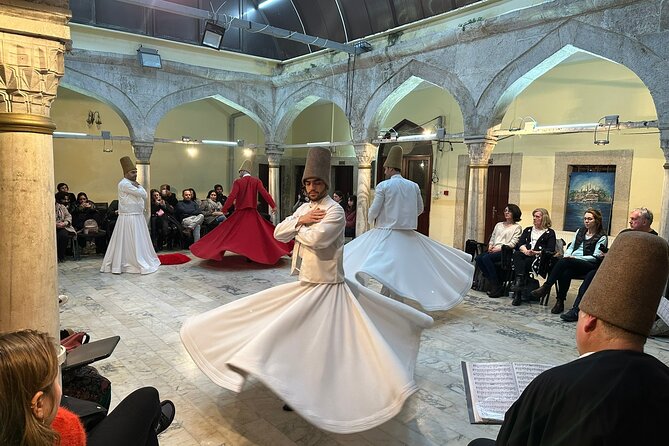
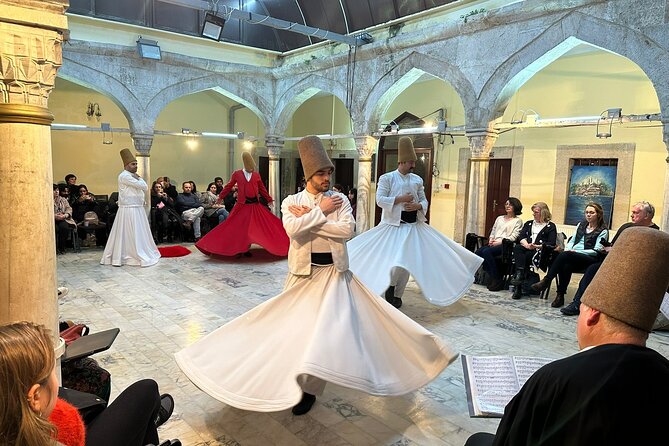
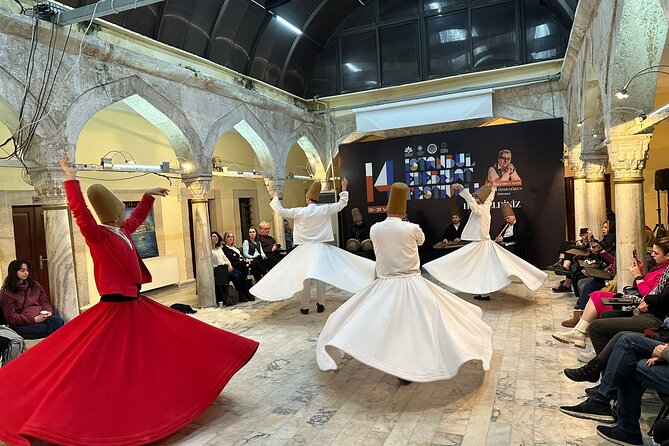
You will see this idea expressed through clothing and gesture. The black cloak represents death, while the white robe suggests birth or the burial shroud. The tall felt hat represents the tombstone of the ego. As the ceremony proceeds, the dervish leaves the dark outer cloak behind and turns in white.
The right hand is traditionally raised toward the sky, while the left hand points toward the earth. This gesture expresses receiving divine blessings above and passing them on to humanity below. You do not need to memorize every symbol before arriving, but knowing these basics changes the experience from a pretty spinning display into a ritual with a clear spiritual structure.
More Whirling Dervish Shows in Istanbul
- Istanbul: Whirling Dervish Ceremony next to Hagia Sophia
★ 4.5 · 906 reviews - Istanbul Traditional Turkish Dinner and Dervish Experience
★ 5.0 · 490 reviews - Whirling Dervish Ceremony: Go on a Spiritual Journey
★ 4.0 · 177 reviews
Entering Hoca Rüstem Medrese in central Istanbul
The ceremony takes place at Hoca Rüstem Medrese, in the heart of Istanbul. Its location makes this a practical evening activity if you are already sightseeing in the historic center. You do not need to arrange hotel pickup or drop-off, so plan your own route and allow time to find the hall.
The meeting point is described clearly, but the surrounding streets can still be confusing if you are moving through Fatih for the first time. I would arrive at least 30 to 40 minutes early, even though the formal instruction says to be there 15 minutes before the start.
That extra time serves two purposes. First, it gives you a cushion if you take a wrong turn. Second, seating is limited. The hall has only a small number of rows, and people arriving close to the start may end up behind a pillar or away from the best angle.
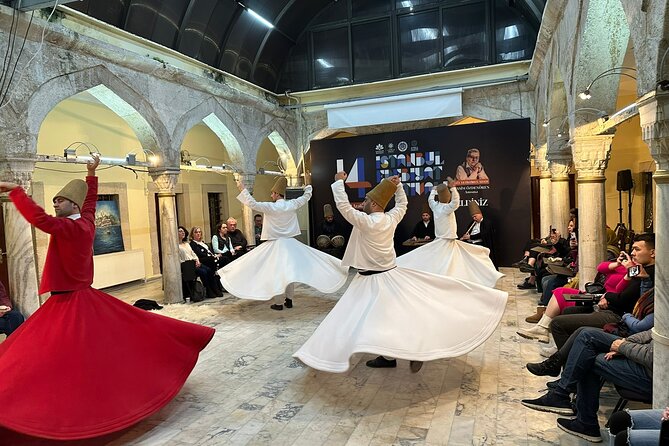
The space is part of the experience. It is not a large theater with flashy staging. The intimate medrese setting suits a quiet religious ceremony, though it also means that your view can depend on where you sit. If seeing the dancers’ footwork matters to you, arrive early and choose a clear position.
The opening music sets the tone
The ceremony begins with live music. A small group of musicians plays traditional instruments, with singing and chanting that lead into the opening prayer. This first section lasts about 20 to 30 minutes, depending on the evening.
I would not treat the music as filler before the main event. It creates the mood and gives you time to settle into the ceremony. The sound is part of the ritual, not background entertainment, and it helps explain why the whirling feels measured rather than theatrical.
The musical portion also gives you a chance to study the hall and notice how the audience responds. Some people may arrive expecting a short dance show and feel surprised by the slow opening. If you prefer fast-moving entertainment, the pace may test your patience. If you can sit quietly and listen, the gradual beginning makes the dervishes’ entrance more powerful.
Several visitors specifically appreciated the musicians and singers, and that praise makes sense. The music is live, skilled, and central to the atmosphere. You may not understand the words, but the sound carries the ceremony even when the meaning is unfamiliar.
Watching the dervishes begin the ritual
After the music, the dervishes enter and begin the Sema. Their movements are controlled and repetitive, but never casual. The turning develops a hypnotic quality because the performers maintain focus while rotating for an extended period.
The white robes spread outward as the dervishes turn. Their raised arms and steady posture make the motion look effortless, although the discipline behind it is clear. The effect is peaceful rather than acrobatic.
A small hall gives you a close view, but there is a tradeoff. A crowded room or a poorly placed pillar can block part of the floor. You may not see every detail of the footwork from every seat. For the best chance of a clear view, arrive early, sit toward the front, and keep your phone use discreet.
Photography is a sensitive matter here. One person found the back-lit side panels distracting when taking pictures, and bright screens can also disturb the quiet mood. I would take a few photographs only if permitted, then put the phone away and watch the ceremony directly.
Do not expect commentary while the Sema is taking place. The absence of a running explanation helps preserve the solemn atmosphere, but it can leave first-time viewers unsure about the order of events. A little preparation makes a large difference.
More dervish ceremonies in Istanbul:
- Istanbul: Traditional Turkish Dinner and Dervish Experience
★ 5.0 · 109 reviews - Göreme: The Original Dervish Ritual in Konya or Cappadocia
★ 4.5 · 54 reviews - Cappadocia: the Original Whirling Dervish Ceremony
★ 4.8 · 50 reviews - Cappadocia Dervish Ritual with live music (With 2 options)
★ 4.4 · 43 reviews
Why the lack of explanation matters
The most consistent weakness is simple: there is no substantial introduction before the ceremony. The English audio guide is included, but you must use it on your own smartphone. That arrangement works well for independent visitors who like to read at their own pace, but it is less helpful if you want a host to explain the ritual in person.
The host or greeter speaks English, and Kadir is singled out by name in the supplied information as a particularly helpful host. Still, the ceremony itself does not come with a live cultural briefing. You should not expect a guide to explain each movement from the front of the room.
Before you go, learn these four details:
- The black cloak represents death or the old self.
- The white robe suggests birth and the burial shroud.
- The tall hat symbolizes the tombstone of the ego.
- The turning expresses harmony with creation and a spiritual journey toward divine love.
You should also know how to behave. This is a religious ceremony, even though admission is sold to the public. Keep your voice low, avoid moving around once the ritual begins, and do not assume applause is expected at the end.
That last point is worth stressing. Some people naturally clap after a performance, but the Sema is not presented as ordinary entertainment. Quiet respect is the safest approach.
Tea, seating, and the one-hour format
Tea is often served before the ceremony begins. It is a modest detail, but it helps create a welcoming pause while you wait. It is especially pleasant on a cold evening, and it gives early arrivals something to do while choosing a seat.
The one-hour length is one of the experience’s strengths. It is long enough to include the music, chanting, and whirling without taking over your entire evening. You can fit it between sightseeing and dinner, or use it as a calm change of pace after the crowded streets of central Istanbul.
The seats are basic rather than luxurious. That is not a serious problem for a one-hour event, but you should not expect theater-style comfort. The hall is wheelchair accessible, which makes the experience workable for people who need step-free access, though the supplied information does not describe the exact seating arrangement.
The ceremony starts on time. Build in extra arrival time, but do not count on a late start if you are delayed. You need to be in the hall 15 minutes before the scheduled beginning.
Is $23 good value?
At $23 per person, this is a reasonably priced way to see a traditional Mevlevi Sema in central Istanbul. The ticket covers entry to the ceremony and an English audio guide. You are paying for a focused cultural experience rather than a long guided tour, meal, transportation package, or elaborate production.
That distinction helps set the right expectations. If you want an evening with hotel pickup, a guide, dinner, and several attractions, this is not that kind of booking. If you want one hour of live music and ritual in a historic central setting, the price is sensible.
The value is strongest for visitors who care about atmosphere and cultural context. The live musicians, intimate venue, and dervishes provide something you cannot get from a museum label or a quick photograph. The value is weaker if you want detailed teaching during the event, since the explanation is left mainly to the audio guide and your own preparation.
Flexible booking adds a practical benefit. You can reserve now and pay later, and cancellation is available up to 24 hours before the start for a full refund. Those terms help if your Istanbul schedule is still changing.
Who will enjoy this ceremony most?
I would recommend it to you if you want a quiet cultural experience connected to Istanbul’s spiritual traditions. It suits couples, solo visitors, families with older children, and anyone who enjoys music, ritual, and historic settings more than loud entertainment.
It is also a good choice if you have already seen Istanbul’s major mosques and palaces and want a different side of the city. The ceremony offers a glimpse into Sufi practice through sound, costume, movement, and stillness.
You may want to choose something else if you need constant explanation, dislike slow performances, or expect an interactive show. The dervishes do not invite audience participation, and the ritual does not stop to explain itself.
I would be especially careful about booking this for very young children who may find it difficult to remain quiet for an hour. The ceremony asks for attention and respect from the audience.
How to prepare for a better evening
Bring a charged smartphone and headphones so you can use the English audio guide. Read a short explanation of Rumi, the Mevlevi order, and the meaning of the clothing before you arrive. That preparation fills the main gap in the experience.
Arrive 30 to 40 minutes early if you want a front-row seat. Fifteen minutes is the minimum arrival time, not the ideal arrival time. Early arrival also lets you find the building without rushing and enjoy the tea before the music begins.
Dress comfortably and be ready to sit quietly. You do not need special clothing information for this activity, but respectful behavior is important because the Sema is a religious ritual.
Plan dinner afterward if the timing works. The ceremony lasts one hour, and its central location makes it easy to pair with an evening meal in the historic district. Keep the rest of the evening flexible enough that you do not need to leave before the final movements.
Should you book the Istanbul Whirling Dervishes Ceremony?
Book it if you want a short, affordable, and atmospheric look at Mevlevi Sema in Istanbul. The live music is a major strength, the intimate hall creates a close connection with the ritual, and the whirling is unforgettable once you understand its symbols.
Go in knowing what it is. This is not a theatrical dance show with a presenter explaining every step. It is a one-hour religious ceremony adapted for public viewing, with limited seating and little spoken guidance.
My practical formula is simple: arrive early, sit where you can see the floor, listen to the music, use the audio guide, and remain quiet during the ritual. If that sounds appealing, the $23 ticket is a worthwhile addition to your Istanbul plans.
FAQ
How long does the Whirling Dervishes Ceremony last?
The ceremony lasts one hour. The evening generally begins with around 20 to 30 minutes of music and singing, followed by the dervishes’ ritual whirling.
Where does the ceremony take place?
It takes place at Hoca Rüstem Medrese in central Istanbul, in the historic heart of the city.
What is included in the ticket?
The ticket includes admission to the Whirling Dervishes ceremony and access to an English audio guide app on your smartphone.
Is hotel pickup included?
No. Hotel pickup and drop-off are not included, so you must make your own way to Hoca Rüstem Medrese.
How early should I arrive?
You must arrive at least 15 minutes before the scheduled start. Arriving 30 to 40 minutes early is a better plan if you want a front-row seat.
Is the ceremony suitable for wheelchair users?
The activity is listed as wheelchair accessible.
What should I bring?
Bring headphones and a charged smartphone for the English audio guide.
Is there an explanation before the ceremony?
There is no substantial spoken introduction during the experience. You can learn more through the audio guide, and it is useful to read about the Mevlevi Sema before arriving.
Can I cancel the booking?
You can cancel up to 24 hours before the activity for a full refund. You can also reserve now and pay later.
Just added around Istanbul
- Istanbul: Private Guided Tour★ 4.7 · 81 reviews
- Luxury Private Yacht Rental★ 4.4 · 54 reviews
- Learn Turkish Cuisine from a Local Mom★ 5.0 · 32 reviews
- From Istanbul Airport: Layover City Tour with Options★ 4.7 · 67 reviews
- Istanbul: Ertugrul and Osman Ghazi Movie Set Tour with Lunch★ 4.4 · 145 reviews
- Istanbul: Zipline Adventure with Bosphorus View★ 3.8 · 159 reviews
- Istanbul:Basilica Cistern Skip-the-Line Ticket & Audio Guide★ 3.8 · 38 reviews
- Istanbul: Bursa and Uludag Full-Day Trip with Cable Car Ride★ 3.6 · 164 reviews
Istanbul Tours, compared.
Bosphorus Dinner Cruise & Show with Private Table
Read our review →
Daytime or Sunset Sightseeing Cruise & Audio Guide
Read our review →
Bosphorus Dinner Cruise with Turkish Night Show
Read our review →
Best of Istanbul 1, 2 or 3-Day Private Guided Istanbul Tour
Read our review →
Basilica Cistern Fast-Track Entry and Audio Guide
Read our review →
Hagia Sophia Skip-the-Line Ticket & Museum Option
Read our review →
Hodjapasha Whirling Dervishes Show & Exhibition
Read our review →
Topkapi Palace & Harem Museum Ticket & Audio Guide
Read our review →Browse the lists this tour appears in