
Reviewed · CANAKKALE TOURS
Gallipoli ANZAC Battlefields Tour from Canakkale
Gallipoli is best understood on the ground, where a short distance separates beaches, trenches, cemeteries, and memorials tied to the 1915 campaign. This six to seven hour tour crosses the Dardanelles from Canakkale, then follows the ANZAC battlefield by air-conditioned coach with an English-speaking guide.
I like the small maximum group of 15, which gives you a better chance to ask questions, and I like that lunch comes before the battlefield visits rather than being squeezed into the middle of a busy afternoon. The guides, including Ercan Yavuz, Adem, and Apo, are praised for explaining both the military operations and the personal stories behind them.
The main consideration is pace. You visit many important places in roughly five hours at the battlefield, so this is a strong first visit but may feel brief if Gallipoli has special meaning for you. If you want time to absorb every cemetery and trench, a two-day visit would suit you better.
Key points to know before crossing the Dardanelles
- The ferry begins the experience: You cross to the Gallipoli side by Kilitbahir car ferry, adding useful geographical context before the battlefield visit.
- Lunch is included at Maydos Restaurant: Turkish-style food is served before the main sightseeing, while drinks cost extra.
- You visit the core ANZAC sites: Brighton Beach, Beach Cemetery, Ari Burnu Cemetery, Lone Pine, Johnston’s Jolly, the 57th Regiment Memorial, the Nek, and Chunuk Bair are all included.
- The group is capped at 15 people: That is small enough for questions and personal explanations from the guide.
- The tour runs in the afternoon: Meet at 11:20 am, depart at about 11:45 am, and return to the Canakkale meeting point after the visit.
- Weather can affect the outing: Poor weather may lead to a new date or a full refund, while the standard booking is non-refundable for other cancellations.
Why this Gallipoli tour works well from Canakkale
Gallipoli can be confusing if you try to connect the sites on your own. The beaches, ridges, cemeteries, memorials, and trench positions are spread across the peninsula, and the meaning of each place is easy to miss without someone explaining how the positions relate to one another.
This tour gives you that framework in a single day. You begin in Canakkale, cross the Dardanelles by ferry, eat lunch, and then travel by coach through the main ANZAC area. You are not simply ticking off monuments. You are moving from the intended landing place to the actual landing area, then on to the sites connected with Australian, New Zealand, and Turkish forces.
The timing also makes practical sense. The meeting point is Hassle Free Travel at Kemalpaşa, Cumhuriyet Boulevard, with a stated start time of 11:20 am and departure around 11:45 am. Selected hotels can receive pickup and drop-off, but you should confirm that your hotel qualifies before booking.
The battlefield portion takes about five hours. That is enough time to see the main locations, but not enough for long independent wandering at each one. Think of this as a guided introduction with serious historical depth, not a slow, private study tour.
More Gallipoli battlefield days:
- Istanbul to Gallipoli Full Day Tour with Lunch and Transfers
★ 5.0 · 567 reviews - Gallipoli Full-Day Tour from Istanbul
★ 4.9 · 468 reviews - From Istanbul: Gallipoli and Anzac Full-Day Tour
★ 4.9 · 345 reviews
Crossing by Kilitbahir ferry
The Kilitbahir car ferry crossing is a useful opening to the day. The Dardanelles were not just a scenic waterway in this campaign. The crossing helps you understand the narrow geography separating Canakkale from the Gallipoli peninsula.
You will be on a vehicle ferry before reaching the battlefield area. The crossing also breaks up the journey and gives you a clear sense that Gallipoli is a separate place, not just another stop within Canakkale.
After crossing, the group goes to Maydos Restaurant & Bar for lunch. Turkish-style food is included, and this meal is placed before the longer battlefield route. That is a sensible arrangement because the afternoon includes several outdoor stops and limited time for a separate meal.
Vegetarian food is available if you request it when booking. Drinks are not included, so bring money for anything you want beyond the provided meal. The exact menu is not specified, so you should treat lunch as a convenient local meal rather than booking the tour for a particular dish.
Brighton Beach and the first view of the ANZAC area
Brighton Beach was the intended landing place. Seeing it early in the route gives you an immediate reference point for the campaign and helps explain the gap between military plans and what happened on the ground.
You can swim here if weather permits. That option depends on conditions, so do not build your whole day around a guaranteed beach stop. Even without swimming, the location matters because it brings the campaign down to a human scale. You are looking at a real shoreline, not only reading a date or viewing a memorial.
The visit is also a reminder that battlefield touring is not only about monuments. Beaches, slopes, ridges, and narrow approaches shaped the movements of soldiers. Your guide’s explanation is especially useful here because the physical setting can be hard to interpret without direction.
Beach Cemetery at the southern end of ANZAC Cove
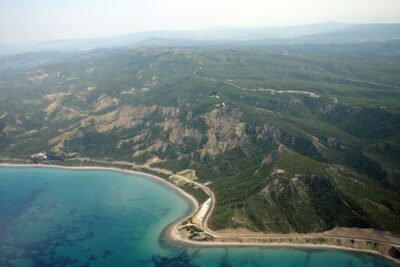
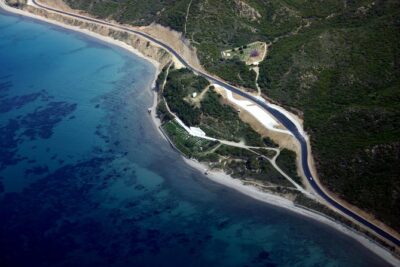
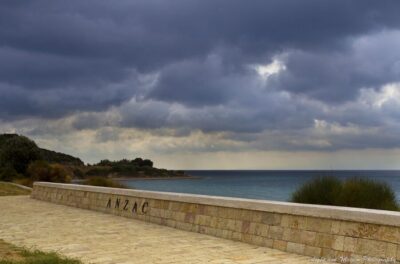
The route continues to Beach Cemetery on the southern tip of ANZAC Cove. This was the landing place of the first wave of ANZAC troops, and the cove later became home to as many as 30,000 troops during the campaign.
That number is difficult to grasp until you connect it with the small scale of the area. The cemetery and cove together help you think about the campaign not only as a military operation, but also as a crowded, sustained presence of soldiers, supplies, medical work, and death.
John Simpson Kirkpatrick, remembered for carrying wounded men with his donkey, is buried here. His grave gives the stop a personal focus. Rather than hearing only about commanders and troop movements, you encounter the story of one individual whose name remains closely linked with the ANZAC experience.
You should expect this stop to be reflective rather than rushed in mood, even though the overall tour has a fixed schedule. A guide such as Ercan Yavuz, who is praised for explaining key operations, people, and defining moments, can help connect the cemetery to the wider campaign.
A few more Turkey half-days to weigh up
- Canakkale: 6-Hour Gallipoli Tour with Lunch
★ 5.0 · 168 reviews - Gallipoli Tour from Çanakkale – Lunch Included
★ 5.0 · 114 reviews - Canakkale: Full-Day Troy and Gallipoli Tour
★ 4.8 · 79 reviews - Canakkale: Half-Day Troy Tour
★ 4.6 · 28 reviews
Ari Burnu Cemetery and the shape of ANZAC Cove
Ari Burnu Cemetery lies at the northern tip of ANZAC Cove. Visiting it after Beach Cemetery lets you see both ends of the cove and understand the area as a connected battlefield rather than a series of unrelated memorials.
The paired cemetery visits are one of the tour’s most useful features. They give you a physical sense of the landing zone and the concentrated area in which so many events unfolded. You also get time to consider the losses on both sides, a theme that guides repeatedly return to during the day.
The tour presents the Australian, New Zealand, and Turkish sides together. That balance matters at Gallipoli. You are not visiting a single national memorial route, but a battlefield and memorial area shaped by opposing forces and remembered by several countries.
Lone Pine and Johnston’s Jolly
Lone Pine Australian Memorial stands on the site of the attack and capture of Turkish trenches by Australian forces. This is one of the major Australian stops and a place where the guide’s battlefield explanation becomes particularly important.
The site is not valuable only because of its national association. It also shows how the fight centered on trenches and defensive positions rather than open movement across a broad area. The tour’s guide-led format helps you understand why the location mattered and how the action fitted into the wider route.
At Johnston’s Jolly, you view Allied and Turkish trenches and tunnels. This is one of the strongest parts of the day for understanding the physical conditions of the campaign. A trench line can look modest from a distance, but the surviving features provide a direct link to the close, confined nature of the fighting.
Allow yourself a little quiet time at these locations. The coach and group must keep moving, but pausing to look at the ground, walls, and memorials can make the guide’s explanation easier to picture. The tour is at its best when the historical detail and the physical remains work together.
The 57th Regiment Memorial and the Nek
The 57th Regiment Turkish Memorial adds the Turkish side of the campaign to the route. This is an important stop because the tour does not treat Gallipoli as an ANZAC story alone. Turkish forces defended the peninsula, and their memorials are essential to understanding how the battle is remembered locally.
The Nek is another key stop, made familiar to many people through the film Gallipoli. Film can give a battlefield emotional force, but standing at the actual site gives you a chance to separate cinematic storytelling from the place itself.
Your guide can explain what happened here and how the site fits into the larger sequence of attacks and positions. This is also where a smaller group helps. With no more than 15 people, it is easier to hear the explanation and ask about details that may not be clear from the film or from general reading.
The Nek is likely to be one of the more emotionally heavy moments of the afternoon. The tour does not reduce the site to a movie reference. It places the location within the broader story of the campaign and the losses suffered by both sides.
Chunuk Bair and the New Zealand connection
The final named stop is Chunuk Bair New Zealand. For visitors from New Zealand, this can be the most meaningful part of the route. One guide, Apo, is described as sharing both battlefield information and background stories about individual soldiers, along with details from his own research.
That kind of storytelling is valuable at Chunuk Bair because the site carries both national memory and military significance. You get more than a photo stop. The guide’s task is to connect the location, the fighting, and the people affected by it.
The route across Gallipoli also makes Chunuk Bair a fitting later stop. By this stage, you have seen the landing areas, cemeteries, trenches, and memorials. The final visit can bring those pieces together, although the afternoon schedule means you may wish for more time.
If you have a strong family or national connection to the campaign, consider extending your stay in the area or choosing a two-day tour instead. The one-day outing covers the main points well, but its strength is breadth and explanation rather than long, unhurried visits.
How the guide shapes the experience
The guide is the most important part of this tour. The battlefield sites have meaning, but many are not self-explanatory. A good guide links the geography to the decisions, movements, and personal stories that shaped the campaign.
The named guides associated with this experience include Ercan Yavuz, Adem, and Apo. Ercan is praised for detail about Australian, New Zealand, and Turkish operations, while Adem is described as an expert on the significant sites. Apo is noted for bringing in soldier stories and personal research.
You should expect an English-language tour. The small group gives you a better chance to ask about military operations, individual people, or the connection between a particular cemetery and the nearby battlefield.
The guide also has to keep the day moving. Because the route covers so much ground, you may occasionally want to linger after an explanation. That is the tradeoff for seeing the key sites in one outing.
Is $140 good value?
At $140 per person, this is not the cheapest way to see Gallipoli, but the price includes several items that would be awkward to arrange separately. You receive lunch, a professional guide, an air-conditioned vehicle, the ferry crossing as part of the route, and hotel pickup and drop-off at selected hotels.
The air-conditioned coach matters during a long battlefield afternoon. Gallipoli sightseeing involves outdoor stops, and comfortable transport saves you from arranging separate transfers between scattered sites.
The included lunch also adds value, particularly because the tour runs from late morning into the afternoon. You do not need to stop the route to find a restaurant, although you should budget separately for drinks.
The price makes the most sense if you are in Canakkale for a short stay and want the main battlefield area explained in one day. It is less compelling if you prefer to spend hours at one cemetery, walk independently, or study every trench position at length.
Who should book this tour?
I would recommend it to first-time visitors to Gallipoli, people staying in Canakkale for a limited time, and anyone who wants historical context rather than a simple transport service. It also suits Australian and New Zealand visitors who want to understand the ANZAC story alongside the Turkish experience.
The tour is suitable for most participants, according to the supplied information. Still, remember that it lasts six to seven hours and includes outdoor battlefield stops. You should be comfortable with a full afternoon of sightseeing and changing locations.
It is especially useful for people who have read about Gallipoli but cannot picture the geography. The ferry, coach route, and linked stops help turn separate names into a connected place.
You may prefer a longer visit if this is a personal pilgrimage or a major reason for coming to Turkey. The one-day tour covers a great deal, but you will not have unlimited time for independent reflection.
Booking, weather, and practical details
The activity is offered in English and accepts mobile tickets. Group discounts may be available, which could make the per-person cost more attractive for families or larger parties.
Hotel pickup and drop-off are available only from selected hotels. If that service does not apply to you, the activity begins and ends at Hassle Free Travel, Kemalpaşa, Cumhuriyet Boulevard No. 59, in central Canakkale.
The stated meeting time is 11:20 am, with departure at approximately 11:45 am. Seasonal and weather-related changes are possible, so confirm the departure time with the provider before the day of the tour.
The booking is non-refundable and cannot normally be changed. Poor weather is an exception: if the provider cancels for that reason, you can receive a different date or a full refund. The same applies if the minimum number needed to operate the tour is not reached.
Should you book the Gallipoli ANZAC Battlefields Tour?
Book it if you want a well-organized introduction to the main Gallipoli sites, an English-speaking guide, included lunch, and transport from Canakkale. The small group, strong guide reports, and balanced treatment of Australian, New Zealand, and Turkish sites give it real value.
Think twice if you want a quiet, slow visit or plan to study one cemetery or trench area in detail. For that purpose, a two-day tour would be the better choice.
For most first-time visitors with one free day, I would choose this outing. It gives you the essential geography, the major memorials, and enough historical explanation to make the visit meaningful without turning the day into a transport problem.
FAQ
How much does the Gallipoli ANZAC Battlefields Tour cost?
The tour costs $140 per person. Group discounts are available.
How long does the tour last?
The full experience lasts approximately six to seven hours. The battlefield portion takes about five hours.
What time does the tour start?
The meeting time is 11:20 am, and the tour departs at approximately 11:45 am. Departure times can change by season or weather.
Where does the tour begin and end?
The tour begins at Hassle Free Travel, Kemalpaşa, Cumhuriyet Boulevard No. 59, Canakkale. It ends back at the meeting point.
Is hotel pickup included?
Hotel pickup and drop-off are included for selected hotels only. Confirm eligibility with the provider before booking.
Is lunch included?
Yes. Lunch at Maydos Restaurant & Bar is included, with Turkish-style cuisine served before the battlefield visits.
Are drinks included with lunch?
No. Drinks are not included in the tour price.
Is a vegetarian meal available?
Yes. A vegetarian option is available, but you must request it when booking.
How many people can join the tour?
The activity has a maximum group size of 15 participants.
Can the tour be canceled because of bad weather?
Yes. The experience requires good weather. If the provider cancels because of poor weather, you will be offered a different date or a full refund.
Just added around Turkey
- Marmaris: Cleopatra Island Boat Trip with Lunch and Transfer★ 4.4 · 109 reviews
- From Marmaris: Ephesus and Selcuk Tour with Buffet Lunch★ 4.6 · 135 reviews
- Marmaris: All-Inclusive Pirate Boat Trip with Pickup Option★ 4.3 · 95 reviews
- Marmaris: Atlantis Water Park Transfer and Entry Ticket★ 4.2 · 64 reviews
- Marmaris: Aqua Dream Waterpark Entry Ticket & Hotel Transfer★ 3.9 · 25 reviews
- Manavgat: Guided Aqueduct, Waterfall & Green Lake Tour★ 4.3 · 140 reviews
- Manavgat River Cruise With Waterfall & Bazaar Tour★ 3.1 · 41 reviews
- Manavgat Cruise & Grand Bazaar w/Lunch and Unlimited Drinks★ 3.8 · 71 reviews
Canakkale Tours, compared.
Browse the lists this tour appears in