
Reviewed · CANAKKALE TOURS
Canakkale: 6-Hour Gallipoli Tour with Lunch
Gallipoli makes the First World War feel startlingly close. You walk from ANZAC Cove toward the ridges where the first landings stalled, then see trenches, cemeteries, and memorials that turn a campaign into a human story. I like the way this tour links Australian, New Zealand, and Turkish viewpoints, rather than treating Gallipoli as only an ANZAC pilgrimage.
I also like the small minivans, which are easier to manage than a full-size coach, and the guides who bring the history to life without turning a solemn place into a lecture hall. The main drawback is the one-hour lunch at the start. If you have already eaten, you may wish that hour were added to the battlefield visits, especially in summer when the late start means touring in the heat.
Key points about the six-hour Gallipoli tour
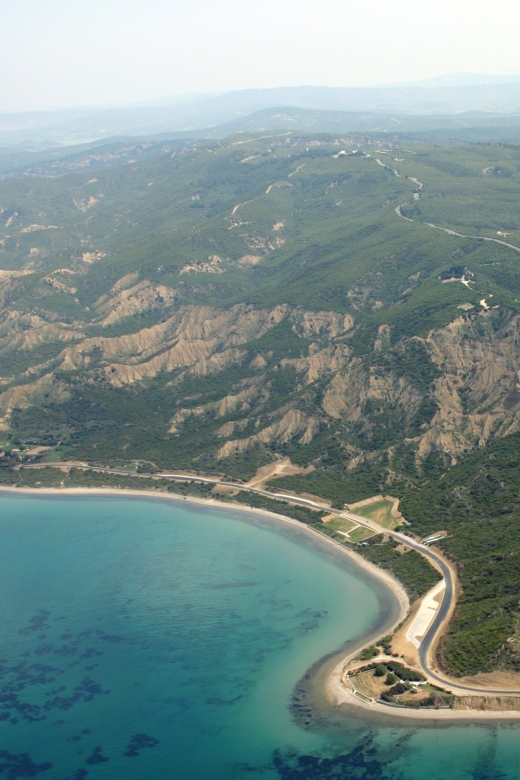
- Brighton Beach and ANZAC Cove: See the intended landing beach and the shore where the ANZAC troops actually came ashore on April 25, 1915.
- Lone Pine and Johnston’s Jolly: Visit major Australian memorials, cemeteries, trenches, and tunnel entrances.
- Chunuk Bair: Finish at the New Zealand National Memorial, one of the campaign’s most important sites.
- Turkish perspective: Learn how Ottoman troops defended the peninsula, including the role of Mustafa Kemal.
- Simple, useful transport: Take the ferry across the Dardanelles and travel between sites in an air-conditioned vehicle.
- Best for first-time visitors: Get the story and geography in one afternoon, then return independently if you want longer walks.
Crossing the Dardanelles from Çanakkale
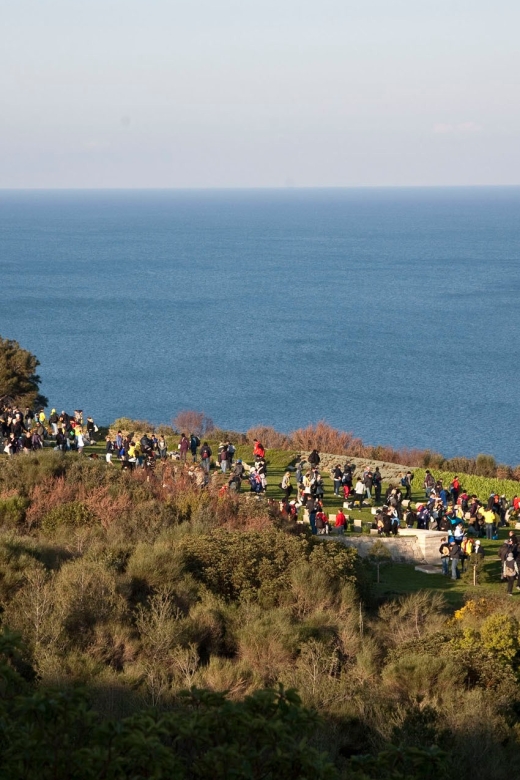
The day begins around 10:45 AM in front of the Tourist Information Center at the ferry harbor in Çanakkale. If you are staying at a central hotel, an optional city-center pickup may be available. Hotels farther out use a meeting point near the harbor, so check the exact arrangement before setting off.
The ferry ride takes about 25 minutes. It is not just a transfer. The Dardanelles is the waterway that made this campaign so important, and crossing it gives you a useful sense of the distance between Çanakkale and the Gallipoli Peninsula.
The ferry terminal is easy to reach from several listed hotels, including Hotel Limani, Grand Anzac Hotel, Hotel Kale 17, Anzac Hotel, Hotel Akol, and others in central Çanakkale. If your hotel is not on the pickup list, the meeting point remains the Tourist Information Center by the harbor.
On arrival, you continue to Eceabat, once known as the ancient city of Madytos. The town is the practical gateway to the peninsula, and lunch takes place here before the battlefield drive.
More Gallipoli battlefield days:
- Istanbul to Gallipoli Full Day Tour with Lunch and Transfers
★ 5.0 · 567 reviews - Gallipoli Full-Day Tour from Istanbul
★ 4.9 · 468 reviews - From Istanbul: Gallipoli and Anzac Full-Day Tour
★ 4.9 · 345 reviews
Lunch in Eceabat: convenient, but not essential for everyone
Lunch is included and lasts about an hour. The meal is simple rather than fancy, with one described example consisting of lentil soup, chicken and beef with rice, and watermelon. Drinks are extra, and water is included in the meal arrangement described by one participant, but you should not count on bottled water being supplied throughout the afternoon.
I see the value of lunch if you are arriving from Istanbul, have not eaten, or simply want the day organized for you. You walk from the ferry to the restaurant, eat, and then board the vehicle without needing to search for food in an unfamiliar town.
For independent visitors based in Çanakkale, lunch is the least convincing part of the package. Several people felt that an hour was longer than needed, with some waiting around after finishing. The tour could begin later without lunch, or use that time for another battlefield stop. At $81 per person, the meal adds convenience, but it is not the reason to book this outing.
If you eat breakfast late, the timing can feel awkward. The tour starts at about 10:45 AM and lunch follows the ferry crossing, so you may be eating again around midday. I would keep breakfast light and carry water, especially from late spring through summer.
Reaching Brighton Beach and ANZAC Cove
After lunch, the vehicle takes about 15 minutes to reach the battlefield area. The road crosses the peninsula toward the Aegean coast, where the tour begins with the beaches connected to the first day of the campaign.
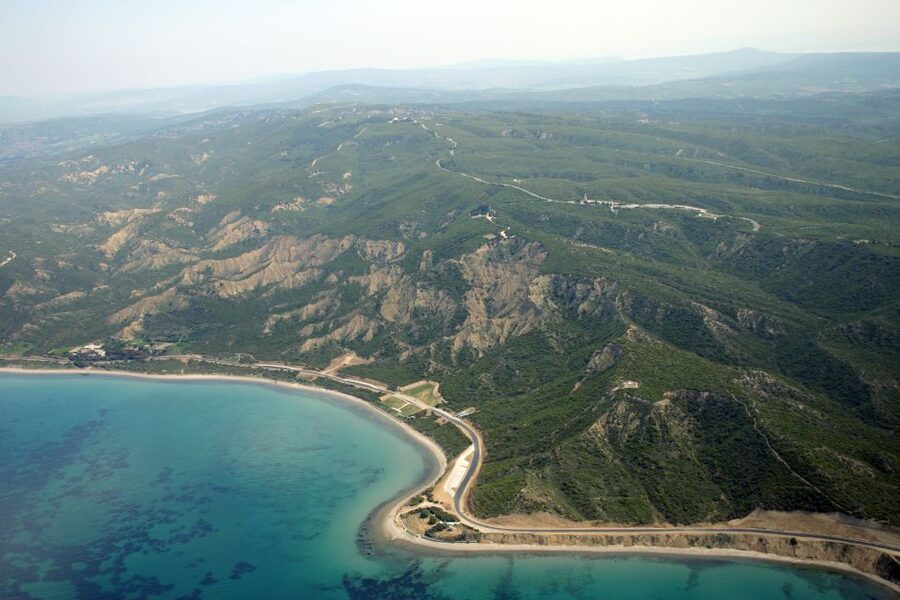
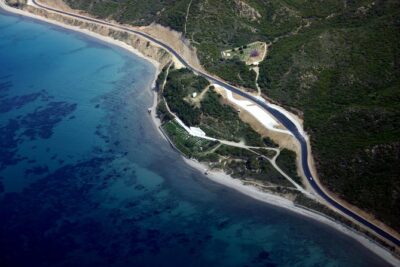
Brighton Beach was the intended landing site for the ANZAC force. The actual landing took place farther north at ANZAC Cove, where steep hills and confused terrain immediately disrupted the Allied plan.
Seeing both places helps you understand the first mistake of the campaign. The soldiers did not come ashore on the broad, open beach their commanders had expected. Instead, they landed below difficult slopes and narrow gullies, then tried to push uphill against Ottoman defenders.
At ANZAC Cove, your guide explains the first landing of April 25, 1915. This is where a strong guide matters most. The ground itself can appear quiet and ordinary, but references to distance, ridgelines, and movement make the military decisions easier to follow.
The tour also visits Ariburnu Cemetery at the northern end of the cove. Cemeteries here are carefully maintained, and the names and dates put individual lives back into a campaign often reduced to slogans. Take a quiet moment before moving on. This is not a place to rush through for a photograph.
Following Second Ridge and the old front line
From the beaches, the route climbs toward the hills and follows the line known as Second Ridge. The Allied advance was stopped here on the first day, and the front line remained in this general area for the next seven months.
The geography gives the campaign its meaning. You are not looking at a single grand battlefield with a clear boundary. You are tracing ridges, gullies, roads, and narrow positions where soldiers fought over short distances with enormous losses.
The road along Second Ridge passes areas where Allied and Turkish trenches are still visible on both sides. The remains are not presented as a museum display. They are fragments in the ground, and you need the guide’s explanation to understand how troops used them and how close the opposing positions could be.
Guides including Burak, Charlie, Hasan, Bulent, Ibrahim, Ibo, Orkan, and Burak Yetimoglu have been praised for different strengths: clear explanations, strong battlefield knowledge, humor used at the right moments, and an ability to connect the Turkish and ANZAC accounts. The guide assigned to you will vary, but the experience depends heavily on this person’s storytelling.
Several guides use maps to show troop movements. That is especially helpful because the campaign involved repeated advances and withdrawals over confusing terrain. A good explanation lets you see why a small rise or ridge mattered, instead of leaving you with a list of unfamiliar names.
More lunch stops in Turkey:
- Top Choice For Cruisers: Ephesus, Mary’s House WITH TICKETS+LUNCH
★ 5.0 · 7,233 reviews - Antalya/Kemer: Suluada Island Small-Group Boat Tour w/ Lunch
★ 4.4 · 4,207 reviews - Antalya: Ziplining, Rafting, Jeep Tour & Quad Safari w/Lunch
★ 4.6 · 3,260 reviews - City of Side: Jeep Safari & Green Lake Boat Trip with Lunch
★ 4.9 · 2,919 reviews
Lone Pine: Australia’s major memorial on the peninsula
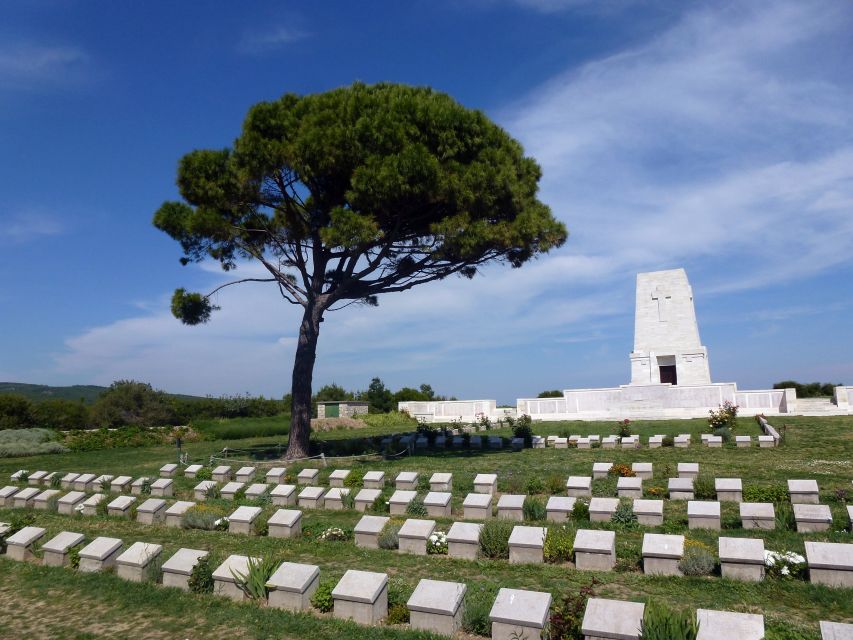
The Australian memorial at Lone Pine is one of the emotional centers of the tour. It commemorates nearly 5,000 Australians who have no known grave.
The name comes from the fighting around a single pine tree, though the site now carries far greater meaning than that original battlefield marker. Your guide explains the action here and places it within the wider struggle along the ridges.
I would allow yourself time to read the names and absorb the setting. The memorial is not only for Australians. It also helps explain the scale of the fighting and why Gallipoli became such a lasting part of Australian national memory.
Visitors with family connections can ask their guide for help locating names. One guide took time to help a participant find great-uncles on a memorial wall, turning a general historical visit into a personal one. Bring any family names or service details you have, though the tour does not promise genealogical research.
The stop is also useful for visitors from New Zealand, Turkey, Britain, the United States, and elsewhere. Gallipoli was a shared conflict, and the memorials reveal how differently each country remembers it.
Johnston’s Jolly and the remaining trenches
At Johnston’s Jolly Cemetery, you can walk through abandoned trenches and see tunnel entrances. This is one of the places where the battlefield becomes physical rather than symbolic.
The trenches are not a complete preserved system, and you should not expect a long archaeological walk. Still, even partial remains show how soldiers lived and fought in cramped, exposed positions. The contrast between today’s silence and the intensity of the campaign can be unsettling.
This stop rewards comfortable shoes. The tour includes several short walks at cemeteries and battlefield sites, and the ground may be uneven. The supplied information does not give a formal accessibility rating, so ask the operator if you need specific mobility advice.
The time at each stop is designed to keep the six-hour schedule moving. Some guides allow quiet time and questions, while the overall route remains fairly efficient. If you want to follow every trench line or read every inscription, you will need a second day.
The 57th Regiment Turkish Memorial
The 57th Regiment Turkish Memorial brings the Ottoman side of the campaign into sharper focus. Turkish troops defended the peninsula with great determination, and the regiment became closely associated with sacrifice at Gallipoli.
This stop matters because it prevents the tour from becoming a one-sided ANZAC story. The campaign was not fought against an abstract enemy. Ottoman soldiers were defending their country, and the memorials on the peninsula honor their losses and their courage.
Several guides are especially good at showing how the events look from both sides. That balance is one of the tour’s strongest features. You hear about Allied planning and ANZAC identity, but also about Turkish defense and the command decisions that stopped the advance.
For Turkish visitors, the experience can be just as valuable as it is for Australian and New Zealand visitors. It offers a structured account of a major part of Turkish history, with the actual ground close at hand.
Chunuk Bair and the campaign’s closing chapter
The final major stop is Chunuk Bair, one of the highest points on the peninsula. It is also home to the New Zealand National Memorial, which commemorates more than 850 New Zealand soldiers who fell in the area.
New Zealand troops captured the hill in August and held it for two days before Ottoman forces retook it under Mustafa Kemal’s personal command. Kemal later became the first president of modern Turkey, known as Atatürk.
Chunuk Bair is a fitting place to end because its recapture effectively ended Allied hopes of winning the campaign. The hill shows how much the entire operation depended on a few high points, and why the fighting there was so severe.
I find this final stop especially useful for visitors who know the ANZAC legend but want the wider military story. The tour does not leave you with a simple tale of victory or defeat. It shows a failed campaign shaped by terrain, planning errors, persistence, and enormous human cost.
Small vehicles make a real difference
The tour uses air-conditioned, non-smoking transportation. Groups may be divided among several small minivans, with one reported arrangement using three vans and groups of no more than about 15 people.
That setup is far better suited to Gallipoli than a large coach. Smaller vehicles can handle the battlefield roads more easily, and you spend less time waiting for a large group to gather at each stop.
Air-conditioning is important in summer. One practical warning: the back seat can make it harder to hear the guide over the vehicle’s air vents. If you have hearing concerns, try to sit nearer the front or ask the guide to repeat key points.
The tour runs about six hours, including two ferry crossings, lunch, transfers, and roughly four and a half hours on the peninsula. That is enough for the major ANZAC and Turkish sites, but not enough for every cemetery, trail, or battlefield position.
Is $81 a fair price?
At $81, the cost covers the ferry fees, lunch, guide, and transport. You are paying mainly for structure and interpretation, not for luxury.
I consider it good value for a first visit. Gallipoli’s sites are spread across the peninsula, and the geography is difficult to understand from a map alone. The guide ties each stop to the next, while the ferry and minivan arrangements remove the day’s main transport problems.
The value is strongest if you are staying in Çanakkale for a short time, visiting from Australia or New Zealand, or want a solid introduction before exploring alone. It is weaker if you have your own vehicle, already know the campaign well, or would rather spend an extra hour walking than sitting down for lunch.
The tour also includes free cancellation up to 24 hours before departure and lets you reserve while paying later. Those terms help if your Turkish itinerary is still changing, but the real booking decision is about time: do you want an efficient overview or a slower, self-guided visit?
Who should book it?
I would choose this tour for a first-time visit to Gallipoli, particularly if the peninsula is one of the main reasons you came to Çanakkale. It suits families as well as adults, and a guide can adjust the explanation for younger visitors. One family with children aged four and eight found the selected stops and lunch manageable.
It is also a strong choice for people with ANZAC family connections. Tell the guide your family names early, and allow time at Lone Pine and Chunuk Bair for personal reflection.
If you are visiting in hot weather, carry water, wear practical shoes, and expect the main battlefield sightseeing to happen after lunch. Some people would prefer an earlier start, but the schedule is built around the ferry, lunch, and wider group arrangements.
Should you book the Gallipoli tour?
Book it if you want the major sites explained clearly in one afternoon. The strongest reasons are the thoughtful guides, the Turkish and ANZAC balance, the small vehicles, and the chance to see places such as ANZAC Cove, Lone Pine, Johnston’s Jolly, the 57th Regiment Memorial, and Chunuk Bair without arranging transport yourself.
Skip it if the included lunch feels like wasted time or if you have several days for a slower visit. A good plan is to take this tour first, then return independently the next day, as some visitors do, with the route and story already in place.
For most first-time visitors, I would book it. Gallipoli is too important to experience as a quick series of stops with no context, and the right guide turns the peninsula’s ridges, beaches, and memorials into a clear, moving account of 1915.
FAQ
Where does the tour start?
The meeting point is in front of the Tourist Information Center at the ferry harbor in Çanakkale.
What time does the tour begin?
The tour starts at around 10:45 AM. City-center hotel pickup may be available during this period.
Is hotel pickup included?
Pickup is optional for hotels in the city center. If your hotel is outside the center, you will be given a meeting point close to the ferry harbor. Hotel pickup and drop-off are not included as a standard tour feature.
How long is the ferry ride?
Each ferry crossing takes about 25 minutes. The tour includes a crossing from Çanakkale to Eceabat and a return crossing at the end.
Is lunch included?
Yes. Lunch is served at a local restaurant in Eceabat and lasts about one hour. Drinks other than the included meal provisions are not included.
What language is the tour conducted in?
The tour has a live English-speaking guide. English is the listed tour language.
Which Gallipoli sites are visited?
The route includes Brighton Beach, ANZAC Cove, Ariburnu Cemetery, Lone Pine Australian Memorial, Johnston’s Jolly, the 57th Regiment Turkish Memorial, and Chunuk Bair with the New Zealand National Memorial.
How do I reach the battlefields?
After lunch in Eceabat, you travel by air-conditioned vehicle for about 15 minutes to the battlefield area. Transport between the main sites is included.
Can I cancel the booking?
You can cancel up to 24 hours before the tour for a full refund. The booking option also allows you to reserve now and pay later.
Just added around Turkey
- Marmaris: Cleopatra Island Boat Trip with Lunch and Transfer★ 4.4 · 109 reviews
- From Marmaris: Ephesus and Selcuk Tour with Buffet Lunch★ 4.6 · 135 reviews
- Marmaris: Aqua Dream Waterpark Entry Ticket & Hotel Transfer★ 3.9 · 25 reviews
- Marmaris: All-Inclusive Pirate Boat Trip with Pickup Option★ 4.3 · 95 reviews
- Marmaris: Atlantis Water Park Transfer and Entry Ticket★ 4.2 · 64 reviews
- Manavgat: Guided Aqueduct, Waterfall & Green Lake Tour★ 4.3 · 140 reviews
- Manavgat River Cruise With Waterfall & Bazaar Tour★ 3.1 · 41 reviews
- Manavgat Cruise & Grand Bazaar w/Lunch and Unlimited Drinks★ 3.8 · 71 reviews
Canakkale Tours, compared.
Gallipoli ANZAC Battlefields Tour from Canakkale
Read our review →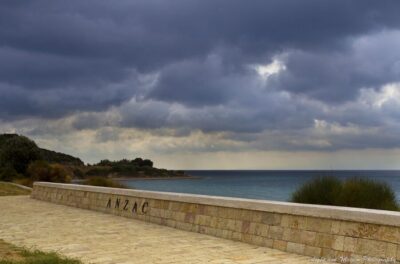
Browse the lists this tour appears in